









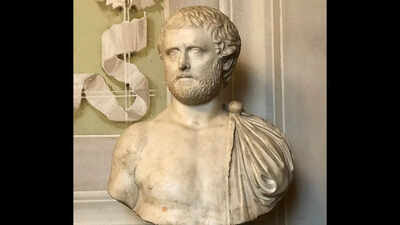
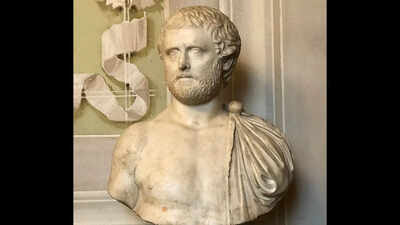
A great deal of writing about love focuses on what people possess. Houses, jewellery, money, status and all the visible things that can be counted. This line from the Roman poet Ovid looks in the opposite direction. It begins with a lack rather than an abundance.That may be one reason the quote has survived for so long.The speaker is not presenting himself as powerful, wealthy or admired. Instead, he recalls a period when he had very little to offer in the conventional sense. Love was present, but money was not. The usual gifts associated with courtship were beyond his reach. Faced with that reality, he turned to the one thing he felt he could still give: language.The quote comes from a distant world, yet the feeling inside it remains familiar. Most people have experienced moments when their means did not match their intentions. They wanted to do more than circumstances allowed. Ovid’s response was not to withdraw from love altogether. He simply found another way to express it.The result is a line that speaks about affection, dignity, creativity and self-expression all at once. It feels personal, but it also points towards something much broader.
Quote of the day by Ovid
“I am the poet of the poor, because I was poor when I loved; since I could not give gifts, I gave words.”
What is the meaning behind the quote by Ovid
At the centre of the quote is a contrast between material gifts and emotional expression.Ovid is not saying gifts are unimportant. Rather, he is acknowledging that he could not afford them. The interesting part comes afterwards. Instead of focusing entirely on what he lacked, he turns towards what remained available.Words.For a poet, words were not casual objects. They were his craft, his identity and his way of making sense of the world. When wealth was absent, language became the thing he could still offer.There is a quiet confidence in that idea.The quote does not sound ashamed. It does not ask for sympathy. It simply accepts a limitation and works around it. The message seems to be that affection does not disappear just because financial resources are limited. People often find other ways to communicate what they feel.That is where the emotional force of the quote comes from.
Love has often existed far from wealth
Looking across history, love has rarely belonged only to the wealthy.Most people throughout the centuries have lived ordinary lives with limited means. Their relationships developed without luxury, elaborate gifts or grand displays of spending. Yet affection, companionship and devotion remained central parts of human experience.The stories that survive from different cultures frequently reflect this reality. Lovers exchange letters rather than expensive possessions. Poems carry feelings that money cannot purchase. Songs become expressions of longing and admiration.Ovid’s quote fits naturally into that tradition.The circumstances may change from one era to another, but the underlying experience remains surprisingly consistent. Many people have loved while lacking resources. Many have searched for ways to communicate feelings without relying on money.The quote captures that situation in a few simple words.
The value of a gift is not always financial
One of the reasons the quote continues to resonate is that it challenges a common assumption about value.Modern life often encourages people to measure worth in financial terms. Expensive items are treated as significant because their cost is visible. The connection between price and value becomes easy to assume.Yet human relationships rarely operate according to that formula alone.A thoughtful letter can become more treasured than an expensive object. A meaningful conversation can stay in memory long after material gifts have been forgotten.This does not mean money has no place in expressions of affection. It clearly does. The point is that emotional value and financial value are not always the same thing.Ovid seems aware of that distinction. His poetry could not compete with wealth in a practical sense, but it could still carry meaning.
Poetry became an alternative form of giving
For Ovid, language was not merely a method of communication. It was what he devoted his life to.That matters because the quote is not only about poverty. It is also about offering something deeply personal.When people give gifts, they often choose things that reflect who they are. A musician may share music. A painter may create art. A writer may offer words.In that sense, Ovid was giving more than sentences. He was giving a part of himself.The quote becomes more interesting when viewed from that angle. It is not simply a story about a lack of money. It is a story about recognising the value of what one already possesses.
Human beings often create when resources are limited
There is a pattern that appears repeatedly in creative history.Writers, artists and musicians frequently produce meaningful work during periods when resources are scarce. Constraint does not automatically prevent creativity. Sometimes it pushes people towards it.This does not mean hardship is desirable. Most people would choose comfort over difficulty if given the option.Still, limitations can force attention towards abilities that might otherwise remain unnoticed.Ovid’s quote reflects a version of that process.Unable to compete through wealth, he relied on imagination and language. The result was not merely a substitute for material gifts. It became its own form of expression.
The quote feels surprisingly modern
Despite being centuries old, the line continues to feel relevant.Part of that relevance comes from the way modern culture often presents relationships. Social media frequently highlights expensive holidays, luxury purchases and visible signs of success. Displays of affection can sometimes appear closely linked to spending.Against that backdrop, Ovid’s words feel almost refreshing.They redirect attention away from possessions and towards communication. The quote suggests that connection depends on more than purchasing power.That idea remains meaningful because many people still find themselves in situations where their financial resources do not fully reflect their feelings.The gap Ovid describes has not disappeared.
Words leave a different kind of legacy
Material objects inevitably change hands, wear out or disappear.Words have a different relationship with time.Letters are preserved. Poems are passed down. Quotations survive across centuries. Entire lives can be remembered through language long after physical possessions have vanished.Ovid’s own quote unexpectedly proves this point.The gifts he could not afford have disappeared into history. The words he chose instead remain available to readers thousands of years later.There is something quietly fitting about that outcome.The very thing he offered because he lacked wealth ended up lasting far longer than most material gifts ever could.
Why readers still connect with the quote
The enduring appeal of this quotation probably lies in its honesty.There is no attempt to pretend poverty is pleasant. There is no dramatic claim that money does not matter. The quote simply recognises a limitation and then looks beyond it.People respond to that because it feels real.Most lives contain moments when circumstances fall short of intentions. People want to give more than they can. They wish they had greater resources, more opportunities or better conditions.Ovid’s response is neither resentment nor self-pity.It is expression.He could not give what others gave, so he offered what he had.That simple decision transformed a personal limitation into a statement that still resonates nearly two thousand years later.
Other famous quotes by Ovid
- “Bear and endure: This sorrow will one day prove useful.”
- “Chance is always powerful. Let your hook be always cast.”
- “Take rest; a field that has rested gives a bountiful crop.”
- “The cause is hidden. The effect is visible to all.”
- “Happy is the man who has broken the chains which hurt the mind.”