







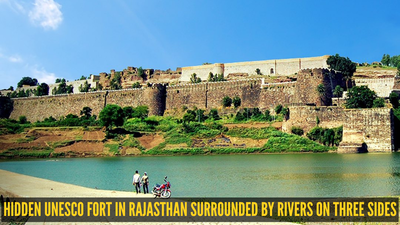
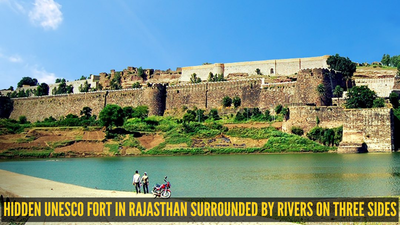
Most of the forts in Rajasthan are situated in arid deserts, or high mountain peaks, meanwhile, Gagron Fort is something different. It is almost like an island, surrounded by rivers on three sides, and completely built over a mountain.Tucked away near Jhalawar in the southeastern corner of the state, this 2013 UNESCO World Heritage Site (part of the Hill Forts of Rajasthan) flies under the radar for many tourists. Built right where the Ahu and Kali Sindh rivers meet, this centuries-old stronghold delivers a striking mix of spirituality, rugged nature, and architectural history.
A fort unlike any other in Rajasthan
Roughly 12 kilometers from Jhalawar and about 85 from Kota, Gagron holds a distinct title, it’s both a hill fort and a water fort. Military historians frequently point to it as one of the very few citadels in India that leveraged hills, forests, and rivers all at once for its defense.The structure was erected on the Vindhyan ranges. With the Ahu and Kali Sindh rivers wrapping around three sides, medieval engineers simply carved out a massive moat on the fourth. Whenever conflict flared up, the fort effectively became an isolated island.That dramatic approach hasn’t faded with time. Crossing the bridge today, with water rushing below and mammoth stone walls looming above, guarantees a striking first impression.
A journey through 800 years of history
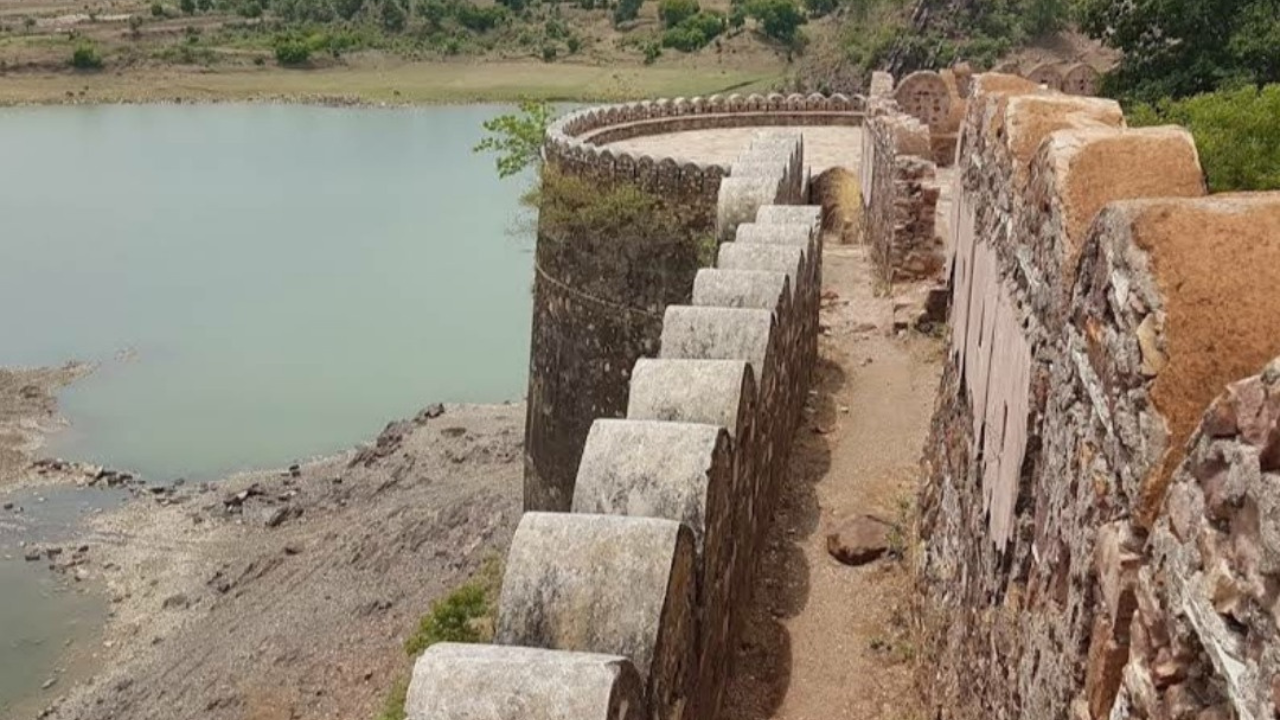
Image Credit: Facebook/ Tourism Rajasthan
Gagron’s roots stretch way back to the 12th century under the Dod Rajputs. The Khinchi Chauhans eventually took over, turning the outpost into a formidable regional power.Because it sat at a crucial chokepoint between Malwa and Rajasthan, the fort was a constant target. Local chronicles and historical texts record no fewer than 14 major sieges over its lifespan. Things reached a boiling point in the 15th century when the Malwa Sultanate launched repeated attacks. The fort saw two separate Jauhars, these events still echo in the folklore.
Architecture shaped by nature
The engineering here is brilliant in its simplicity. Instead of digging a traditional foundation, the builders used the solid rock of the hill itself as the base. It gave the complex incredible structural integrity.Another rarity for Rajasthan is Gagron’s triple-layered defensive wall. Walk through the complex and you’ll easily notice the heavy military focus in its watchtowers, fortified corridors, massive bastions, and imposing gates.Visitors pass through entrances like Suraj Pol, Bhairav Pol, Ganesh Pol, and the towering Nawab Gate. Tucked inside are the remnants of courtyards, armouries, temples, audience halls, and royal living quarters.
What travellers can expect today
Perhaps the best part about Gagron Fort is the peace and quiet. You won’t find the shoulder-to-shoulder crowds typical of Rajasthan’s other tourist spots, allowing you to wander the massive complex mostly undisturbed.Plan for about two to three hours to really see it all during the day. If you’re timing your trip, aim for the winter months (October through March). The weather is comfortable, and the surrounding greenery is incredibly vibrant right after the monsoon season.
How to reach Gagron Fort
By road: If you’re driving up from Kota, expect to be at the fort in roughly two hours. Coming all the way from Delhi via the highway network will take you about eight to nine hours.By Train: You will find Kota Junction to be the most practical major stop, though Bhawani Mandi and Ramganj Mandi also provide good regional connectivity.By Air: You’ll want to look at flights landing in Jaipur, Indore, or Bhopal as your closest options.
Places to explore nearby
It’s incredibly easy to pair Gagron Fort with a few other local sights around Jhalawar.The Garh Palace right in Jhalawar is packed with stunning royal architecture and intricate murals. Nearby, the Government Museum holds a fantastic lineup of artifacts, old manuscripts, and stone sculptures.Don’t skip the Chandrabhaga Temples, famous for their incredibly detailed stonework or Jhalrapatan’s Surya Temple, which easily ranks among the finest temple complexes in all of Rajasthan. If you’re more into the outdoors, the Mukundara hills and the surrounding river ecosystems offer plenty of scenic exploring.