






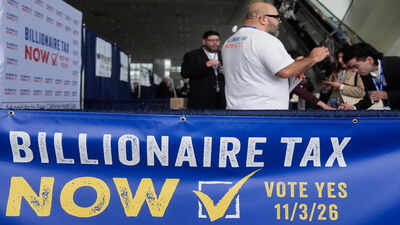
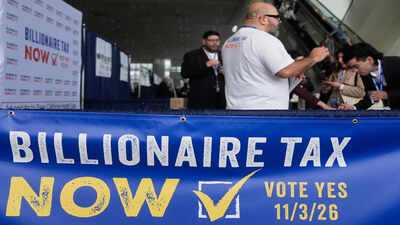
It started as a gripe session. Last fall, as a union-backed ballot measure to tax 5% of California billionaires’ net worth raced toward qualification, a private Signal chat lit up with some of the richest men in America—Google’s Sergey Brin, Marc Andreessen, Stripe’s Patrick Collison, Coinbase’s Brian Armstrong—commiserating over the threat to their fortunes. Then the kvetching turned into scheming. They talked about running candidates, lobbying the governor, even buying the very company collecting signatures so they could shut it down. Now, with California’s June 25 deadline to pull the tax off the November ballot bearing down, the contents of those chats have gone public—and they paint a picture of a billionaire class that’s wildly rich, deeply rattled, and mostly out of its depth.
Inside the Signal chat where Silicon Valley’s richest plotted their next move
The roster was staggering. According to The San Francisco Standard, which first reported the chat’s contents, the group included Brin, Y Combinator’s Garry Tan, Ripple cofounder Chris Larsen, venture capitalist Ron Conway, and dozens more. Some fired off messages constantly. Others lurked silently. “It’s kind of like, ‘Who wasn’t in it?'” one person who saw the chat told the outlet.The tax itself is a one-time, 5% levy on Californians worth more than $1.1 billion, crafted by the SEIU United Healthcare Workers West union to plug holes left by Trump-era federal healthcare cuts. It targets roughly 200 billionaires and aims to raise about $100 billion over five years. For the people in that chat, it was personal.When someone pitched the signature-company buyout, it landed as pure Silicon Valley logic. “Of course, that’s what they would think,” a source told The Standard. “If there’s an impediment, just buy it.”
Why throwing millions at the problem hasn’t worked for billionaires yet
For all the firepower, the campaign has mostly flopped. The union gathered nearly 1.6 million signatures—almost double what it needed—and the measure polls at around 50% support. The billionaires’ chosen candidates fared worse. San Jose Mayor Matt Mahan, recruited as a gubernatorial pick, pulled just 3.7% in the June 2 primary. Ethan Agarwal, drafted to challenge tax-defender Rep. Ro Khanna, came fourth with 6.5%.The infighting didn’t help. When the chat splintered in January, Conway—who’d urged the group to ease up on Gov. Gavin Newsom—wasn’t invited to the follow-up rooms. Donations meant for various anti-tax groups kept failing to materialize. At one point, organizers reportedly planned a “Shark Tank in the dark” Zoom, where donors would appear with blacked-out screens while groups pitched them. It got scrapped over leak fears.“Many of them are bold, and their tactics are stupid,” Khanna strategist Cooper Teboe told The Standard. “None of it has worked, because they don’t know what they’re doing.”
What the June 25 deadline means for California’s billionaire tax fight
The real action now sits with the state Legislature, which has until June 25 to negotiate the tax off the November ballot with a compromise bill SEIU-UHW will accept. Newsom—who opposes the measure but distrusts its architects as much as the billionaires distrust him—is reportedly working the phones, rallying unions and healthcare groups against it. The California Teachers Association has already come out against it.Meanwhile, the exodus continues. Brin and fellow Google cofounder Larry Page have shifted dozens of LLCs out of California to Nevada, with Page snapping up Miami property. Peter Thiel has decamped to Buenos Aires, charmed by President Javier Milei’s libertarian streak. Brin, who spent $57 million fighting the tax, told the New York Times he “fled socialism” as a child and doesn’t want California heading the same way.Not everyone’s running. Nvidia CEO Jensen Huang said he’s “perfectly fine” with the tax. And the math may favor the state regardless—an NBER paper found it would take 25 years of lost income tax to equal what the wealth tax raises in five, even if every billionaire left tomorrow.The billionaires have coalesced around Building a Better California, the Brin-backed group that’s raised over $100 million. Whatever happens by June 25, Silicon Valley’s money is now firmly in Sacramento’s game.