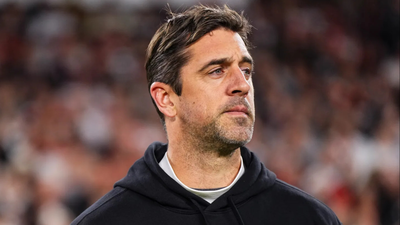










Dario Amodei has had a year to soften his most controversial prediction. He hasn’t. Sitting for a Bloomberg Originals profile filmed partly in a wood-panelled library and partly across Anthropic’s San Francisco haunts, the CEO was asked whether his now-infamous forecast—that AI could wipe out half of all entry-level white-collar jobs within one to five years—still stood. He didn’t flinch. “I don’t know exactly, but I’m still pretty concerned. I’m still the same order of concern,” he said. When the interviewer pushed harder—was the number still 50%, or had it climbed? —Amodei declined to reset the figure but left no doubt the worry runs as deep as ever.What makes the consistency land is who’s saying it. This is the man whose company builds the very AI doing the displacing, repeating a warning most of his peers have spent recent months walking back. And it arrives at an awkwardly convenient moment: Anthropic is now valued near a trillion dollars and inching toward a public listing, which means every word Amodei says about the future of work is being read twice—once as a warning, once as a sales pitch.
Anthropic CEO Dario Amodei ’s logic behind his ‘doomsday’ prediction
Amodei first floated the half-of-entry-level-jobs figure last year, and it has trailed him through Davos, a 20,000-word essay, the India AI Impact Summit, and a long run of podcasts. In the Bloomberg sit-down he leaned into the mechanics rather than the headline number. His framing is the productivity “hump”: automate 90% of a job, and the remaining 10% makes workers ten times more leveraged and more productive. The trouble, he argued, is what comes after. “Eventually it gets close to a hundred percent,” he said, at which point the task itself runs out and there’s nothing left for the human to be more productive at.He pointed to software engineering as the live example. AI now writes nearly all the code at Anthropic, yet engineers there are still more productive, not redundant—for now. “We’re already starting to see the beginning of like, there may be some people that it’s not making more productive, that it’s better for the AI to just do the thing,” he said. Asked how that sits with him, he didn’t dress it up: “It’s very uncomfortable.“
Why Dario’s doom warning doubles as an IPO pitch for Anthropic
The persistence of the message is hard to separate from the money. Anthropic has confidentially filed a draft S-1 with the SEC, setting up a fall listing that investors expect to clear $1 trillion. That follows a $65 billion Series H round at a $965 billion valuation, which leapfrogged OpenAI’s $852 billion. Annualised revenue has rocketed from roughly $9 billion at the end of 2025 to about $47 billion last month.For an institutional investor weighing a billion-dollar cheque, the displacement story reshapes the math. AGI pioneer Ben Goertzel put it bluntly to Fast Company: if AI is going to take all the jobs, you’d better own a piece of the AI. The bigger the slice of human labour Claude can credibly replace, the larger the addressable market—and the easier the valuation is to justify. Critics have noticed. The warning that sounds like candour also functions as a roadshow.
What Anthropic’s own data quietly shows
Anthropic’s researchers have complicated their CEO’s pitch. A March 2026 paper found Claude currently covers around 33% of tasks in the computer and math category, against a theoretical ceiling of 94%—and, crucially, no systematic rise in unemployment among the most AI-exposed workers. The clearest signal was a roughly 14% drop in hiring of 22-to-25-year-olds into exposed roles since ChatGPT launched. Concerning, but not a white-collar bloodbath. The Yale Budget Lab separately found no meaningful macroeconomic effect from AI on labour through late 2025.The internal contradictions are sharper still. Anthropic has been advertising more than 400 engineering roles, some paying up to $405,000. Boris Cherny, who built Claude Code and once predicted the “software engineer” title could vanish by year-end, still reviews every line of code Claude produces. The tool’s own creator says you can’t yet trust it unsupervised, even as the CEO warns it’s coming for white-collar work writ large.
Jensen Huang, Sam Altman, and the peers who think Amodei Dario’s plain wrong
Amodei is increasingly isolated among the industry’s biggest names. Nvidia’s Jensen Huang called the AI-layoffs narrative “complete nonsense,” arguing productivity gains push firms to hire more engineers, not fewer. Meta’s Yann LeCun was harsher, saying Amodei “knows absolutely nothing about the effects of technological revolutions on the labour market.” Even Sam Altman, who matched Amodei’s doom register through early 2026, has pivoted to “augment and elevate”—a shift that landed conveniently as OpenAI prepped its own filing.Amodei pushes back hard on the cynicism, insisting the “cheap marketing” charge is itself cheap marketing, and that he writes carefully about tasks, jobs, and policy fixes while critics clip three-second soundbites. His proposed remedies—progressive taxation of AI firms, wage insurance, even universal basic income—suggest he means the warning seriously. Whether it’s prophecy or pitch, he isn’t letting the five-year clock reset.