









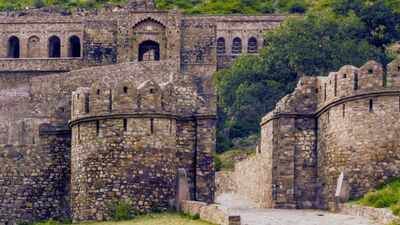
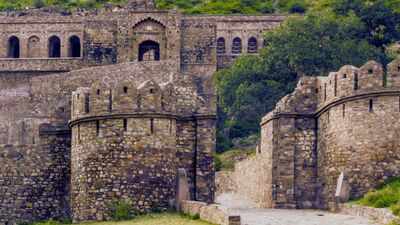
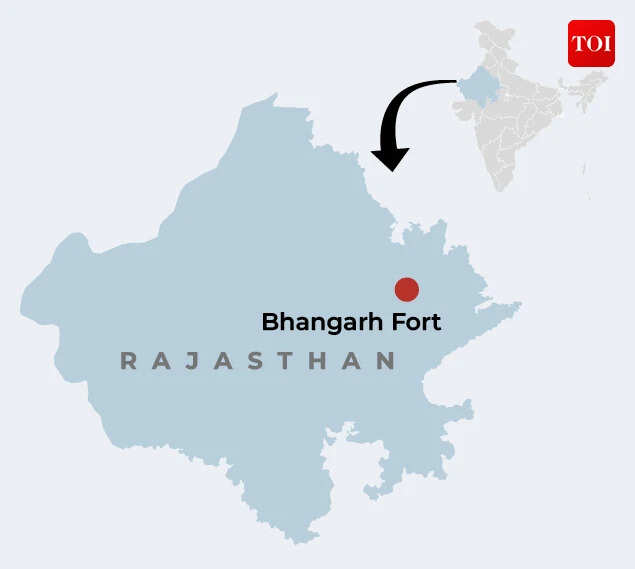
ALWAR: “Chal bhai Bhangarh chalte hain” — the line has become familiar among those fascinated by India’s most famous ‘haunted’ destination. But behind the ghost stories of Bhangarh Fort lies a mix of history, psychology and science.Situated amid the green hills of the Aravalli range, Bhangarh Fort stands as one of Rajasthan’s most striking historical sites. Located around 50 kilometres from Sariska Sanctuary between Jaipur and Alwar, the fort was built in the 17th century by Raja Madho Singh, younger brother of Mughal general Man Singh of Amber.
During its peak, Bhangarh was a growing settlement. The township reportedly had more than 9,000 houses until around 1720, after which its population gradually declined. Protected by three layers of fortifications and five massive gates, the fort once housed grand havelis, temples and bustling markets.Today, its ruined palaces and deserted streets have turned it into a major tourist attraction — and one of India’s most talked-about “haunted” places.Inside the fort complex are remnants of several temples, including Gopinath Temple, Someshwar Temple, Keshav Rai Temple, Mangla Devi Temple and Ganesh Temple.Built in the Nagara style of architecture, these temples reflect the craftsmanship of the 17th century. The Gopinath Temple, standing on a 14-foot-high platform, is known for its detailed stone carvings.The fort also contains the ruins of several havelis, including Nartakiyon Ki Haveli, believed to have been the residence of royal dancers.At the far end of the complex are the remains of the royal palace, which is believed to have originally had seven storeys, though only four remain today.
The legends behind Bhangarh’s curse
Bhangarh’s reputation as a haunted fort is linked to several local legends.One story involves a sadhu named Baba Balau Nath. According to folklore, he allowed the construction of the fort on the condition that no structure should become taller than his home.
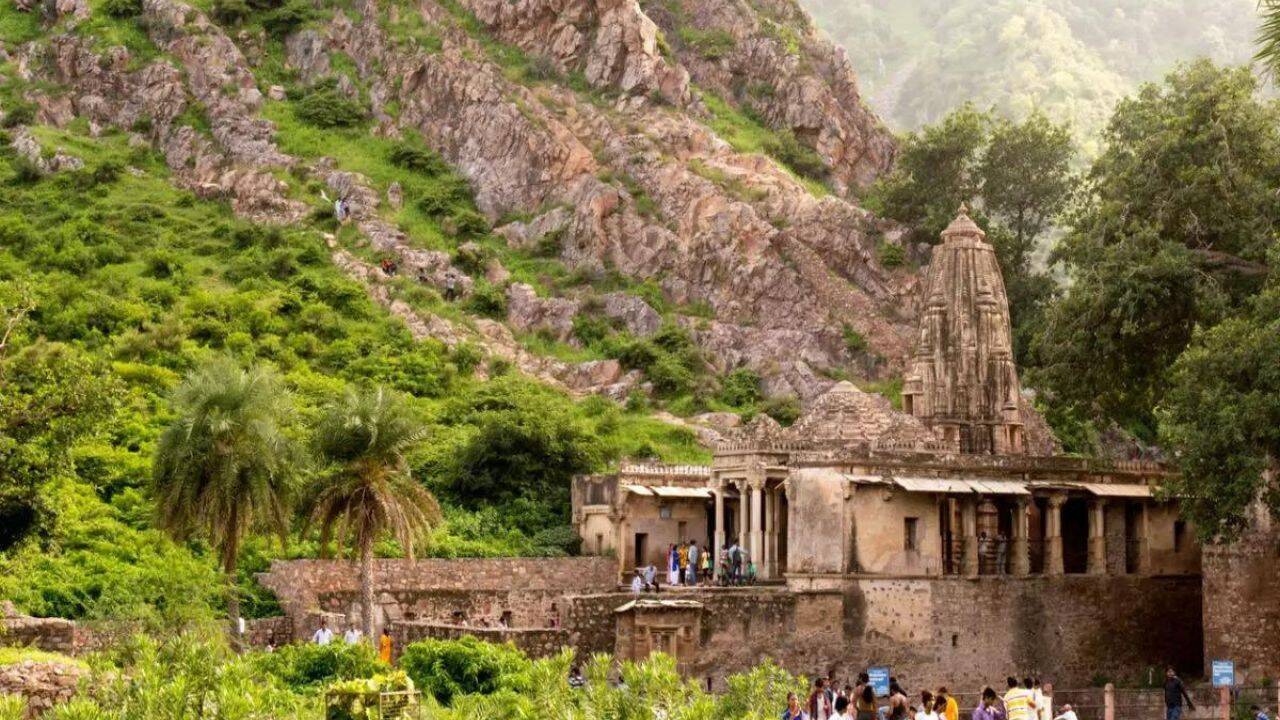
But behind the ghost stories of Bhangarh Fort lies a mix of history, psychology and science.
If a building’s shadow reached his residence, he warned, the town would be destroyed.The legend says Madho Singh’s grandson Ajab Singh ignored the warning and increased the height of the fort, causing its shadow to fall on the sadhu’s home. The town was then said to have faced destruction.Another popular tale is linked to Princess Ratnavati, known for her beauty. According to the story, a wizard who fell in love with her tried to use black magic through a love potion. The princess discovered the plan and threw the potion away. The spell allegedly caused a boulder to roll towards the wizard and kill him, but before dying he cursed Bhangarh.The legend says the kingdom was later attacked, and its inhabitants, including the princess, were killed.Because of these stories, visitors are not allowed inside the fort before sunrise or after sunset. Authorities have said the restriction is linked to safety concerns, including wildlife in the area.
Visitors report strange experiences
Even today, many visitors claim they feel unusual sensations inside Bhangarh.Some report hearing footsteps.

Others describe seeing shadows or feeling sudden fear and anxiety. But scientists have suggested that such experiences may have explanations beyond the supernatural.
The science behind ‘haunted’ experiences
One theory often discussed is infrasound.Infrasound refers to extremely low-frequency sound waves below the range of normal human hearing. Wind passing through ruins, tunnels, caves and rocky landscapes can naturally create such vibrations.This means people may experience genuine physical reactions even without the presence of anything paranormal.Another explanation is psychological priming.When people enter a place expecting ghosts, the brain becomes more alert to every sound and movement. A creaking door, a moving shadow, a bat flying nearby or a sudden temperature change can be interpreted as something supernatural.
Vic Tandy’s infrasound theory
British engineer Vic Tandy studied the connection between infrasound and reported paranormal experiences.In his 1998 paper, “The Ghost in the Machine”, co-authored with Tony R. Lawrence and published in the Journal of the Society for Psychical Research, Tandy described an experience where he felt a “presence” in a laboratory.His investigation later identified a low-frequency sound wave of around 19 Hz, which he suggested could contribute to unusual sensations and visual effects.Tandy later examined another location in his 2000 work, “Something in the Cellar”, where people had reported apparitions, and again explored the possible role of infrasound.His work became one of the scientific explanations often cited in discussions about why some places feel haunted, though researchers continue to debate the strength and limits of the evidence.
Other possible factors
Bhangarh is located in Rajasthan’s Alwar district, an area classified under Seismic Zone IV, considered a high damage risk zone.Experts have also discussed the possible role of environmental factors, including vibrations, geological conditions and electromagnetic fields. Some theories suggest that strong electromagnetic fields may influence brain activity and contribute to unusual sensations, though their connection to paranormal experiences remains debated.
Is Bhangarh actually haunted?
India’s famous paranormal investigator Gaurav Tiwari investigated thousands of locations, including Bhangarh Fort. According to accounts of his investigation, he did not find evidence that the fort was haunted.

Image Credit: Indian Paranormal Society/ Youtube
Local officials, guides and residents have also said that the fort is not haunted. They have pointed out that the area becomes unsafe after sunset because of wild animals rather than ghosts.