









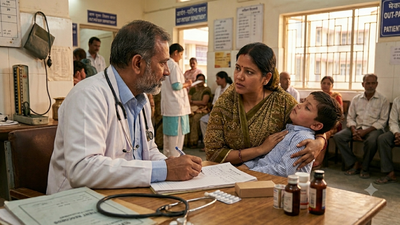
Every year in India, the arrival of the monsoon triggers two things at once: a collective sigh of relief from the summer heat, and a quiet, steady surge in hospital visits. The symptoms are familiar to anyone who’s lived through a bad monsoon season. The sudden stomach cramps, the diarrhea that comes from nowhere, the vomiting that leaves you exhausted and dehydrated. Most people attribute these to something they ate. But the story of why this keeps happening, season after season, is a little more layered than a bad batch of street food.
A perfect storm for bacteria
High humidity, standing water, and fluctuating temperatures create exactly the kind of environment that bacteria, viruses, and parasites need to grow fast and spread faster. “The rainy season brings some much-needed relief from the heat of summer,” says Prof. Dr. S M Fayaz, Lead & Senior Consultant, Internal Medicine, KIMS Hospitals, Mahadevapura, Bengaluru. “However, it also provides a perfect climate for disease-causing microorganisms to grow and spread.“That growth happens in food that’s stored without adequate cooling. In produce that’s been sitting out. In water that looks clear but has been contaminated somewhere along its path to your glass. “Any food not stored correctly, not completely cooked, or contaminated in any way can become a place for bacteria to multiply and will be very susceptible to getting contaminated during the rainy season,” Dr. Fayaz explains. The examples he gives are things most people encounter without a second thought: “Street vendors serving food from dirty locations, cut fruits being sold from carts, unwashed raw salads, and dairy products that are not kept at the right temperature could all be at risk of contamination during the monsoon season.”
The numbers behind the season
India’s track record with monsoon-linked illness is sobering. Nearly 70% of all disease outbreaks reported by the Ministry of Health and Family Welfare are waterborne, many reports have cited and their incidence continues to rise with intensifying rainfall patterns. A 2025 analysis published in the Journal of Hazardous Materials Advances, which examined disease outbreak data from India between 2017 and 2023, found that nearly 4,400 outbreaks linked to foodborne and waterborne disease were reported by the Integrated Disease Surveillance Programme during that period, involving more than 200,000 infected persons, with outbreaks showing a second clear peak during the monsoon season attributable to rainfall. The research also noted that nearly 50% of all disease outbreaks in India stem from foodborne and waterborne infections.The cholera data tells a specific seasonal story too. A systematic review of cholera outbreaks in India from 2011 to 2020 found that outbreaks occurred throughout the year but exploded with the monsoons between June and September, with contaminated drinking water and food, inadequate sanitation, and open defecation identified as the main drivers.

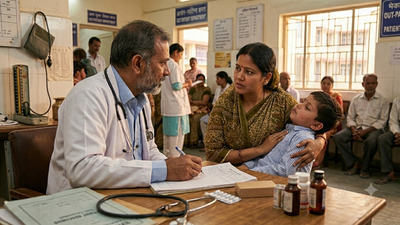
Image: AI
Individually, the burden is enormous. An estimated 37.7 million Indians are affected by waterborne diseases annually, with 1.5 million diarrheal deaths in children. These aren’t abstract statistics. Behind them are children who didn’t survive a preventable infection, families who lost working days, and a healthcare system that absorbs an enormous seasonal spike it has to manage every single year.
What’s getting into the water
One of the less visible risks of the monsoon is the effect heavy rain has on drinking water infrastructure. Dr. Fayaz is direct about this: “Heavy rains can result in sewage and other contaminants getting into the drinking water supply, thus increasing the risk of developing an illness such as gastroenteritis, typhoid, cholera, or hepatitis A and hepatitis E.” And then there’s the detail that tends to surprise people: “Even water that appears to be clean may contain microorganisms if it were not appropriately filtered or boiled.“This is particularly relevant in Indian cities where piped water infrastructure is aging and sewage lines often run adjacent to water pipelines. A study published in Scientific Reports examining water quality and diarrheal disease patterns across urban and rural sites in Tamil Nadu found that piped distribution systems showed high seasonal fluctuations in water quality during the monsoon. The visual cleanliness of water, in other words, tells you almost nothing about its microbial safety. Clear water can carry typhoid. It can carry hepatitis A. It can look fine and make someone critically ill.
Who gets hit hardest
Dr. Fayaz identifies the groups that need to be most careful during the monsoon. “These include young children, old adults, pregnant women, and people with compromised immune systems. In these cases, even a relatively harmless infection of the intestines might sometimes lead to infections requiring urgent medical help.” A common stomach bug that an otherwise healthy adult might shake off in a day or two can become a medical emergency for a young child who gets severely dehydrated, or for an elderly person whose body can’t mount the same recovery response.
What prevention actually looks like
Dr. Fayaz’s advice on prevention is practical. “The prevention of these infections primarily rests upon good food and water hygiene practices,” he says. “The need for boiled, filtered, or purified water is essential. These meals, which are prepared from scratch, should ideally be served hot and freshly cooked, while reheated meals should be eaten less frequently. Fruits and vegetables need to be washed very clean before eating. Raw foods or foods that are slightly cooked should be eaten as little as possible.”On hand hygiene: “Hand hygiene is also part of the equation and is very important especially before meals and after using the restroom.” And on the temptation of street food, which tends to peak during the festive energy of the monsoon season: “Consumption of street food is to be restricted during the monsoons, as that could lead to infections through contaminated ingredients, water, or cooking surfaces.”He is equally clear on when to stop self-managing and see a doctor. “Vomiting, diarrhoea, or any fever should be treated by a doctor, especially in cases of continual sickness.” Dehydration from persistent diarrhea moves fast. Waiting it out isn’t always an option.The rains, as Dr. Fayaz puts it plainly, “demand more vigilance in food safety. Simple hygienic practices and wise food choices together can nip most stomach infections in the bud in the monsoon season.” That’s not a dramatic ask. It’s just the kind of attention that a season this medically loaded requires from all of us.Medical experts consulted This article includes expert inputs shared with TOI Health by: Prof. Dr. S M Fayaz, Lead & Senior Consultant, Internal Medicine, KIMS Hospitals, Mahadevapura, BengaluruInputs were used to explain monsoon illnesses prevalent in India and how to stay safe.