








For centuries, engineers and historians have puzzled over one of the greatest mysteries of the ancient world. Why have Roman buildings survived earthquakes, storms and nearly two millennia of wear while many modern concrete structures begin to crack and deteriorate within decades? Researchers at the Massachusetts Institute of Technology (MIT) now say they have uncovered the clearest evidence yet behind this extraordinary durability. By analysing an unfinished Roman construction site preserved in Pompeii, the team confirmed that a unique building technique using volcanic ash and quicklime created a form of concrete capable of strengthening itself over time and even repairing its own cracks. The findings, published in Nature Communications, could help inspire a new generation of stronger and more sustainable building materials.
How Pompeii helped MIT scientists solve the ancient Roman concrete mystery
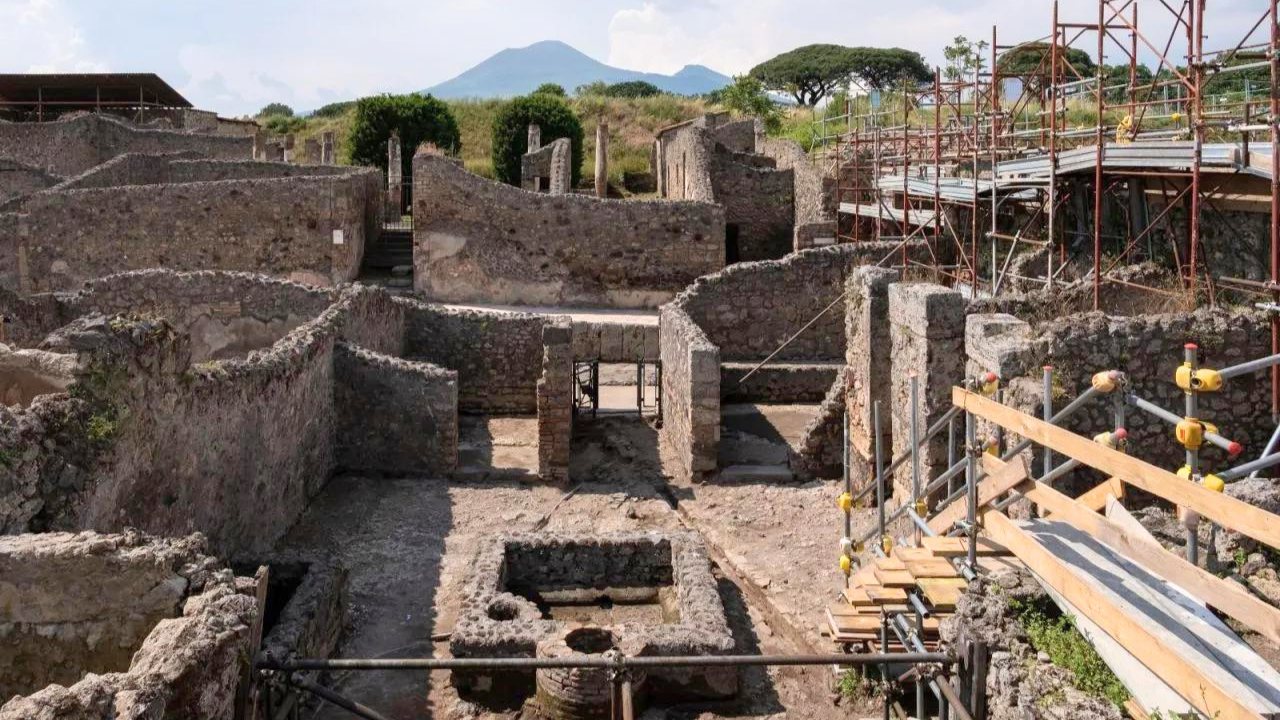
The breakthrough came from an excavation at Domus IX 10, 1 in Pompeii, the ancient Roman city buried beneath volcanic ash after the eruption of Mount Vesuvius in AD 79. Unlike previous research, which focused on completed monuments such as the Pantheon or Roman harbours, this site preserved a construction project frozen midway through the building process.Researchers examined piles of raw construction materials, partially completed walls, stone blocks awaiting installation and mortar at different stages of preparation. The unfinished site effectively acted as a time capsule, allowing scientists to reconstruct how Roman builders actually prepared and applied their concrete rather than relying solely on finished structures or historical descriptions.“This is the first time we have been able to directly observe Roman concrete production in progress through archaeological evidence,” the researchers noted, describing the excavation as a unique opportunity to connect ancient construction practices with modern materials science.
The secret ingredient came from volcanic ash near Naples
At the heart of Roman concrete is pozzolan, a fine volcanic ash named after the town of Pozzuoli near Naples. Rich in silica and alumina, pozzolan reacts chemically with lime and water to produce exceptionally durable cementitious compounds.The MIT team confirmed that Roman builders mixed dry quicklime, volcanic ash and aggregates before adding water in a process known as hot mixing. Unlike conventional methods, adding water to quicklime generates intense heat, accelerating chemical reactions and creating a stronger internal structure.This process also preserved tiny pockets of highly reactive lime within the hardened concrete, something scientists now believe was intentional rather than accidental.
The concrete could repair its own cracks
One of the most remarkable discoveries involves the small white fragments scattered throughout Roman concrete, known as lime clasts. For decades, archaeologists assumed these were evidence of poor workmanship or incomplete mixing.The new study turns that assumption on its head.When tiny cracks develop, rainwater or groundwater enters the concrete and dissolves the lime clasts. The dissolved lime then recrystallises into calcium-rich minerals that naturally fill the cracks before they can grow larger.According to the researchers, this built-in self-healing mechanism helps explain why many Roman buildings, bridges and sea walls remain structurally sound after nearly 2,000 years of exposure to the elements.As MIT Associate Professor Admir Masic, one of the study’s lead authors, explained:“Roman cement is durable, it heals itself, and it’s a dynamic system. We want materials that regenerate themselves.”
Pompeii confirms a theory first proposed in 2023
The findings also validate a hypothesis first put forward by the MIT team in 2023. At the time, laboratory experiments suggested that hot mixing and lime clasts were responsible for Roman concrete’s exceptional durability, but direct archaeological proof was lacking.The Pompeii excavation has now supplied that missing evidence.Researchers found construction materials that had already been dry-mixed with quicklime before water was added, exactly matching the manufacturing process proposed in their earlier work. The evidence suggests that Roman builders deliberately engineered their concrete to become more resilient over time rather than simply relying on high-quality raw materials.
Why the findings differ from ancient Roman texts
Much of what historians know about Roman construction comes from Vitruvius, the Roman architect and engineer whose treatise De Architectura remains the most important surviving ancient manual on architecture.His writings have traditionally been interpreted as describing the use of slaked lime. However, the Pompeii evidence points towards builders using dry quicklime during hot mixing.Rather than contradicting Vitruvius, researchers believe the difference may reflect translation ambiguities, editorial changes over centuries or regional variations in Roman building practices. They also note that Vitruvius described heat being generated during construction, a detail that aligns well with the newly confirmed hot-mixing process.
Why Roman concrete still outperforms many modern materials
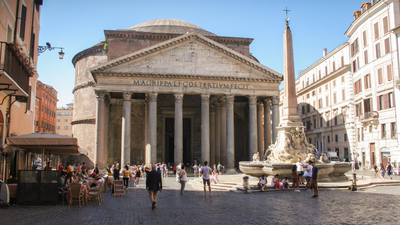
Modern concrete is incredibly strong under compression but often weakens over time because of corrosion, water infiltration and repeated freeze-thaw cycles. Repairs and replacement can become necessary within a few decades, especially in harsh environments.Roman concrete, by contrast, was designed to evolve after construction. Instead of remaining chemically inactive, it continued reacting with water throughout its lifespan, enabling damaged sections to regenerate naturally.This explains why structures including the Pantheon, Colosseum, Roman aqueducts and ancient Mediterranean harbours have endured for centuries despite earthquakes, coastal erosion and changing climates.
Ancient engineering could help solve a modern climate challenge
The implications extend far beyond archaeology.Concrete production is responsible for roughly 7 to 8 per cent of global carbon dioxide emissions, largely because manufacturing Portland cement requires extremely high temperatures. Scientists believe that understanding Roman construction techniques could help create future concrete that lasts significantly longer while requiring fewer repairs and less replacement.Longer-lasting infrastructure would also reduce demand for fresh cement production, lowering emissions over the lifetime of buildings and bridges.“We want materials that regenerate themselves,” Masic said, highlighting the team’s broader goal of developing construction materials inspired by ancient engineering but adapted for modern sustainability needs.
A 2,000-year-old lesson for the future
The study, published in Nature Communications, demonstrates that one of history’s greatest engineering achievements was not the result of luck but of carefully refined materials science. The Pompeii excavation provides the strongest evidence yet that Roman builders intentionally used hot mixing to create self-healing concrete capable of surviving for millennia.What began as an archaeological investigation has now become a blueprint for future innovation. As engineers search for cleaner, stronger and more resilient building materials, the answers may lie not in the latest technology, but in construction techniques perfected by the Romans more than 2,000 years ago.