





A crash Beijing cannot easily explain
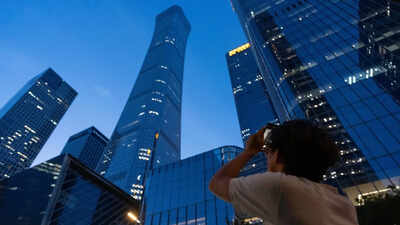
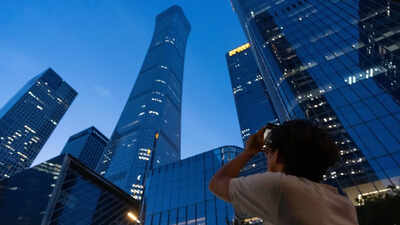
On the evening of June 26, a small aircraft hit CITIC Tower, Beijing’s tallest skyscraper, in the capital’s central business district. The pilot was killed in the crash. The physical damage was limited: Shattered glass, debris falling to the street and a scar on one of China’s most recognisable modern buildings. The political damage is harder to measure.What is known is stark enough. Beijing authorities said a single-engine, two-seat light aircraft struck a high-rise building in Chaoyang district at about 5:55pm. The pilot, the only person on board, was killed. Thirteen others were injured and treated. The official statement did not name the building, the pilot, the aircraft operator or the cause. It only said the matter was under investigation.Flight-tracking and media reporting filled in some of the blanks. Reuters reported that Flightradar24 data identified the aircraft as an Aurora SA60L with the registration B-12PP. The plane had flown from Beijing’s northeastern suburbs before approaching downtown, with tracking ending in Chaoyang, where CITIC Tower stands.
Why the flight path matters
That route is the heart of the mystery. Beijing is not just another capital city. It is the political nerve centre of China, guarded by layers of police, surveillance, restricted zones and airspace controls. Zhongnanhai, the Communist Party leadership compound where Xi Jinping works and where top leaders live, is only a short distance from the crash site.The Financial Times reported that the aircraft flew to within about 7km of Zhongnanhai before crashing into CITIC Tower, also known as China Zun. The FT called the incident one of the most high-profile security breaches in China’s capital in years.So the central question is not only why the plane crashed. It is how it was able to get so far into one of the world’s most tightly controlled urban spaces.Was it pilot error? Mechanical failure? A deliberate suicide attack? No public evidence has established any of these. Authorities have not said whether the aircraft had permission to fly, whether the pilot was in distress, whether the plane entered prohibited airspace, or whether civil or military systems detected it in time.
The silence became part of the story
The government’s response quickly became almost as important as the crash itself. The FT reported that after the plane hit CITIC’s headquarters, employees were ordered not to speak about the incident. According to the FT, staff were told not to talk to anyone about what had happened.The BBC reported that China published only a brief official account and that dramatic footage of the crash was scrubbed from the internet. It also reported that even unrelated photos and memes of CITIC Tower disappeared from Chinese social media platforms.That censorship created an information vacuum. In China, politically sensitive events are often controlled through delayed statements, narrow wording and the removal of online discussion. But this case was especially sensitive because it touched on something the state works hard to project: competence, order and total control over the capital.Manya Koetse, who runs the Eye on Digital China newsletter, told the BBC: “This is a highly unusual incident.” She added that it called into question government competence and threatened “important party narratives”.
A symbolic target , even if not an intentional one
CITIC Tower is not an obscure building. At 528 metres, it is Beijing’s tallest skyscraper and the headquarters of a major state financial conglomerate. Its curved shape is inspired by a zun, an ancient Chinese ritual wine vessel, which is why the tower is widely known as China Zun.That symbolism matters. A small aircraft striking such a landmark in the middle of Beijing is embarrassing even if the crash turns out to have been accidental. It suggests that an aircraft could penetrate the capital’s defensive envelope and hit a major building before being stopped.The FT quoted Minxin Pei, a professor of government at Claremont McKenna College, saying: “I think it’s unprecedented.” He added: “It shows a huge lapse in security and I think some heads will roll.”That is likely to be one immediate consequence. In China’s political system, security failures near the leadership compound are rarely treated as routine operational mistakes. They become questions of vigilance, discipline and political responsibility.
Accident or attack?
For now, there is no public basis to say the crash was a deliberate attack. The most careful answer is that the cause remains unknown. Reuters reported that authorities were still investigating, while the FT and BBC both noted that officials had not said whether the incident was accidental or intentional.The aircraft was also small. Reuters described it as a two-seat, single-engine Aurora SA60L. In aviation terms, this was not a passenger jet or a heavy aircraft. But in security terms, that does not make the incident harmless. A low, slow, light aircraft can still cause panic, damage property and expose weaknesses in detection and response systems.The BBC quoted Raymond Kuo, vice-president of research at the Chicago Council on Global Affairs, saying the incident could have been caused by pilot error or mechanical failure, but could also “potentially have been intentional”.That uncertainty is exactly why the silence is so damaging. Without a credible public explanation, speculation fills the gap.
The air-defence embarrassment
The crash also raises questions about the relationship between civilian aviation regulators and military air-defence authorities. Beijing falls under tight civil aviation controls, and its political core is subject to even stricter restrictions. The FT reported that the city’s inner prohibited zone is supposed to trigger warnings and possible military response if entered.James Char, an expert on China’s armed forces at Singapore’s S Rajaratnam School of International Studies, told the FT: “Before this event, most of us wouldn’t imagine this to be possible at all — we would imagine the defence of Beijing to be impregnable.” He also said: “I’m not sure even whether the PLA was able to detect this slow, low-flying aircraft.”That is a serious point. Modern air-defence systems are often designed around faster, larger or more clearly hostile threats. A small civilian aircraft at low altitude may be harder to classify and harder to respond to, especially over a dense city where shooting it down could create more casualties.
Why the timing is politically sensitive
The timing adds to the pressure. The crash came just before the Communist Party’s 105th anniversary on July 1 and ahead of the next party congress in 2027, when Xi Jinping is expected to consolidate another term and oversee a new leadership line-up. The FT reported that analysts believe the fight over responsibility could feed into political jockeying among senior officials.It also comes during a period of intense scrutiny inside the People’s Liberation Army. The FT connected the crash to broader purges and personnel changes in the PLA, arguing that senior officers could face pressure if the incident is judged to reflect insufficient vigilance.
The bigger tension: Security versus low-altitude growth
There is another policy problem. China wants to develop a huge “low-altitude economy” involving drones, flying taxis, electric aircraft, logistics and sightseeing flights. State-linked reporting has cited the Civil Aviation Administration of China forecasting that the sector could reach 3. 5tn yuan by 2035.But that ambition runs straight into Beijing’s security instincts. The more China encourages low-altitude aviation, the more it must manage the risk of small aircraft moving through crowded cities and sensitive zones.After the crash, the FT and BBC reported that some light aircraft operations were suspended or restricted. That points to the likely policy response: tighter controls, more scrutiny of flying schools and perhaps new detection systems around Beijing.
What really happened?
What really happened is this: a small aircraft flew from Beijing’s outskirts into the capital’s core and struck the city’s tallest building, killing its pilot and injuring 13 people. What has not been explained is why it happened, whether it was accidental or deliberate, and why existing controls did not prevent it.Until Beijing provides a fuller account, the crash will remain more than an aviation incident. It is a political embarrassment, a security warning and a reminder that even a state built around control cannot always control the skies above its own capital.(With inputs from agencies)