









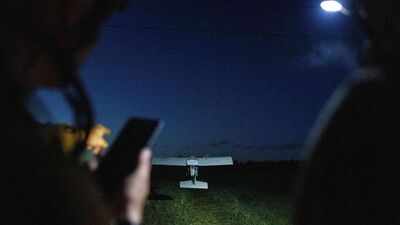
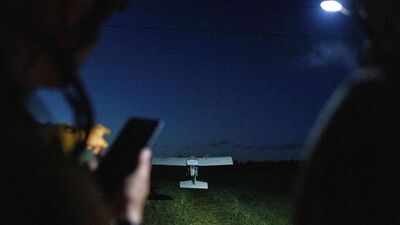
Russia has begun deploying powerful electronic jamming systems to disrupt Ukraine’s use of Elon Musk’s Starlink satellite internet network, marking a new phase in the technological battle between the two sides as the war increasingly shifts towards drone warfare.The move is aimed at weakening Ukraine’s long-range drone strikes, which rely heavily on Starlink to maintain communication between pilots and drones operating deep inside Russian-held territory, reported news agency Reuters. Ukrainian commanders say Moscow is also disguising military supplies inside civilian vehicles and changing logistics routes to reduce the effectiveness of Kyiv’s growing drone campaign.According to Ukrainian drone commanders and pilots who spoke to Reuters, Ukraine’s development of so-called “mid-strike” drones has significantly altered the battlefield. These drones can accurately hit military targets located dozens of kilometres behind the front lines at relatively low cost, disrupting Russian supply chains, fuel depots, air defence systems and command centres.Most of these operations are conducted using Starlink, SpaceX’s satellite internet service, which enables drone operators to maintain communications over long distances. The system had previously been regarded as largely resistant to electronic interference.However, Ukrainian officials say Russia is now attempting to change that.According to the commanders, Russian forces have installed advanced electronic warfare systems near towns and military installations to interfere with Starlink signals and disrupt drone operations.
Volna Kupol Garant vs Starlink
Serhii Beskrestnov, an adviser to Ukraine’s defence ministry, said Russia was deploying a jamming system known as the Volna Kupol Garant.He said the system emits a signal powerful enough to destabilise Starlink connectivity across an area of around 20 square kilometres and added that Ukrainian forces had identified about 10 such systems so far. The jamming installations have themselves become priority targets for Ukraine.The 422nd Unmanned Systems Regiment, operating in Ukraine’s southern Zaporizhzhia region, said it had participated in attacks against two of the systems. One of them was reportedly destroyed only hours after being detected during a joint operation with Ukraine’s SBU security service.Video footage of one strike showed a large explosion after a Ukrainian drone hit a site containing six large trailer-like units believed to house the jamming equipment.“As soon as we struck that installation, our Starlink-equipped (drones) flew without problems,” said a crew commander who uses the callsign “Dyryhent”.
Ways Russia avoiding aerial surveillance
Alongside electronic warfare, Ukrainian commanders said Russia has adapted its logistics network to make military supplies harder to detect and destroy. According to the commanders, fuel and military equipment are increasingly being transported in civilian vehicles, while convoys are using smaller roads to avoid aerial surveillance. Fuel tankers are also being escorted by pickup trucks fitted with machine guns.“We hit water tankers and the tankers were burning because there was gasoline inside,” Kolesnyk said. “We’ve hit painted-up milk trucks that had diesel fuel in them.”Ukraine’s military intelligence also told Reuters that Russian forces were using civilian cars, quad bikes and motorcycles to transport fuel, ammunition and other supplies to frontline positions.Military supplies are also being concealed inside abandoned buildings, agricultural structures, camouflaged dugouts and even civilian petrol stations, according to Ukrainian intelligence.The growing use of electronic warfare reflects Russia’s efforts to counter one of Ukraine’s most effective battlefield tactics this year.Rob Lee, a senior fellow at the US-based Foreign Policy Research Institute, said Ukraine’s long-range drone campaign had become one of the conflict’s most significant military developments, although Russia was beginning to adapt.“If they scale production of the jammers, they could make it more difficult to conduct the middle-strike campaign,” he said.Despite Ukraine’s growing drone capability, the campaign has not fundamentally altered the course of the war. Russia continues to occupy about one-fifth of Ukrainian territory, while both sides are constantly adapting their tactics as technology becomes an increasingly decisive factor on the battlefield.During Reuters’ visit to the 422nd regiment, one Ukrainian RAM-2X drone missed its intended target, while the surveillance drone monitoring the operation was shot down by a Russian Tor surface-to-air missile system.“At least we know it’s there now,” one crew member said after logging the missile system into Ukraine’s digital battlefield targeting network for future strikes.