






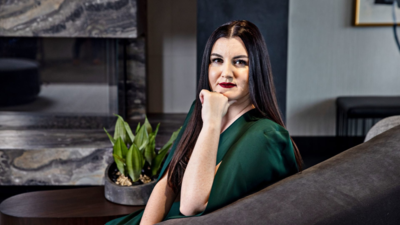
Fidji Simo, CEO of Applications at OpenAI has announced that she is stepping down from her full time role and will transition to being a part-time advisor. This decision from Simo comes after three months of medical leave, during which she realised that her recovery from a chronic illness would require more time and focus than anticipated. “Today, I shared with the OpenAI team that I have decided to leave my full-time role at OpenAI and transition to being a part-time advisor,” she wrote in a post shared on social media platform X (formerly known as Twitter). Simo also revealed that she has lived with this chronic illness for seven years and the recent exacerbation forced her to reassess her priorities. She admitted that despite repeated advice from doctors and colleagues to slow down, she often ignored it. Reflecting on her career, she said: “What I’m learning now is that grit and endurance are not the only skills required to have impact over decades. Sometimes the harder thing is to stop, listen, and trust that taking care of yourself today makes it possible to contribute for much longer tomorrow.”
Fidji Simo’s career journey and purpose
Before joining OpenAI, Simo held senior roles at Facebook and later became CEO of Instacart. She described her OpenAI role as one her career had been building toward, making the decision to step back especially difficult. Yet, she emphasized that her experience has strengthened her conviction about the importance of AI in solving real-world problems, particularly in healthcare.
Read Fidji Simo’s complete post here
Today, I shared with the OpenAI team that I have decided to leave my full-time role at OpenAI and transition to being a part-time advisor.Three months ago, I had to go on medical leave after a severe exacerbation of a chronic illness I’ve lived with for seven years. During that time, it became clear that the road to recovery would be much longer and more complex than I had anticipated—and that I needed to focus on it fully.When I went on leave, many people told me I was courageous for prioritizing my health. The truth is that I am only making this decision now because I failed to make it many times before.Over the years, doctors, friends, colleagues, and loved ones encouraged me to slow down. Two years after I got sick, Facebook offered me the opportunity to take a full year of medical leave. I didn’t even pause to consider it. I immediately said no. At the time, Zuck told me I should play the long game. I wish I had listened.Looking back, I realize that a lot of what made me successful also made this decision incredibly difficult.I grew up believing that opportunities were precious and that when they appeared, you grabbed them with both hands. That mindset carried me from a small town in southern France to opportunities I never could have imagined. By the time I turned 40, I had already gotten to do more than I’d ever dreamed possible as a kid growing up in Sète.I love building. My work has always given me a deep sense of purpose. OpenAI in particular felt like a role that my entire career had been building toward, which made this decision even harder.But what I’m learning now is that grit and endurance are not the only skills required to have impact over decades. Sometimes the harder thing is to stop, listen, and trust that taking care of yourself today makes it possible to contribute for much longer tomorrow.This experience has also strengthened my conviction about why this work matters.It has been a jarring experience to spend my days helping build the future while simultaneously navigating a disabling disease that still has no cure.Over the last seven years, I’ve spent countless hours in doctors’ offices, dealing with symptoms, treatments, insurance, uncertainty, and all the invisible work that comes with being a patient. Like millions of others living with chronic illness, I’ve experienced firsthand how difficult healthcare can be to navigate, even when you have every possible advantage.More than ever, I believe that some of the most important opportunities for AI lie in helping people solve real problems in their daily lives: their health, their finances, their time and the everyday burdens that shape human experience.In particular, curing disease is the most important thing AI could accomplish. I’m excited to continue working towards cures through OpenAI but also through my work with@ChronicleBioAIand @CODA_research.I’m deeply grateful to@sama,@gdb and the OpenAI board for their support during this time and for offering a way for me to continue contributing to the mission without sacrificing my chances of recovery. I’m also so thankful to my team and the many extraordinary colleagues I’ve had the privilege to build alongside.For now, my focus is recovery. But my belief in the potential of technology to solve deeply human problems has never been stronger.