









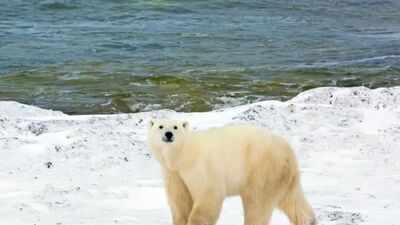
An AI-powered radar system called Bear-dar has successfully detected a polar bear mother and her two cubs near Canada’s High Arctic. The detection gave staff enough time to respond safely and avoid a potentially dangerous encounter.The incident took place at the Environment and Climate Change Canada (ECCC) weather station in Eureka, Nunavut. The Bera-dar alerted staff as the bears approached, following which the staff began to monitor the family’s movements and calmly guided them away using vehicles. The bears then headed back towards the nearby sea ice, their preferred hunting habitat.Eureka is one of the world’s northernmost permanently staffed weather stations and is located on Ellesmere Island in Nunavut, Canada’s High Arctic.The successful detection marks the first confirmed sighting of a polar bear family by Bear-dar at the site. The AI-based system has been developed by Polar Bears International along with Spotter Global to detect approaching polar bears in all weather conditions and at any time of the day.Bear-dar was installed at the Eureka weather station after several years of testing and refinement near Churchill in Manitoba. The Eureka installation is the system’s first deployment in Canada’s High Arctic.As climate change continues to reduce Arctic sea ice, polar bears are spending more time on land increasing the chances of encounters with people. The system aims to reduce these surprise interactions and improve safety for both humans and wildlife.Video released by Polar Bears International shows the mother bear and her two healthy cubs approaching the weather station. The cubs can be seen rolling in the snow, exploring the area and making their way around a fence before the family leaves.“The biggest cause for celebration is that Bear-dar works,” Alysa McCall, Director of Science for Polar Bears International, told BBC Wildlife.
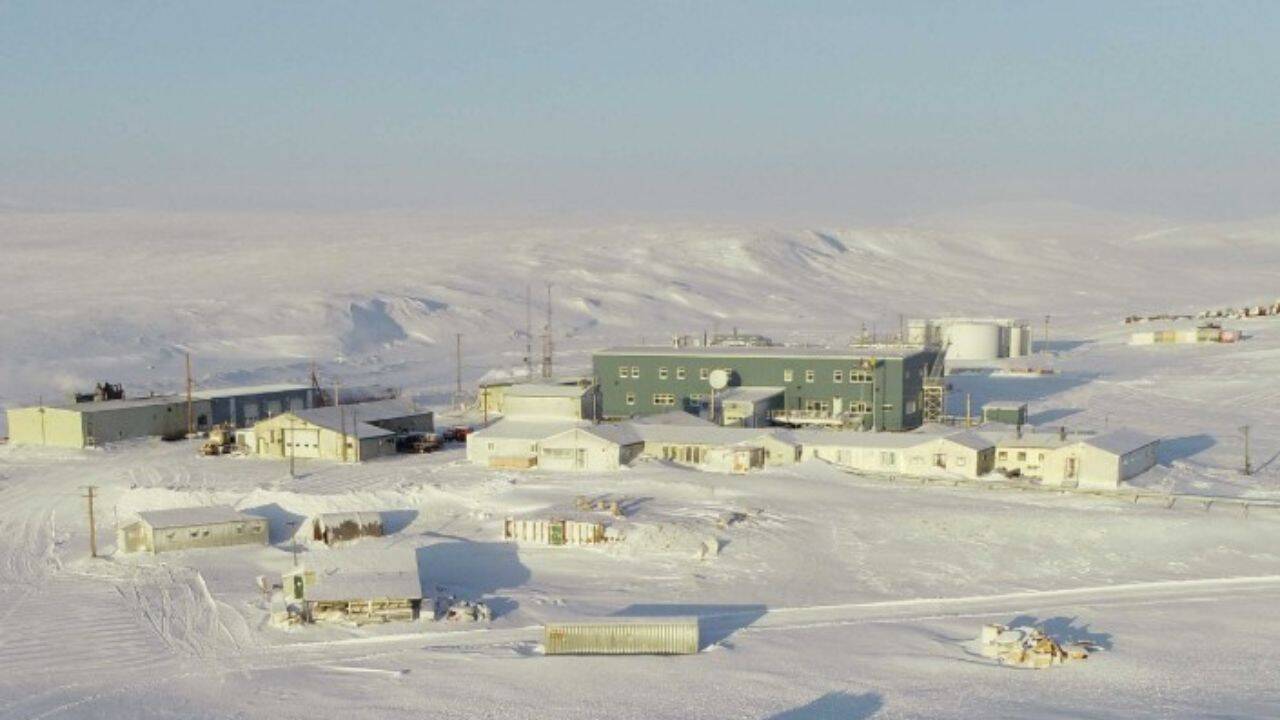
Eureka is one of the world’s northernmost permanently staffed weather stations and is located on Ellesmere Island in Nunavut, Canada’s High Arctic. (Picture source: Nasa)
“It detected wild polar bears in Eureka for the first time, helping station staff raise the alert for the bears’ approach, safely plan their response, and continue to monitor bear activity throughout the day, while avoiding an encounter.”She added, “After years of development, having the radar and camera do their jobs as intended is quite exciting and satisfying. Any time we can potentially add another tool to our bear safety toolbox, it’s a big deal. More bear-safe tools mean fewer negative encounters, keeping people and polar bears separate and safer.”Bear-dar works by tracking movement across the landscape using radar. When it detects an object whose size, speed or movement resembles a polar bear or another unknown large animal, it sends an alert to staff at the station. A workstation emits a continuous beep while the object remains active.If the animal is moving towards the station, the system plays an audible warning saying ‘approaching’. Staff can also view the object’s location on a digital map. A camera linked to the radar attempts to capture images so staff can confirm what triggered the alert, while an outdoor beacon light switches on to warn of large ‘potential wildlife moving near the weather station’.
Do you believe AI technology can play a key role in wildlife conservation efforts?
3k+ users shared opinion today
5k+ users already voted today
3k+ users shared opinion today
The system still needs further refinement. According to the report, it sometimes struggles to distinguish between polar bears and Arctic wolves. Researchers also found that nesting Arctic terns regularly triggered the radar as they flew around the station.“We will work on filtering them out,” Elbert Bakker, Research Support Specialist for Polar Bears International, said.Researchers say future Bear-dar installations will be adapted to local geography, weather conditions, wildlife and human activity. Lessons from the Eureka station are expected to improve the system for use in other Arctic communities. The team also hopes future versions could automatically activate deterrents, such as loud sounds, when a polar bear is detected.