









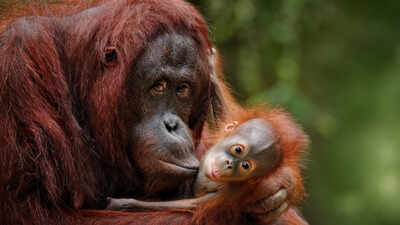
If we’ve learned anything from Mowgli, it’s that growing up in the rainforest is brutally difficult. The same applies to orangutans, except their mothers can’t hire a bear and a panther to help. They do the work themselves.Picture this: a mother in the dense rainforest, navigating thick vegetation for days on end, deliberately steering her infant towards other young orangutans so they can play together. Except the mothers do not have phones or apps to coordinate their schedules. They didn’t pack snacks in a designer nappy bag. Just careful planning, travel, and pure sacrifice. Because this isn’t a scene from the world of affluent Manhattan parenting. It’s the reality of orangutan mothers in Central Kalimantan, Indonesia. This isn’t a scene from a comic book either, but what scientists have recently found. A 15-year study found that orangutan mothers methodically arrange social opportunities for their offspring, even when it costs them energy they can’t spare.
How orangutan mothers go the extra mile for their offspring
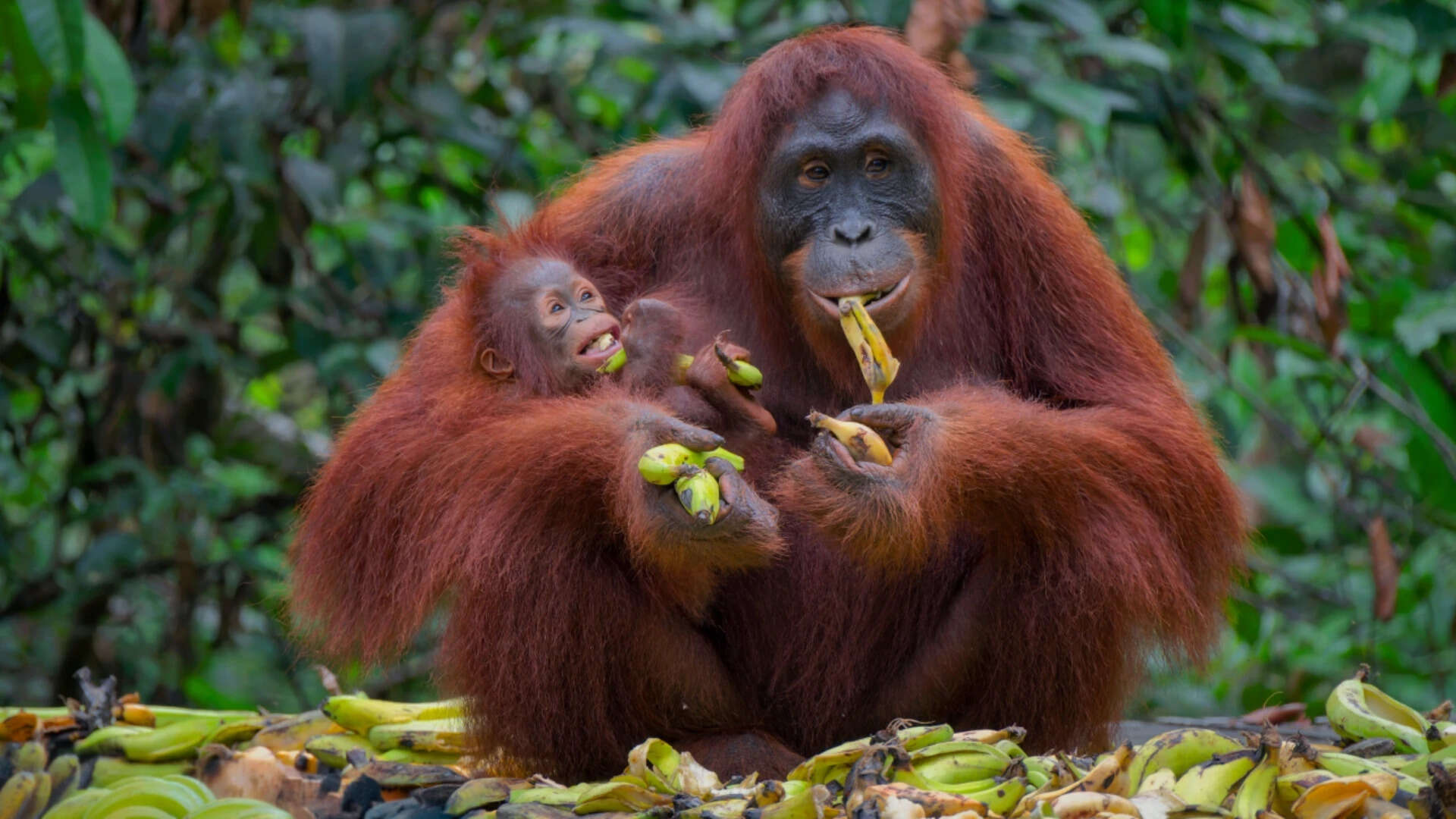
A 15-year study led by Odd T. Jacobson from the Max Planck Institute of Animal Behavior, Germany, revealed how famously solitary apes plan meetings and skip meals so their babies can romp with other orangutan infants. The researchers spent about 30,000 hours tracking 31 mother-and-young pairs, watching how these animals moved through the forest, fed, and socialised. The data revealed a surprising story.Mothers whose infants were similar in age didn’t run into each other by accident in the canopy. Instead, they occupied the same forest patches far more often than would happen by chance. When they did, their babies played together. The pattern was unmistakable once researchers looked for it.“Mothers plan and actively structure social opportunities for offspring. These encounters are planned and actively pursued over multiple days rather than arising by chance,” Odd T. Jacobson said.
The hidden cost of playdates
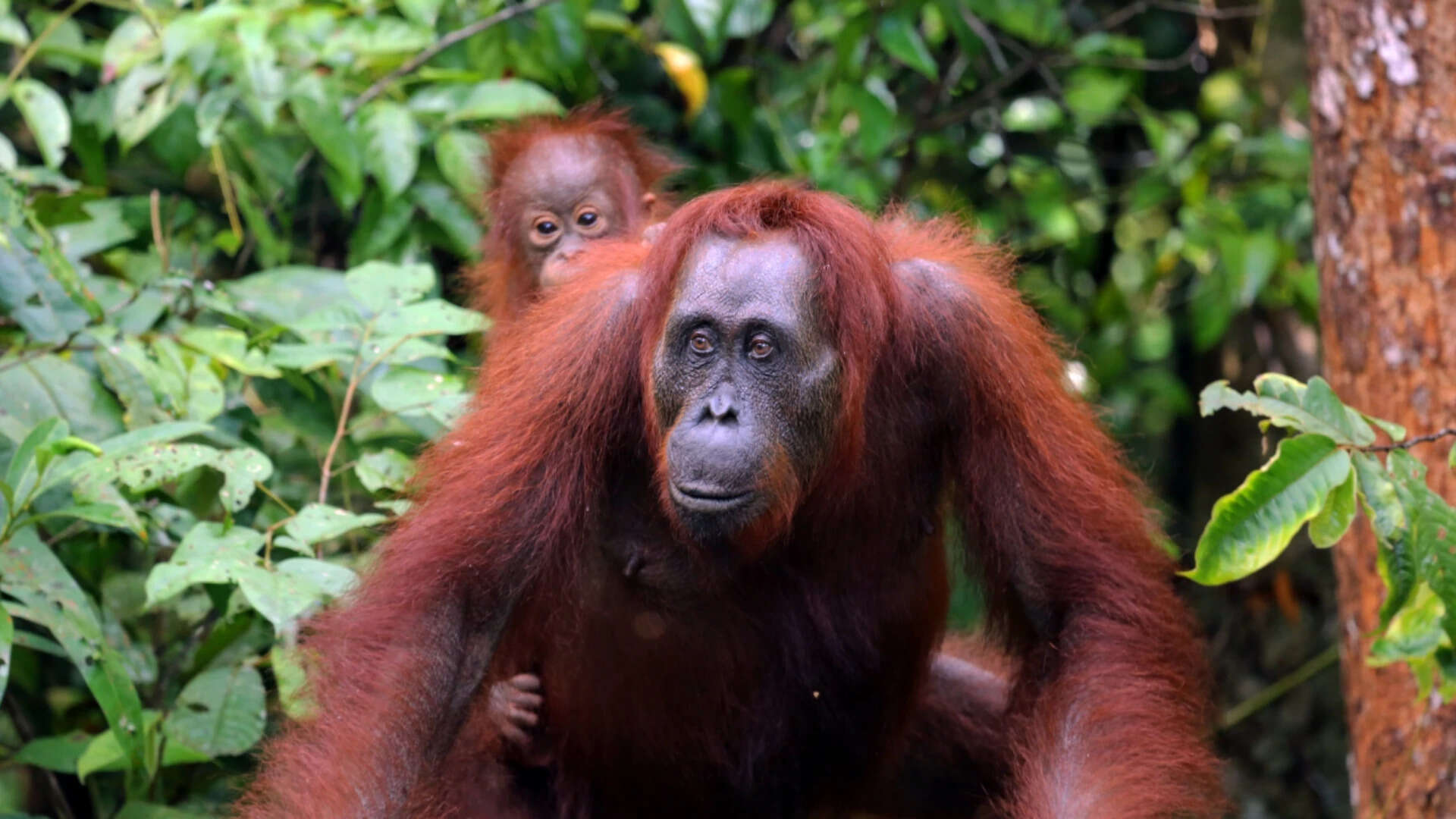
Now, here’s where things get more interesting. On days their young played with peers, mothers travelled significantly farther through the forest and spent less time feeding. These playdates, of course, came at a cost to the mothers. Anything for the children. These mothers were burning calories at a higher rate and eating less. Their children’s social lives came at the expense of their own bodies.“Mothers also incurred energetic costs; on days their offspring played with peers, mothers travelled farther and spent less time feeding. Travel distances were also elevated on the days before and after play, with mothers orienting movement towards play partners’ core areas before play and back towards their own core areas after play. This suggests these encounters are planned and actively pursued over multiple days rather than arising by chance. These findings reveal that orangutan mothers incorporate their infants’ social needs into daily ranging decisions, at a cost to their own energy budgets,” the study revealed.The researchers noted that these behavioural patterns “point towards an underappreciated form of maternal investment”. This pattern shows how the social requirements of development can be met even near the solitary extreme of animal social organisation.
Why these playdates matter
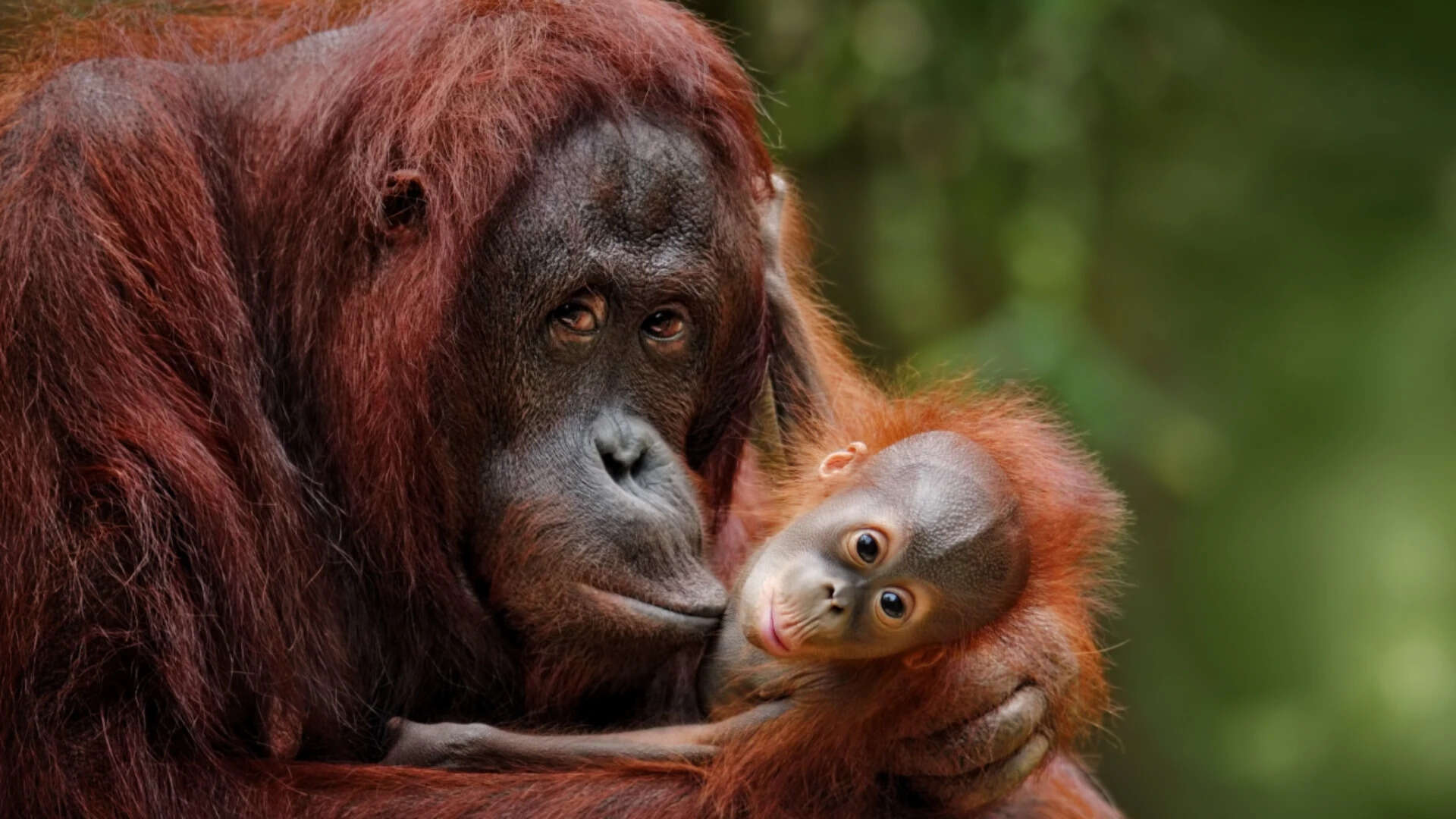
Orangutans live solitary lives compared to other primates. They’re not pack animals like chimpanzees or gorillas. But they’re not completely isolated either, and so their young need to learn social navigation like any mammal. This social interaction comes at the cost of their mothers’ energy.“This represents an overlooked form of maternal investment, extending beyond offspring nutrition and protection to include their social development. Such investment in social play opportunities arises in a species where ecological pressures otherwise favour minimal sociality, suggesting that the need for social experience during development is a deep constraint on mammalian life histories,” the study said.Interestingly, that’s not the only sacrifice orangutan mothers make. They invest between seven and nine years raising a single infant, longer than any other land mammal on Earth except humans. They nurse their young for up to eight years and actively teach them survival skills such as foraging and nest construction. Every developmental stage matters.Arranging playdates, of course, is a significant part of this broader pattern of intensive parenting. It’s another form of maternal investment, one researchers described as previously ‘underappreciated’.
Did you know?
Orangutans are not that different from us. In fact, they are among our closest living relatives, sharing approximately 97% of their DNA with humans. Their intelligence and problem-solving abilities even surprise researchers. Orangutans can recognise and remember dozens of other individuals across their forest range.