







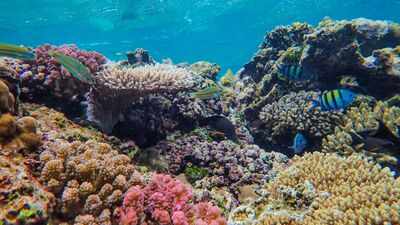
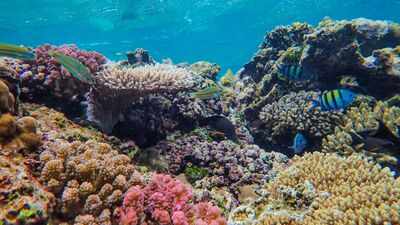
Human activity is changing coral reefs in ways that go far beyond what we can see on the surface. A new study led by researchers at the University of Hawaiʻi at Mānoa shows that the chemicals we release into the environment are actually becoming part of coral tissue itself, and weakening corals’ ability to cope with heat and acidifying oceans.The team found 25 different contaminants from agricultural, industrial and pharmaceutical sources embedded in the soft tissues of corals around Maui, Hawaiʻi. At the same time, in areas more heavily impacted by human activity, corals had lower energy and nutrient reserves, making them significantly less resilient to environmental stress.
Looking inside coral tissues: the metabolome
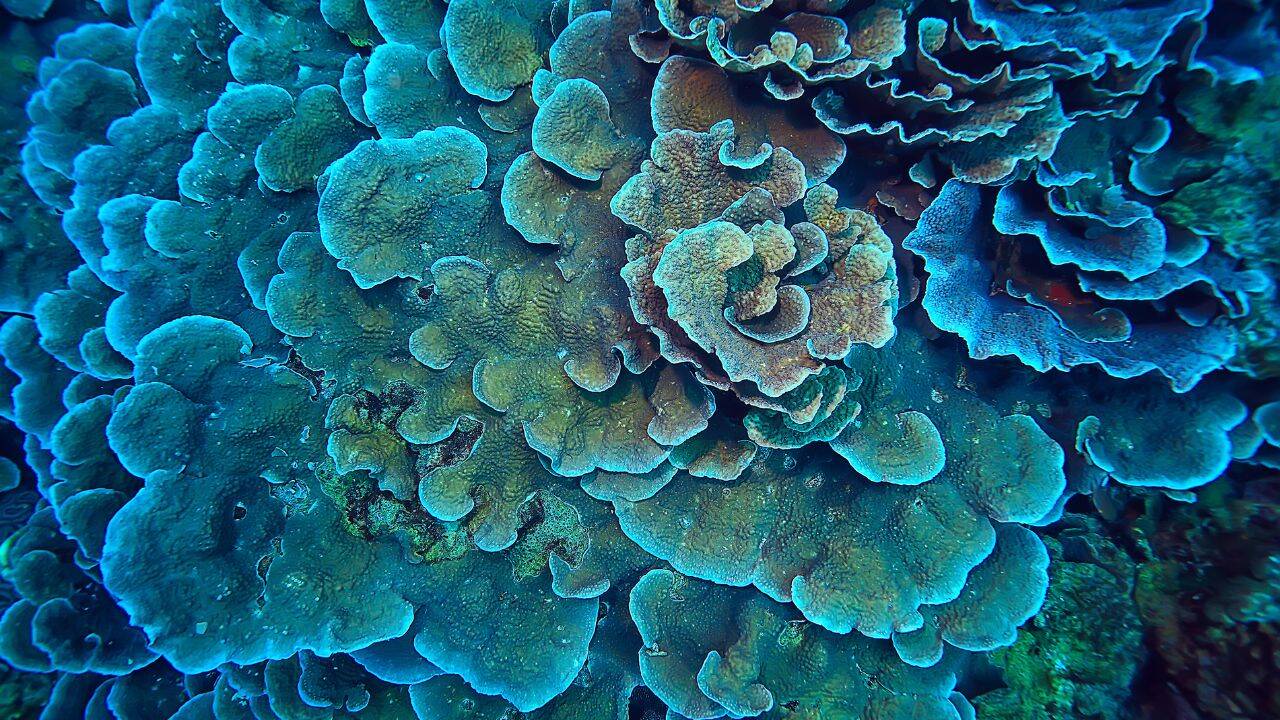
Every coral holds a complex mix of small molecules inside its tissues: things like nutrients, energy compounds, stress chemicals and contaminants. This pool is called the metabolome.The researchers, led by biologist Zach Quinlan from the Hawaiʻi Institute of Marine Biology, set out to see whether these internal chemical fingerprints could tell a story about human impacts. They examined the metabolomes of 380 corals, focusing on two common reef‑building species, namely: Lobe coral (Porites lobata) and Rice coral (Montipora capitata).Samples were collected from 16 sites off west and south Maui, ranging from less disturbed areas to places heavily influenced by land use, runoff and coastal activity.What they found was striking: Where human influence was stronger, through nearby agriculture, urban areas, sewage, or other activities, the composition of the corals’ metabolomes shifted noticeably. Contaminants built up, while the internal “banks” of nutrients and energy declined.Quinlan summed up the significance: Monitoring coral metabolomes could become a powerful tool for tracking the hidden impacts of human disturbance on marine life.
Different corals, same worrying pattern
Representative image
One surprise in the study was how similar the two coral species’ responses were.Lobe corals and rice corals have very different life strategies: they grow in slightly different ways, occupy different microhabitats, and often respond differently to environmental change. Scientists wouldn’t normally expect them to accumulate contaminants or react to stress in exactly the same way.Yet in this case, both species showed almost identical trends: Where human activities were more intense, both had higher contaminant loads in their tissues. Both showed reduced nutrient and energy reserves. Quinlan described this as evidence of just how strong human pressures are: they can override species differences and push very different corals into similar patterns of decline.
Lessons from the 2016 bleaching event
To understand how these chemical changes connect to real‑world coral health, the researchers looked back at historical data from five of their study sites. They examined how coral cover changed after the major 2016 bleaching event, when unusually warm waters caused widespread stress and whitening of corals around Hawaiʻi and beyond.A clear relationship emerged: Sites that suffered the most severe declines in coral cover after 2016 also had the most altered metabolomes in the new study. At these heavily affected sites, corals showed reduced nitrogen and energy reserves, and higher levels of stress‑related chemicals in their tissues.In other words, the metabolome patterns weren’t just abstract lab data; they lined up with real losses on the reef. Corals carrying more contaminants and fewer internal reserves were less able to survive and recover after heat stress.
Two ways human activity weakens coral resilience
Based on their findings, the team proposed two main mechanisms by which human activities can erode coral resilience:Accumulation of human‑made molecules in coral tissuesContaminants from agriculture, industry and pharmaceuticals—such as pesticides, fertilisers, drug residues and chemical byproducts—escape into coastal waters and build up inside coral tissue. These foreign molecules can interfere with normal cellular functions, stress responses and energy use.Constant pressure drains coral energy and nutrientsLiving in a polluted or highly disturbed environment forces corals to spend more of their limited nitrogen and energy reserves on coping with stress: repairing damage, dealing with harmful molecules, and maintaining basic functions under strain. Over time, this leaves them with less capacity to respond when additional stressors hit, such as higher temperatures or more acidic water.“This response to anthropogenic pressure makes the coral less resilient to stressors,” Quinlan explained, as per a report by Phys.org. The study suggests a direct link between human disturbance, contaminant buildup in corals, and coral health, and that link appears consistent across species.
Metabolomes as an early warning system
One of the most promising ideas from the research is using metabolomes as an early warning system for reef health.Instead of waiting until corals visibly bleach or die, scientists could track changes in contaminant loads, nutrient reserves, energy‑related molecules, and stress chemicals inside coral tissues and other seafloor species. Shifts in these internal profiles could reveal growing problems even when reefs look relatively normal on the outside.Megan Donahue, senior author of the study and director of the Hawaiʻi Institute of Marine Biology, emphasised the broader implications: many human‑made contaminants are escaping into marine ecosystems, and their combined effects are undermining the resilience of coastal habitats.
Why this matters for corals and for people
This research adds to a growing body of evidence that coral reefs are being hit from multiple directions at once. Climate change brings warmer and more acidic waters; local pollution introduces chemicals, sediments and excess nutrients; and human activities on land and in the ocean increase stress and reduce recovery time.When corals already have depleted internal reserves and are carrying a burden of contaminants, they are far more vulnerable to bleaching, disease and death. That, in turn, affects the countless species that depend on reefs, like fish, invertebrates, algae, and the human communities that rely on reefs for food, tourism, coastal protection and cultural values.The study underscores an urgent message: to protect both marine and human health, we need to reduce the flow of harmful chemicals and stressors into coastal environments, not just focus on global climate drivers.Looking ahead, Quinlan and his colleagues are now exploring whether they can boost nitrogen and energy reserves in coral tissues under controlled conditions. If increasing those reserves makes corals more resilient to heat and acidification, it could point toward new strategies to support reef survival in a changing world.Thinking about all this, what aspect feels most important to you: the invisible buildup of contaminants inside coral tissues, or the way those chemical changes quietly erode reefs’ ability to withstand future heat and acid stress?Human activities are fundamentally altering the chemical makeup of coral reefs, according to a study led by the University of Hawai’i at Mānoa and published in Nature Communications. The research team discovered that 25 contaminants from agricultural, industrial and pharmaceutical sources accumulated in the soft tissues of corals around Maui, Hawai’i. Additionally, in areas affected by human activities, energy and nutrient availability within coral tissue decreases, making corals significantly less resilient to environmental stressors such as warmer or more acidic waters.“Our findings suggest that monitoring the pool of chemicals within the coral tissues, called metabolomes, can serve as a powerful tool for tracking the hidden impacts of anthropogenic disturbance on marine life,” said Zach Quinlan, lead author and research biologist at the Hawai’i Institute of Marine Biology in the UH Mānoa School of Ocean and Earth Science and Technology, as per the report.Quinlan and an international team of researchers tested the metabolomes of 380 lobe corals (Porites lobata) and rice corals (Montipora capitata) from 16 sites off west and south Maui.They found that human activities both within the adjacent watershed and in the marine ecosystem altered the composition of the corals’ metabolomes. In areas with greater ecosystem disturbance, contaminants accumulated and nutrient and energy reserves in coral tissues decreased.“It was extremely surprising that the metabolomes of both coral species had almost identical trends,” said Quinlan. “These corals have very different life strategies, and we wouldn’t normally expect them to accumulate contaminants or respond similarly to disturbances. This demonstrates how strong a force these anthropogenic activities really are.”
Clues from the 2016 bleaching event
Using historical trends in coral cover from five of the sites they sampled, the team found that the sites with the most severe declines in coral cover after the 2016 bleaching event also had the most affected metabolomes. At more affected sites, nitrogen and energy reserves were reduced, while stress chemicals were enriched.The research team proposed two potential mechanisms by which human activities and contamination of marine environments lead to decreased coral resilience: Firstly, the accumulation of anthropogenic molecules such as pharmaceuticals and industrial byproducts increased pressure from anthropogenic activities requires corals to use portions of their nitrogen and energy reserves.“This response to anthropogenic pressure makes the coral less resilient to stressors,” said Quinlan. “Together, our findings suggest a direct relationship between anthropogenic disturbance, accumulation of dangerous contaminants within corals and coral health that is consistent across species.”Secondly, tracing contaminants through the ecosystem. The researchers propose that monitoring the metabolomes of corals or other coastal seafloor species can be a powerful tool for tracking human impacts on natural ecosystems.“Beyond the implications for coral health and resilience, this study demonstrates how many anthropogenic contaminants are escaping into marine ecosystems,” said Megan Donahue, senior author on the paper and HIMB director. “We see increasing evidence that anthropogenic contaminants have broad cumulative impacts, undermining the resilience of coastal ecosystems.”This study highlights the urgent need to reduce human impacts on the marine environment to protect marine and human health. Looking ahead, Quinlan and the team are searching for ways to enrich coral tissue nitrogen and energy reserves in controlled experiments to determine whether those increases lead to more resilient corals.