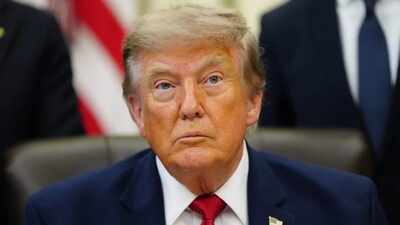










Stock market crash today: Nifty50 and BSE Sensex, the Indian equity benchmark indices, crashed in trade on Wednesday, losing over 1% in intraday trade. Investors turned risk-averse amid the escalating US-Iran conflict, renewed tariff threats from US President Donald Trump and a combination of other global headwinds. BSE Sensex ended the day at 76,755.05, down 715 points or 0.92%. Nifty50 closed at 23,996.25, down 191 points or 0.79%.The broad-based selloff erased nearly Rs 4.25 lakh crore from the combined market capitalisation of BSE-listed companies, bringing the total valuation down to around Rs 480 lakh crore.Pharmaceutical stocks were among the biggest drags on the market after Trump announced a phased tariff framework for imported generic medicines, giving drugmakers a two-year transition period before higher duties come into force.
Why did the stock market crash today?
Iran-US conflict deepensThe conflict between Iran and the United States intensified further after three tankers transporting Saudi crude to Asia reversed course in the Red Sea on Tuesday following alleged threats from Yemen’s Iran-backed Houthi rebelsAlthough US Secretary of State Marco Rubio said on Wednesday that Washington remains willing to negotiate an end to the Iran crisis, he added that Tehran was not demonstrating any serious intent to engage in talks.Crude oil climbs above $92 a barrelOil prices surged to a two-month high on Wednesday amid growing fears of additional supply disruptions following renewed tensions in the Middle East. Brent crude futures traded above $92 a barrel, while US benchmark WTI crude futures climbed past $85 a barrel.In a recent note, Goldman Sachs cautioned that Brent prices could rise to as much as $120 a barrel if disruptions in the Strait of Hormuz continue. However, the investment bank’s base-case scenario still assumes that tensions in the Middle East will eventually ease.Trump’s tariff proposal rattles marketsInvestor sentiment also weakened after US President Donald Trump on Tuesday unveiled a phased tariff proposal for imported generic medicines, reviving concerns over US trade policy following a series of tariff reversals that had unsettled financial markets after he returned to office last year.Under the proposal, imported generic medicines will continue to enter the United States without tariffs for two years beginning August 1. After that, they will be subject to a 100% tariff for one year, followed by a 200% duty.The announcement triggered a broad selloff in pharmaceutical stocks. Shares of Lupin, Piramal Pharma, Glenmark, Cipla and several other drugmakers fell by as much as 4%, dragging the Nifty Pharma index down nearly 2%.Rupee weakens against the dollarThe Indian rupee remained under pressure on Wednesday, opening 11 paise lower at 96.36 per US dollar as the greenback strengthened on the back of rising crude oil prices and increased demand for safe-haven assets.“Elevated energy prices have increased concerns over India’s import bill and inflation outlook, while cautious global sentiment has further weighed on the rupee. Market participants are now focused on the US Federal Reserve’s policy decision on 29 July, which is expected to provide the next major direction for the US dollar and emerging market currencies. Technically, the rupee is expected to trade in the 96.00–96.45 range in the near term,” said Jateen Trivedi, VP Research Analyst of Commodity and Currency at LKP Securities.Treasury yields move higherUS Treasury yields advanced, adding to the negative sentiment in equity markets. The yield on the benchmark 10-year US Treasury note climbed to 4.63%, while the 30-year Treasury bond yield rose to 5.137%. Higher bond yields generally increase the appeal of fixed-income investments, often drawing money away from equities and putting pressure on stock markets.(Disclaimer: Recommendations and views on the stock market, or any other asset classes or personal finance management tips given by experts and analysts are their own. These opinions do not represent the views of The Times of India.)