








An Australian agronomist’s simple idea has transformed one of the world’s driest landscapes into a remarkable environmental success story. According to World Vision, Tony Rinaudo, widely known as the “Forest Maker,” helped farmers in Niger regenerate more than 200 million trees, not by planting new forests but by reviving living tree stumps, dormant root systems and naturally buried seeds beneath the soil. His low-cost approach has restored millions of hectares of degraded farmland while improving food security and livelihoods for millions of people.
A hidden forest beneath the desert
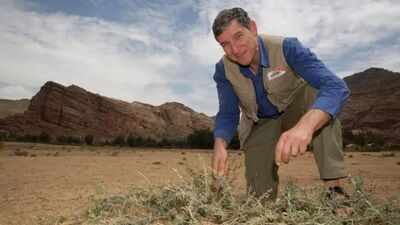
When Tony Rinaudo arrived in Niger in the early 1980s, the West African nation was facing severe drought, desertification and widespread deforestation. Conventional tree-planting projects struggled because newly planted seedlings often died from harsh weather, poor soils and grazing animals.Everything changed during what Rinaudo has described as a “Eureka” moment. While travelling through the countryside, he noticed what appeared to be small desert shrubs. On closer inspection, he realised they were actually shoots growing from living tree stumps and root systems that had survived underground for years.Instead of planting fresh trees, Rinaudo encouraged farmers to protect and carefully prune these natural shoots. By selecting the healthiest stems and removing weaker ones, the underground root systems could channel their energy into growing full-sized trees once again. The technique became known as Farmer Managed Natural Regeneration (FMNR).The approach required very little financial investment because the trees already existed beneath the surface. Farmers simply helped nature recover rather than trying to replace what had been lost.
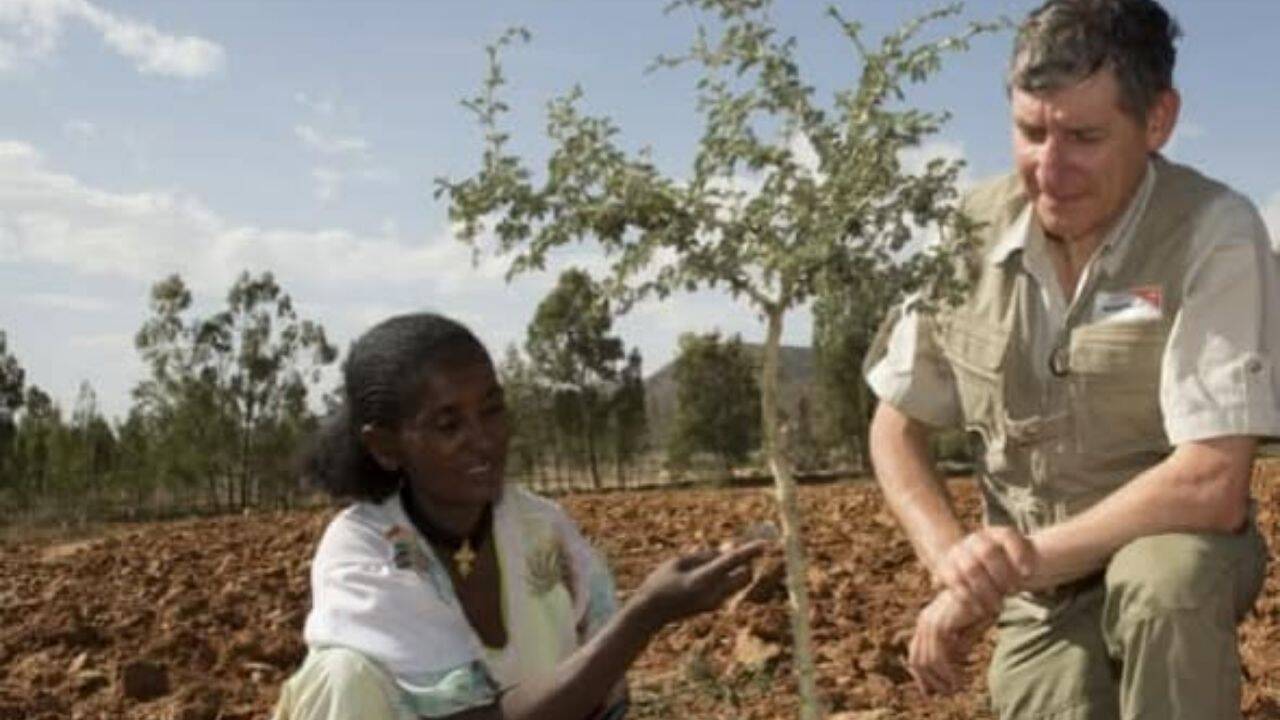
Tony Rinaudo, the Australian agronomist behind the Farmer Managed Natural Regeneration (FMNR) movement (Image Credit: Facebook/ @Australian Embassy, Ethiopia)
How 200 million trees returned
Winning over local farmers was initially difficult. For years, many had believed trees competed with crops for water and nutrients. Rinaudo worked closely with communities, demonstrating that managed trees could actually improve agricultural productivity instead of reducing it.With the adoption of FMNR by many farmers, the impacts could easily be seen. Indigenous trees started regenerating in the agricultural land providing shade, preventing soil erosion and protecting crops from high winds. Leaf litter from the regenerated trees enriched the soil with organic matter, improving soil fertility and helping it retain moisture longer.Over the following two decades, more than 200 million trees regenerated naturally across about five million hectares of farmland in Niger. This regenerated landscape yielded an estimated 500,000 additional tonnes of grain annually, helping provide enough food for at least 2.5 million people. Additional benefits for the farmers were extra firewood, fodder, fruits, and increased income without using costly fertilisers or irrigation systems.Unlike many large-scale reforestation projects, FMNR spread largely through farmers themselves with neighbouring communities adopting the technique after witnessing its success firsthand. Niger’s transformation is one of the world’s most significant examples of large-scale natural forest restoration.
A global model for restoring degraded land
The success in Niger has attracted worldwide attention. Today, FMNR is being practised in dozens of countries across Africa and Asia through organisations such as World Vision. Rinaudo and his collaborators hope the technique can eventually help regenerate one billion hectares of degraded land globally.According to experts, the method offers multiple environmental benefits beyond growing trees. Restored vegetation captures carbon dioxide from the atmosphere, improves biodiversity, reduces land degradation, and increases resilience against droughts and extreme weather. Because the approach relies on naturally occurring root systems instead of costly tree-planting campaigns, it is also significantly cheaper and easier to maintain.Rinaudo’s work has earned international recognition, including the prestigious Right Livelihood Award, often referred to as the “Alternative Nobel Prize.” Yet the greatest achievement may be proving that even landscapes that appear barren can still contain the foundations of a thriving forest.The story of Niger shows that ecosystem restoration does not necessarily require planting millions of new trees. There may be times when the answer is simply understanding the living forests under our feet and allowing nature to heal itself. As climate change and desertification keep endangering ecosystems throughout the world, the amazing transformation of Niger is one of the best cases showing how this can be done.