









MUMBAI: Hindustan Unilever (HUL) will take more price increases in the coming months as shaky peace prospects in West Asia continue to keep commodity costs volatile, the consumer goods giant said on Tuesday.It projected inflation to stay in the range of 2-5% in the Sept quarter. The maker of Dove shampoos and Knorr soups said that demand for soaps, detergents, packaged food and other household staples was stable in the June quarter, pushing growth to a 13-quarter high even though inflation worries weighed on investor sentiment, dragging HUL’s stock price down by nearly 7%—the biggest one-day fall since March 2020, according to Bloomberg estimates.“Overall, we see that the situation continues to remain volatile. Between Sept quarter versus June quarter, we see a sequential inflation, which could range between 2-5%. So, we will continue to take calibrated pricing into the quarter, depending on how inflation pans out,” MD & CEO Priya Nair said in a post-earnings briefing, maintaining that FY27 will be better than FY26.
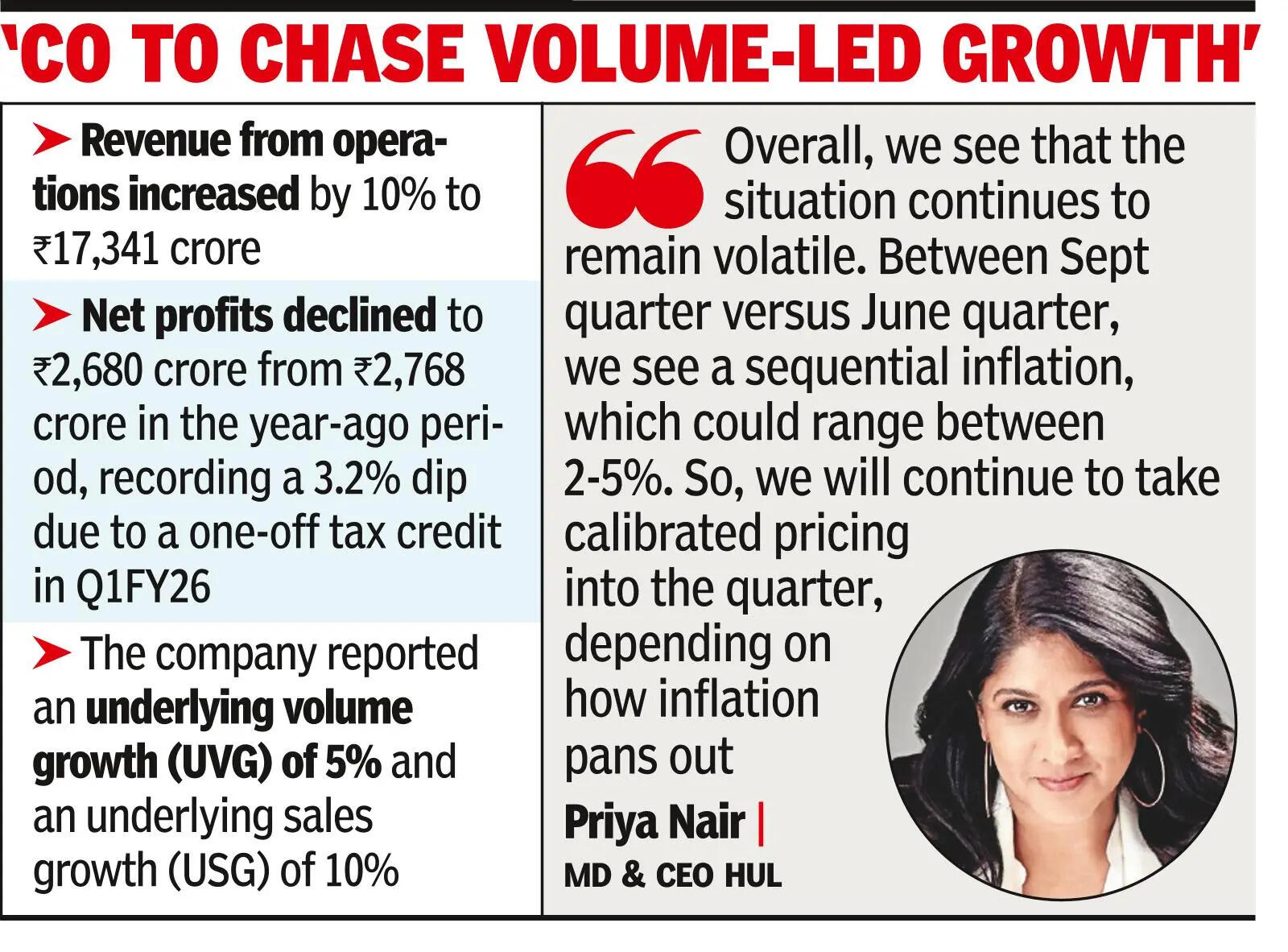
Nair, who will complete a year at the corner office on Aug 1, said that HUL will chase volume-led revenue growth and a wide portfolio spanning categories and price packs somewhat shields it against periods of economic volatility. HUL took a 5% price hike in the June quarter.HUL’s revenue from operations increased by 10% to Rs 17,341 crore on a consolidated basis in Q1FY27. Net profits declined to Rs 2,680 crore in Q1 from Rs 2,768 crore in the year-ago period, recording a 3.2% dip due to a one-off tax credit in Q1FY26.The company reported an underlying volume growth (UVG) of 5% and an underlying sales growth (USG) of 10% during the quarter, which HUL said was driven equally by volume and price.“This growth has come at the cost of stressed margins year-on-year, especially in home care and personal care categories which has led to markets reacting negatively,” said independent consultant Akshay Dsouza, adding that an inflationary environment is leading to continued stress on margins.HUL’s stock price ended lower at Rs 2,023.1 apiece on the BSE on Tuesday.The war-led disruption of energy supplies pushed up prices of crude oil, nudging FMCG companies to take at least one round of price hikes. Crude oil has a direct bearing on packaging and logistics costs.Besides, crude derivatives are used to manufacture a range of household products including lotions, detergents and dish-washing liquids. HUL said that it remains watchful of the impact of El Nino on monsoons. Agriculture currently accounts for about 15% of India’s GDP and the overall impact of monsoons could be around 50-60 bps to GDP, Nair said, adding that progression and geographical spread of the rains will be key.