









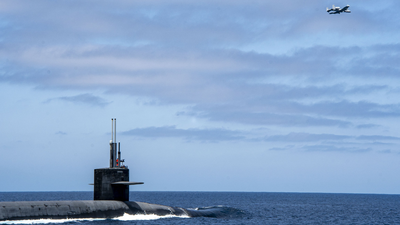
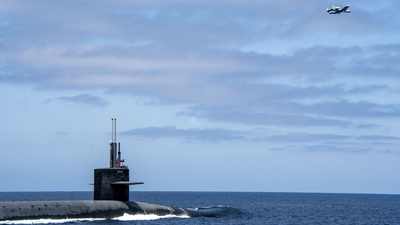
As the great power game continues to simmer in the Indo-Pacific, the United States is investing a whopping $76.6 billion to procure fourteen submarines. India’s defence budget for this fiscal year is around $85 billion.This comes at a time when China is also strengthening its submarine arm. As this new arms race is well underway, the United States has been struggling with an aging submarine fleet. The Columbia-class of nuclear powered ballistic missile launching submarines or SSBNs, which initially began life as the Ohio Replacement Submarine. A dozen Columbia-Class SSBNs are to replace 18 Ohio-Class vessels that were inducted between 1981 (USS Ohio) and 1997 (USS Louisiana).To reinforce its undersea fleet, the United States Navy has moved to award contracts worth $76.6 billion to General Dynamics Electric Boat and Huntington Ingalls Industries for the construction of nine Virginia‑class attack submarines for $42 billion and five Columbia‑class ballistic missile submarines for $29.5 billion. The remaining nearly $5 billion will be provided for what is being termed ‘workforce improvements’ as per the US Naval Institute. The deal, spread across multiple years, is one of the largest submarine procurement pushes in recent history and reflects Washington’s determination to sustain undersea dominance at a time when China is rapidly expanding its own submarine fleet. The Virginia‑class boats will enhance the Navy’s ability to conduct precision strike, intelligence gathering and anti‑submarine warfare, while the Columbia‑class SSBNs are intended to replace the ageing Ohio‑class, ensuring the credibility of America’s nuclear deterrent well into the 2080s.The Columbia‑class programme was considered a key priority, as these submarines will carry Trident II D5 nuclear missiles and form the backbone of the US strategic deterrent and will form the sea based leg of the nuclear triad. The Virginia‑class, meanwhile, continues to evolve with Block V variants equipped with Virginia Payload Modules, capable of carrying additional cruise missiles. Together, these acquisitions represent a decisive reinforcement of America’s undersea fleet at a time when adversaries are pressing forward. The contracts are also designed to stabilise the supply chain and expand shipyard capacity, addressing delays in submarine production caused by industrial bottlenecks.China’s submarine build‑up is the most pressing driver of this US push. Beijing has steadily expanded its fleet with advanced nuclear and conventional submarines, including the Type‑093B nuclear attack submarine and the Type‑094A SSBN. Estimates suggest China could operate as many as 65 to 70 submarines by the early 2030s, with a growing emphasis on quieter hull designs, advanced sonar suites and longer‑range ballistic missiles, according to the US Naval Institute. This expansion of assets and capability is part of a broader Chinese maritime strategy aimed at challenging the US in the Indo‑Pacific.Pakistan, too, is expanding its undersea capabilities, adding eight Type‑039 Hangor‑class submarines to its existing fleet of five. This will give Islamabad a total of 13 submarines, the first of these vessels, PNS Hangor, has been inducted.The Indian Navy, on the other hand, currently operates 16 conventional diesel‑electric submarines across three classes, which are, Kalvari, Sindhughosh and Shishumar. Four Sindhughosh‑class boats have already been retired, while the Shishumar class has undergone mid‑life upgrades to extend service for another decade. The Kalvari class, based on the French Scorpène design, is expected to receive indigenously developed Air Independent Propulsion (AIP) systems, which will give these submarines additional time submerged under water, thereby increasing survivability.The long‑delayed Project‑75I programme, part of the Navy’s thirty‑year submarine building plan first outlined in 1999, envisages the procurement of six to nine Type‑214 submarines from TKMS, equipped with AIP systems. However, delays have dulled the edge of India’s conventional submarine fleet, which was originally intended to reach 24 boats by 2030.On the SSBN side, India has made more progress. The Navy operates three Arihant‑class SSBNs (part of the Advanced Technology Vessel programme), with a fourth undergoing trials. These boats carry the K‑4 missile with a range of 3,500 km and the K‑5 missile with a range of 5,000 km, providing credible second‑strike capability. Work is also underway on the larger S5 class, expected to carry the K‑6 Submarine Launched Ballistic Missiles (SLBMs) which has a slated range of over 5,000 km, significantly extending India’s nuclear deterrence envelope.The US submarine contracts highlight the scale at which Washington is investing to maintain undersea superiority against China. For India, the lesson is clear: while progress on SSBNs has been steady, delays in conventional submarine acquisition risk leaving gaps in deterrence and sea denial capabilities. With China expanding and Pakistan modernising, New Delhi’s ability to accelerate Project‑75I and sustain its nuclear submarine programme will be critical to maintaining balance in the Indian Ocean.