









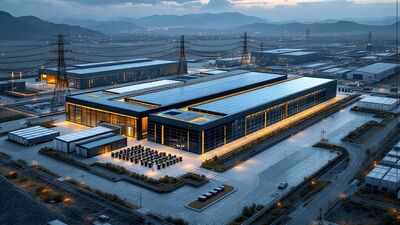
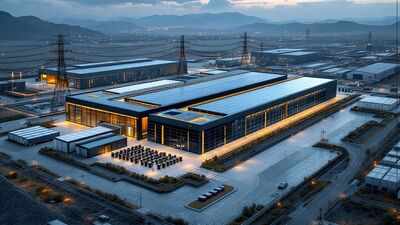
A Pennsylvania township has refused to reject a proposed AI data centre project outright. Instead, Pennsylvania’s Plymouth Township has attached a list of conditions for the project’s continuation, prompting developer Brian O’Neill to sue the township. The project developer has argued that the requirements have become too stringent for development to proceed. In response to O’Neill’s challenge, Plymouth Township has justified itself and asserted that it was “a blatant attempt by the Applicant to demand approval by tantrum,” since “the Township is not interested in entertaining such theatrics.”According to a report by The Philadelphia Inquirer, Plymouth Township officials said the conditions are intended to address residents’ concerns over issues including noise, water use, power generation and pollution. The dispute centres on O’Neill’s proposed 2 million-square-foot AI data centre at the site of the former Cleveland-Cliffs steel mill near Philadelphia. While Pennsylvania law does not allow the township to reject a lawful land use outright, officials say they can enforce zoning rules and require safeguards to protect residents’ health and safety. O’Neill has challenged the township’s zoning ordinance in court.
Pennsylvania township says safeguards are needed
Speaking during a livestreamed township council meeting, Council Chair Lynne Viscio accused O’Neill of attempting to pressure local officials into approving the project.“This is a blatant attempt by the applicant to demand approval by throwing a tantrum,” Viscio said. “The township is not interested in entertaining such theatrics.”She also alleged that O’Neill had “bullied” and “intimidated” township officials after rejecting the township’s proposed safeguards for the project. Viscio said the township would continue opposing both the development application and O’Neill’s legal challenge to the zoning ordinance.
Data centre developer rejects allegations
O’Neill denied the township’s claims, calling the accusations “a bold-faced lie” and part of a “misinformation campaign.” He said he had been “negotiating in good faith” with township attorneys for several months and had accepted “the majority” of the proposed conditions.“We are sympathetic to the fact that they are under tremendous political scrutiny from people outside the township, as well as residents inside the township, and that makes giving a landowner their property rights … challenging,” O’Neill said.“However, I am a landowner, and I do have rights, and it is their job to be impartial and fair in their analysis and response,” he added. Later, O’Neill said he remained open to negotiations. He said, “We’re always willing to make a deal if they want to sit down and talk.”
Residents have raised concerns over the project
The proposed data centre would occupy a 66-acre site less than a mile from downtown Conshohocken. O’Neill resubmitted the proposal in May after withdrawing an earlier version in 2025 because of legal issues. The revised application covers 10 existing buildings at the former steel mill site.The project is one of six AI data centres proposed by O’Neill in the Philadelphia region. Three of his separate proposals in nearby Upper Merion Township were recently not recommended for approval by the local planning commission, and hearings on the remaining applications are scheduled to continue next month.Residents in both Plymouth and Upper Merion townships have opposed the projects, citing concerns over light, noise and air pollution, electricity demand and water use.O’Neill has maintained that the Plymouth Township facility would operate on a closed-loop water system, generate its own power rather than draw from the grid and create economic activity.However, Township officials said their focus remains on ensuring any approved development addresses residents’ concerns while complying with local zoning requirements.