









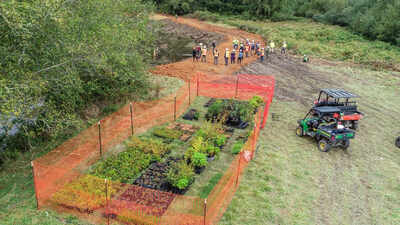
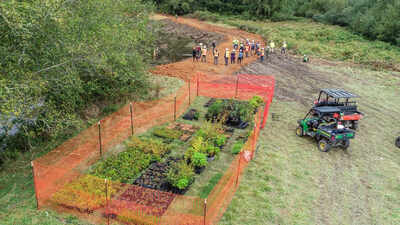
A former lumber mill site along Prairie Creek in Northern California has undergone a major transformation, with more than 20 acres of asphalt and concrete removed and wetland, floodplain and off-channel habitat restored for salmon and steelhead. According to NOAA Fisheries, the project is being monitored to determine how the restored habitat affects juvenile salmon and their survival. The Yurok Tribe’s revegetation crews planted more than 420,000 native plants over five years.
From mill site to wetland
The restoration took place at the former Orick Mill Site along Prairie Creek in Northern California, a tributary of Redwood Creek. The area provides habitat for Southern Oregon/Northern California Coast coho salmon, California Coastal Chinook salmon and Northern California steelhead. Much of the surrounding watershed is protected within Redwood National and State Parks, while the lower section has been affected by livestock grazing, highway construction and industrial logging.The restoration site was once home to a 125-acre lumber mill that operated for nearly five decades before closing in 2009. When restoration planning began, the area contained large expanses of asphalt and concrete, while Prairie Creek flowed through a deeply entrenched channel with steep banks. NOAA Fisheries has described the former industrial site as having very little suitable habitat for salmon.Over more than a decade, NOAA Fisheries and its partners worked to rebuild the landscape. Construction was completed in 2025. The project removed more than 20 acres of asphalt and concrete, restored about a mile of Prairie Creek and created floodplain, wetland and off-channel habitat, including ponds and side channels where juvenile salmon can rest, feed and grow. NOAA Fisheries highlighted the restoration as an effort to reconnect the creek with its floodplain and provide young salmon with more accessible habitat.
Restoring native vegetation
Restoring the physical landscape was only part of the project. The Yurok Tribe’s revegetation crews planted more than 420,000 native plants over five years, representing about 45 plant species. The vegetation is intended to help stabilise the restored landscape, provide habitat and support the ecological functions of the wetland and floodplain.Native trees, shrubs, grasses and other vegetation can also provide shade and help support the aquatic food web on which juvenile salmon depend. As the plants mature, they are expected to become an increasingly important part of the restored riparian and wetland environment.
Early signs of recovery
The project is being closely monitored to determine whether the restored habitat improves conditions for salmon. Researchers from Cal Poly Humboldt, NOAA Fisheries and other partners have been monitoring fish in the Prairie Creek watershed for years, providing data that can be used to compare conditions before and after restoration.Research from the long-running Prairie Creek monitoring program has examined juvenile coho salmon growth, survival and movement in different types of habitat, including alcoves, backwaters and main-channel pools. Researchers have found that juvenile coho using restored off-channel habitat can grow faster than fish remaining in the main creek channel. Larger juvenile salmon generally have better prospects when they migrate to the ocean.One of the notable findings from the monitoring involved marine survival. According to the NOAA Fisheries information provided for the project, researchers used passive integrated transponder, or PIT, tag data to estimate marine survival for the 2023 juvenile coho cohort at 2.6%, compared with earlier estimates of about 1%. However, the figure should be viewed as an early monitoring result rather than proof that the restoration itself caused the increase.Marine survival can vary substantially from year to year because of changing ocean conditions and other factors. Continued monitoring will therefore be necessary to determine whether the apparent improvement persists across additional salmon generations.
A broader restoration effort
The Prairie Creek project is about more than salmon habitat. The site is on ancestral Yurok land, and the Yurok Tribe played a major role in the restoration. The Yurok Tribe’s crews were involved in revegetation and construction work, while the tribe is also expected to play a long-term stewardship role at the site. The restoration has also created opportunities for local communities, including work for Yurok Tribal members and local businesses involved in the project. The former industrial landscape has been transformed into a more functional wetland and floodplain environment that can provide habitat for fish and wildlife.The project is part of a broader effort to restore habitat in the Redwood Creek watershed. By removing industrial infrastructure, reconnecting the creek with its floodplain and restoring native vegetation, the partners aim to create better conditions for salmon and other wildlife. For salmon, the most important changes may take years to fully understand. Continued monitoring will help researchers determine whether the early signs seen at Prairie Creek translate into longer-term improvements for threatened coho salmon and other species.