








Cleaning a TV screen looks like a simple job, but the wrong product or tool can scratch the display, strip its protective coating, or cause permanent damage. Modern LED, OLED, QLED and Mini-LED televisions come with delicate anti-glare and anti-reflective coatings that need careful handling. One question often asked is whether one can use soapy water to clean a TV screen? The short answer is: not directly. While a small amount of diluted soapy water may be recommended for stubborn stains, using too much soap, spraying liquid directly on the display, can damage the screen’s protective coating or allow moisture to seep inside the TV.
How to clean TV screen safely with soap
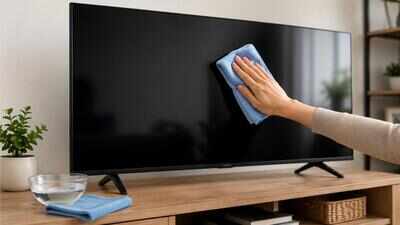
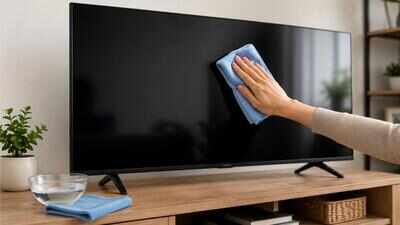
If you need to remove stubborn fingerprints or greasy marks, use only a very small amount of mild dish soap mixed with distilled water.
- Dip a clean microfiber cloth into the solution
- Wring it out thoroughly so it is only slightly damp.
- Wipe the screen gently using light, circular motions without pressing hard.
- Once clean, use a dry microfiber cloth to remove any remaining moisture.
Note: Avoid using strong detergents or excess soap, as they can damage the screen’s protective coating.
Things that you should never use to clean your TV screen
Experts say only approved cleaning methods should be used, and have flagged several household items that people commonly reach for by mistake. Here’s a look at what to avoid when cleaning your TV screen, and why.Never use glass cleaner on a TV screenMost glass cleaners contain ammonia, alcohol or other harsh chemicals that can damage the protective coating on modern displays. These products may work fine on windows or mirrors, but on a TV screen they can leave streaks and permanently alter its finish.Avoid paper towelsPaper towels may feel soft, but they contain wood fibres that can scratch the screen over time. Addiitnally, they can also leave lint behind, making the display look dirtier after cleaning.Don’t use household cleaning spraysMulti-purpose cleaners, kitchen cleaners and disinfectant sprays are not designed for electronics. Spraying them directly on the TV can damage its screen and may allow liquid to seep into the edges of the screen.Skip rubbing alcohol and harsh chemicalsStrong cleaning agents such as rubbing alcohol, acetone, bleach or ammonia-based products can strip away the anti-reflective coating found on many modern televisions. Once damaged, the coating cannot be restored.Never spray water directly on the screenWater sprayed onto a display can run down and seep into the TV through its edges or vents, raising the risk of internal damage. If moisture is needed, a lightly dampened microfiber cloth is the safer route.Don’t use rough cloths or old ragsOld T-shirts, towels, tissues and rough fabric can carry dirt or coarse fibres that scratch the display. A clean microfiber cloth remains the safest choice for wiping away dust and fingerprints.Avoid excessive pressure while cleaningPressing hard on the screen can damage the display panel, especially on OLED and LED TVs. Use light, gentle strokes instead of scrubbing stubborn marks.Avoid baby wipes or wet wipesWet wipes or for that matter baby wipes contain cleaning chemicals, fragrances or moisturisers that are not safe for TV screens. Using wet wipes on screen can leave residue and may damage the coating over time.Don’t use abrasive sponges or scrubbersKitchen sponges, scouring pads or abrasive cleaning tools can permanently scratch the TV screen, even with gentle use. These products should never be used on electronic displays.