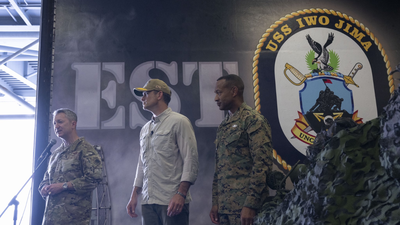









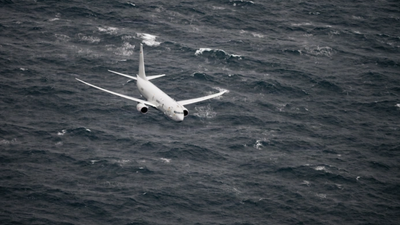
NATO navies are once again turning their attention to one of the oldest and most difficult problems at sea, finding and neutralising an adversary’s submarines before they can strike. This week, Standing NATO Maritime Group One and Standing NATO Mine Countermeasures Group One joined Exercise Northern Viking 26 off the coast of Iceland. This was a US-led drill built around defending the Greenland-Iceland-United Kingdom Gap, one of the most strategically sensitive maritime corridors in the world. The waters between Greenland and Iceland, and between Iceland and Britain, have long served as the primary route through which Russian submarines would have to pass to threaten the North Atlantic. This makes the Greenland-Iceland-UK gap a natural chokepoint for anti-submarine operations since the Cold War.Hunting submarines, however, remains one of the most technically demanding forms of naval warfare. Submarines rely on stealth as their primary defence, and modern anti-submarine warfare has evolved into a layered contest fought largely through sound rather than sight. Passive sonar systems listen for the acoustic signature of a submarine inevitably generates. These acoustic signals are produced by the submarine’s engines, propellers and other machinery.
On the other hand, active sonar transmits a pulse and interprets its echo to pinpoint a target submarine’s range and bearing. Networks of sonobuoys, dropped from patrol aircraft or helicopters, are spaced across a search area to detect and triangulate a submerged contact, while fixed hydrophone arrays on the seabed provide a persistent listening capability across critical corridors.Surface ships, submarines and maritime patrol aircraft all work in tandem, since no single platform can reliably hold a contact on its own, a principle that lies at the very heart of coordinated anti-submarine warfare doctrine. Exercises like Northern Viking underline a wider truth about anti-submarine warfare: detecting and holding a submarine at risk demands persistent coordination between different assets, advanced acoustic technology and an understanding of an operating environment that keeps changing.Since the end of the Second World War, India is the only country which has sunk a submerged submarine in conflict. During the 1971 war, Pakistani submarine PNS Ghazi was sunk by the destroyer INS Rajput outside Visakhapatnam harbour. The Ghazi had been sent to the Bay of Bengal to sink the aircraft carrier INS Vikrant. On the western naval front, Pakistani submarine had torpedoed and sunk the Indian frigate INS Khukri. Since the end of the Second World War many other ships have been sunk by submarines, such as the Argentinian cruiser ARA General Belgrano, which was sunk by a submarine during the Falkland War and the recent sinking of Iranian ship IRIS Dena near the Sri Lankan coast. As both submarines and anti-submarine systems are becoming more advanced, these changes are also making the act of ‘killing’ a submarine a more difficult task.