





Quote of the day by Neil deGrasse Tyson: “You can’t be a scientist if you’re uncomfortable with ignorance” |

Quote of the day by Neil deGrasse Tyson (AI-generated image) Most professions reward certainty. A doctor is expected to diagnose, a lawyer to argue a clear position, a manager to make a firm call. Science runs on the opposite instinct. Neil deGrasse Tyson, the astrophysicist and director of the Hayden Planetarium, put it plainly in…
Read More

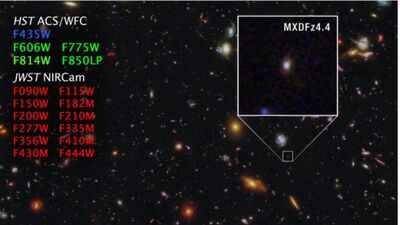
Hubble has spotted ‘impossible’ light in deep space, and scientists are trying to explain where it came from

Astronomers have detected light from a tiny but powerful galaxy that existed when the universe was still emerging from a vast fog of hydrogen gas. The discovery, made using the Hubble Space Telescope and confirmed with data from the James Webb Space Telescope and a giant telescope in Chile, gives scientists one of their clearest…

Read More

Scientists have found a billion-year-old hidden magma system on Mars that supported life on the Red planet

Out of all the planets in the solar system, Earth is held at the highest prominence. It’s consistent shift of the tectonic plates, existence of life and evolution have made it truly one of a kind.In contrast, Mars looks like a planet whose best days are behind it. Its volcanoes are extinct, its crust is…

Read More

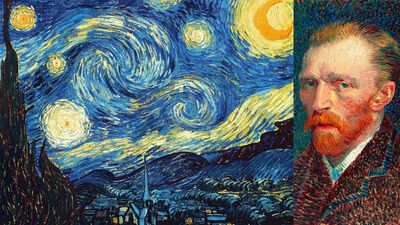
‎Scientists discovered a hidden detail in Vincent Van Gogh’s The Starry Night decades after it was painted

‘Starry Night’ and Van Gogh Most people look at The Starry Night and see a moonlit village beneath a sky alive with swirling stars. Scientists looked at the same painting and saw something else entirely. Hidden within those famous blue spirals is a pattern that resembles one of nature’s most complex phenomena called turbulence.The Starry…

Read More

Indian scientists recreate key functions of human Placenta on chip

Representative image (Photo credit: AP) NEW DELHI: Before a baby’s first breath, life depends on an extraordinary organ that most people rarely think about – the placenta.Acting as the baby’s first life-support system, the placenta delivers oxygen and nutrients, removes waste products, protects the developing fetus and produces hormones essential for sustaining pregnancy.Yet, despite its…

Read More

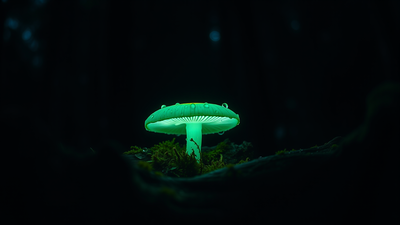
Why some forests in Mexico glow green after sunset, and the tiny fungi behind the eerie light |

Deep inside the cloud forests of Mexico, certain patches of bark and rotting wood begin to glow a faint, ghostly green once darkness sets in. The source is not the trees themselves but tiny mushrooms growing on them, fungi capable of producing their own light through a chemical reaction inside their cells. For years, very…

Read More

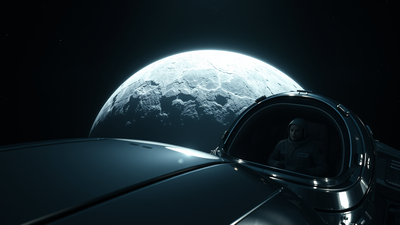
China’s Tianwen 2 spacecraft begins investigating an asteroid that could be a fragment of the moon |

A tiny asteroid no wider than a football pitch has been quietly puzzling astronomers for years, and a Chinese spacecraft is now closing in on the answer. The asteroid, called Kamo’oalewa, is one of only a handful of objects known as Earth’s quasi moons, small bodies that circle the sun in near lockstep with our…

Read More

Scientists transform waste plastic bottles into battery-grade graphite for electric vehicles |

That empty plastic water bottle sitting in your recycling bin might have a second life ahead of it, one that involves powering an electric vehicle, a smartphone or even a renewable energy storage system. Researchers at Penn State University have developed a new method to convert waste PET plastic, the same material used in most…

Read More

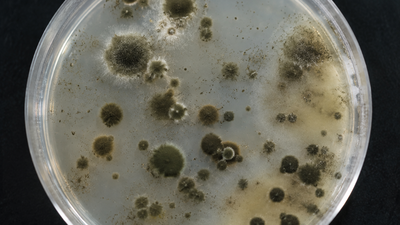
How Chornobyl’s mysterious fungus could change medicine and future space missions |

Nearly four decades after the Chornobyl nuclear disaster, the abandoned reactor remains one of the most hostile places on Earth. Radiation levels that would prove lethal to most forms of life still linger in parts of the exclusion zone, making it an unlikely setting for biological discovery. Yet among cracked concrete, rusting steel and contaminated…

Read More

Scientists discover 149-million-year-old world’s smallest long-tailed bird fossil revealing how modern birds evolved |

While early birds existed in a time period when dinosaurs dominated, they were feathered, capable of gliding or flying, but looked nothing like the birds we have today. Unlike birds like pigeons, robins and eagles, which have short fan-shaped tails, these ancient birds possessed long, bony tails inherited from their dinosaur ancestors. The transition from…

Read More