





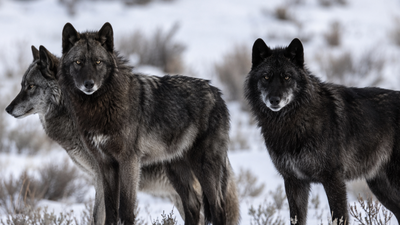
Did wolves really save Yellowstone? New research challenges one of conservation’s biggest success stories |

In 1995, Yellowstone National Park became the centre of a conservation experiment that would later be celebrated across the world. Fourteen grey wolves were reintroduced after an absence of nearly 70 years, with many ecologists crediting their return for triggering a remarkable ecological recovery. The story became a textbook example of a “trophic cascade”, where…
Read More

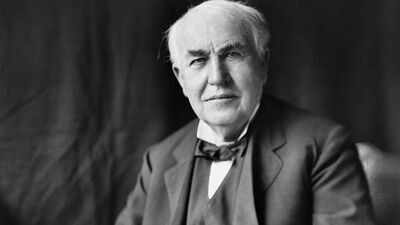
Quote of the day by Thomas A. Edison: “The doctor of the future will give no medication, but will interest his patients in…” |

Thomas A. Edison (Image: Wikipedia) Most people know Thomas Edison as the inventor of the light bulb and the phonograph, not as a thinker about health. Yet more than a hundred years ago, he made a prediction about medicine that still sounds strikingly modern. The doctor of the future, he said, would give no medication,…

Read More

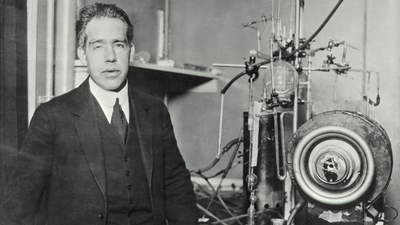
Quote of the day by renowned quantum physicist Niels Bohr: “An expert is a person who has made all the mistakes that…” |

Niels Bohr, one of the most influential physicists of the 20th century, is remembered not only for his groundbreaking contributions to quantum theory but also for his insightful observations about learning and expertise. Among his most quoted remarks is: “An expert is a person who has made all the mistakes that can be made in…

Read More

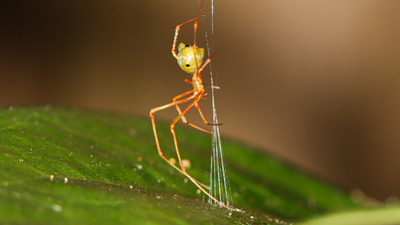
The ‘ballista spider’: Scientists discover a tiny spider that launches ants with 140 times the force of gravity |

Deep in the rainforests of far north Queensland, Australia, scientists have discovered a tiny spider with an extraordinary hunting strategy. Nicknamed the “ballista spider”, the newly described species uses a silk-powered trap that launches prey into its web with accelerations reaching up to 140 times the force of gravity. Researchers say the spider specifically targets…

Read More

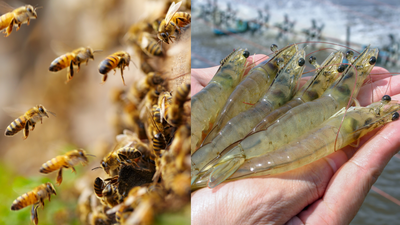
Why scientists are vaccinating honeybees and shrimp for the first time |

People, pets and livestock have long been protected through vaccines, but scientists are now extending that approach to creatures once thought impossible to immunise. Researchers have already developed the world’s first vaccine for honeybees and are testing similar technology in shrimp, despite the fact that these animals lack the antibody-based immune systems that conventional vaccines…

Read More

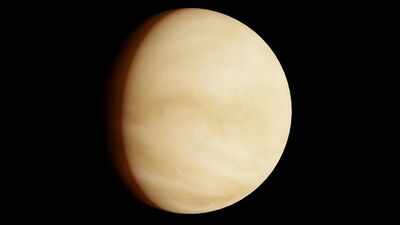
Why does Venus take 243 Earth days to complete a single day, according to NASA |

The Sun would rise in the west on Venus, but that is only the beginning of how strange a day there would feel. A day is usually one of the simplest measurements we have. The Sun comes up, crosses the sky and disappears below the horizon. We mark the passing hours almost without thinking about…

Read More

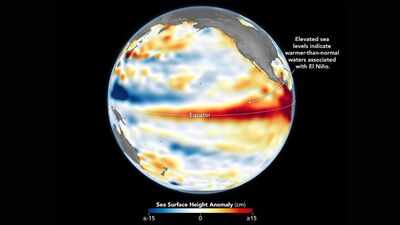
El Niño 2026: NASA satellites capture massive surge of warm water across the Pacific |

A vast stretch of the Pacific Ocean has begun showing signs of a powerful shift beneath its surface, with satellite observations revealing a growing bulge of unusually warm water spreading across the equatorial region. From space, the change appears as an enormous band of elevated sea levels extending from the central Pacific towards the coast…

Read More

Hidden fungi discovered inside California desert moss could rewrite plant evolution history |

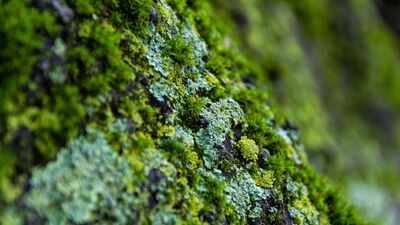
Moss is usually thought of as one of nature’s simplest plants. It carpets rocks, clings to tree trunks and quietly survives in places where many other forms of life struggle. In deserts, some mosses can dry out almost completely, remaining dormant until a brief spell of rain brings them back to life. That ability has…

Read More

Quote of the day by Marie Curie: “In science, we must be interested in things, not in…” – why ideas matter more than egos

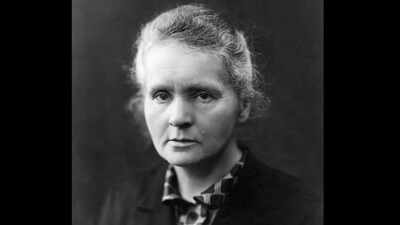
Marie Curie (Image: Wikipedia) Marie Curie spent her life chasing answers, not applause. She discovered new elements, won two Nobel Prizes, and changed science forever, and yet she had little time for fame or personal glory. This short line was something close to a motto for her. It says that in science, our attention belongs…

Read More

Inside Earth’s ‘black box’ in Tasmania: A doomsday project built to capture the end of the modern world |

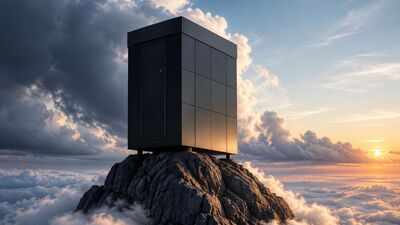
In a quiet stretch of Tasmania’s west coast, where the weather shifts without much warning and the land feels older than anything built on it, a large steel structure has been slowly entering the conversation around climate records. The project, known as Earth’s Black Box, has been described in plain terms by its creators, though…

Read More