






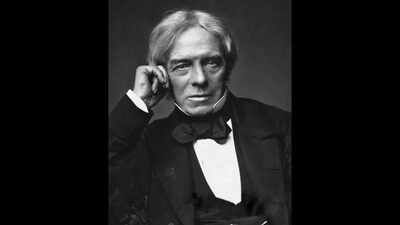
Quote of the day by Michael Faraday: “There’s nothing quite as frightening as someone who knows they are right.” |

Michael Faraday (Image: Wikipedia) Some quotes feel heavy the moment you read them. Others seem simple at first and then quietly stay in your mind for longer than expected. This line, often attributed to Michael Faraday, belongs to the second category. It does not sound dramatic. It does not use complicated language. Still, there is…
Read More

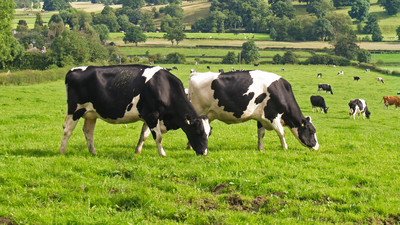
The cow compass: How cows secretly use Earth’s magnetic field while grazing |

A quiet field can look completely ordinary until you notice the pattern. Many cows and deer seem to rest or graze with their bodies lined up roughly north-south. That odd detail first drew serious scientific attention in 2008, when Sabine Begall, Hynek Burda and colleagues reported that cattle and deer across many locations often followed…

Read More

Quote of the day by psychiatrist Viktor Frankl: “Life is never made unbearable by circumstances, but only by lack of…” |

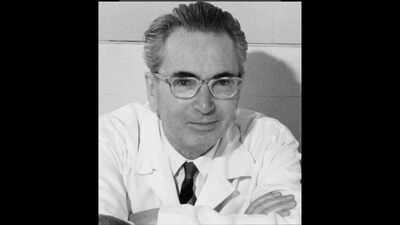
Viktor Frankl (Image: Wikipedia) People usually imagine that difficult situations are what make life unbearable. It sounds like a reasonable assumption because it matches what most of us see around us. Financial stress weighs people down. Illness changes families. Relationships break. Careers take unexpected turns. Some periods feel unfair even when someone has done everything…

Read More

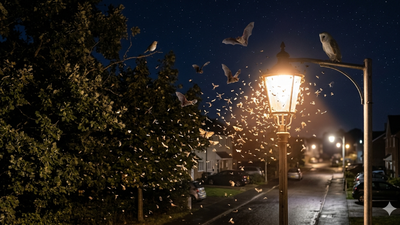
How streetlights may be affecting birds, bats and insects at night in ways scientists did not expect |

The link between artificial light at night, street lights, light pollution, biodiversity destruction, nocturnal fauna, bats, insects, and birds is becoming more evident in modern environmental science. It has been suggested that too much light during the night not only causes comfort for humans but also becomes a serious threat to the environment. Research concerning…

Read More

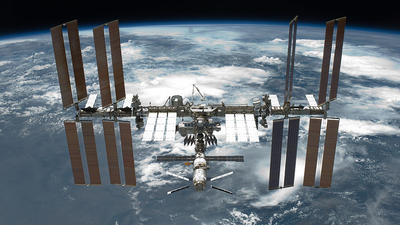
Humanity’s home in space is shutting down: What comes next will be nothing like it |

For 25 years, the ISS was the only address humans kept beyond Earth. It is closing. What replaces it is not one station; it is an orbital economy, built by private companies and designed to manufacture things that cannot be made on the ground.In November 2000, two Russian cosmonauts and one American astronaut moved into…

Read More

Meet the plastic fighters: Three Indian teens win the Earth Prize for creating a tamarind solution that removes microplastics from water |

What began as a question about polluted drinking water has now turned three Indian teenagers into internationally recognised young innovators. Sixteen-year-olds Vivaan Chhawchharia, Ariana Agarwal and Avyana Mehta have been named the Asia winners of The Earth Prize 2026 for creating ‘Plas-Stick’, a biodegradable solution which removes microplastics from water using powdered tamarind seeds. Inspired…

Read More

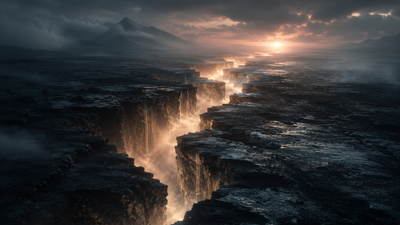
‘The tick-tick quake’: Scientists crack the code of the world’s most frequent earthquakes in pacific |

Deep beneath the eastern Pacific Ocean, roughly a thousand miles off the coast of Ecuador, the seafloor has been keeping time. Every five to six years, in almost the same locations, at almost the same intensity, a magnitude 6 earthquake strikes with a regularity so precise that scientists reached for the word “clockwork” to describe…

Read More

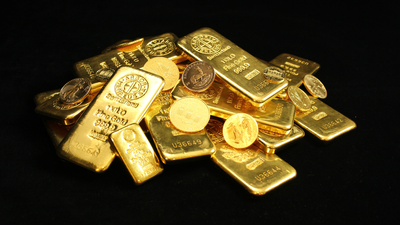
Scientists finally discover why gold never loses its shine after thousands of years |

Gold has fascinated civilisations for millennia because of one remarkable quality: it rarely loses its shine. Ancient coins, jewellery and royal artefacts buried for thousands of years can still emerge gleaming with their familiar golden glow. Scientists have long known that gold resists corrosion better than most metals, but the exact atomic mechanisms behind this…

Read More

There was once an ocean where Asia’s mountains now rise and scientists say it helped build them |

Imagine an ocean so enormous it stretched across half the planet, wider than the Atlantic, older than the Himalayas, home to creatures we’ve only read about in history books. It was called the Tethys Ocean, and for hundreds of millions of years, it sat between the ancient landmasses that would eventually become Europe, Africa, and…

Read More

Quote of the day by English physicist Brian Cox: “We explore because we are curious, not because we wish to develop grand views of reality or better widgets.” |

Brian Cox (Image: Wikipedia) Something is interesting about human beings that appears very early in life. Children ask endless questions before they know anything about science, philosophy or technology. They ask where stars go during the day. They ask why the sky changes colours in the evening. They ask why birds fly, why oceans seem…

Read More