






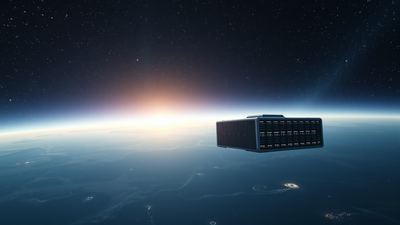
AI’s cooling crisis: Why future data centres in space may not need a single drop of water |

Artificial intelligence is driving an unprecedented surge in demand for computing power. Still, the data centres behind today’s most advanced AI models face a growing challenge: keeping millions of processors cool without consuming vast amounts of energy and water. On Earth, cooling systems can account for a significant share of a facility’s electricity use while…
Read More

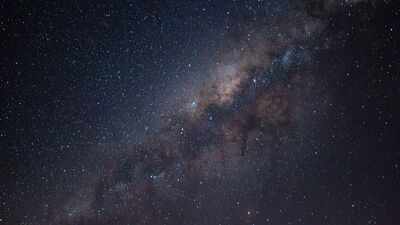
How to see the Milky Way in July 2026: Nasa’s dark sky viewing tips |

For many people, the Milky Way is something they have seen only in photographs. Under most urban skies, the galaxy’s faint glow is washed out by artificial light, leaving only the brightest stars visible overhead. Yet there are a few nights each month when conditions become much more favourable, and July offers one of those…

Read More

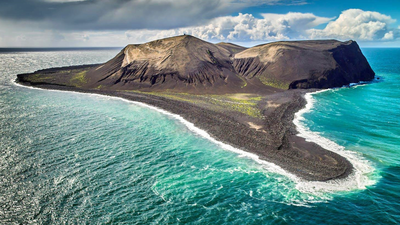
A new island rose from the sea in Iceland in 1963, but everyone except scientists is banned from setting foot on it: Here’s why |

A barren stretch of volcanic rock rising from the Atlantic Ocean may not sound like one of the world’s most protected places, yet almost nobody is allowed to set foot on Iceland’s Surtsey island. There are no permanent residents, hotels or tourist attractions, and even scientists need special permission to visit. The reason lies in…

Read More

Cliff swallows abandoned the California town they once filled every spring, then people came together to rebuild their homes and welcomed them back with an annual festival |

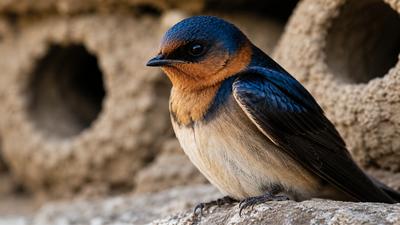
For centuries, the arrival of thousands of cliff swallows transformed the skies above a small California town into one of America’s most celebrated wildlife spectacles. Every spring, the agile birds returned almost like clockwork after migrating from South America, filling the air with their distinctive chatter as they rebuilt their mud nests around the historic…

Read More

Less than 30% of Earth’s ocean floor has been mapped while scientists still have clearer high-resolution data of Mars than most of the seabed covering our own planet

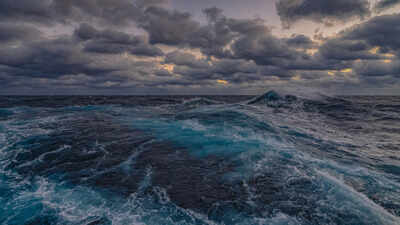
Scientists say we have only explored a fraction of Earth’s Seas and Oceans Less than 30% of the world’s ocean floor has been mapped to modern standards, meaning scientists still have a clearer view of the Space, Moon and Mars than of the seabed that covers most of Earth.The global effort known as the Seabed…

Read More

In 1847, a Vienna doctor discovered that handwashing with chlorine could cut childbirth deaths by 90 percent, but the medical world refused to believe him

In 1847 a Vienna doctor cut childbed-fever deaths on the doctors’ ward from about one mother in ten to roughly one in eighty by making physicians wash their hands in chlorine — and the profession turned on him for it In 1847, a Hungarian obstetrician working at Vienna General Hospital found a way to stop…

Read More

Quote of the day by Marie Curie: “Be less curious about people and more curious about…” |

Quote of the day by Marie Curie (AI-generated image) Marie Curie is widely quoted as saying, “Be less curious about people and more curious about ideas.” It remains one of her most repeated lines, often shared as a reminder to spend less time on gossip and comparison and more time on genuine learning. Curie said…

Read More

Scientists identify 74 genetic regions linked to anxiety in study of nearly 700,000 people, uncovering 39 never-before-seen DNA clues that could reshape future treatments

A genetic analysis of nearly 700,000 people identified 74 distinct locations in the human genome tied to anxiety, 39 of which had never been linked to the condition before A genetic analysis of nearly 700,000 people has identified 74 regions of the human genome linked to anxiety symptoms, including 39 that had never before been…

Read More

Quote of the day by Michael Faraday: “I was at first almost frightened when I saw…” |

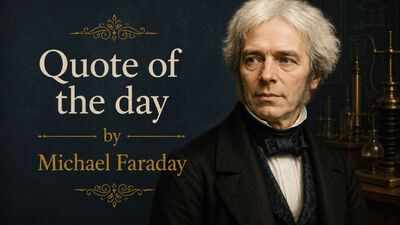
Quote of the day by Michael Faraday (AI-generated image) A young mathematician takes an older scientist’s life’s work and translates it into equations the older man cannot fully follow. Most established figures would bristle. Michael Faraday, one of the most celebrated experimental scientists in history, wrote to the young James Clerk Maxwell in 1857 admitting…

Read More

Homo: 300,000-year-old Homo naledi fossils from a South African cave suggest the ancient human relative may have been a female-only species, new study reveals

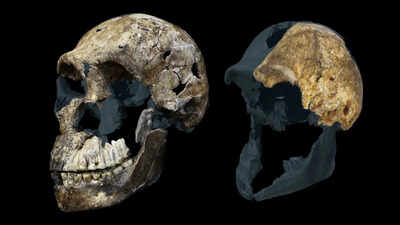
The largest (left) and the smallest (right) skulls of Homo naledi found in the Rising Star cave system in South Africa. All specimens of H. naledi have been shown to be female. All known skeletons of the ancient human relative Homo naledi discovered in a South African cave system appear to be female, according to…

Read More