






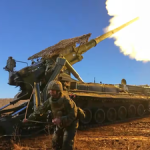

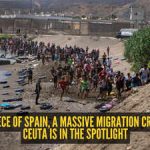
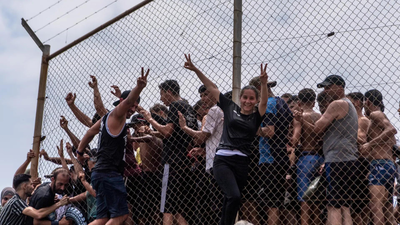
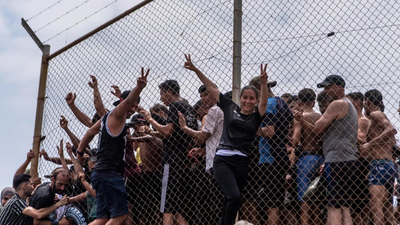
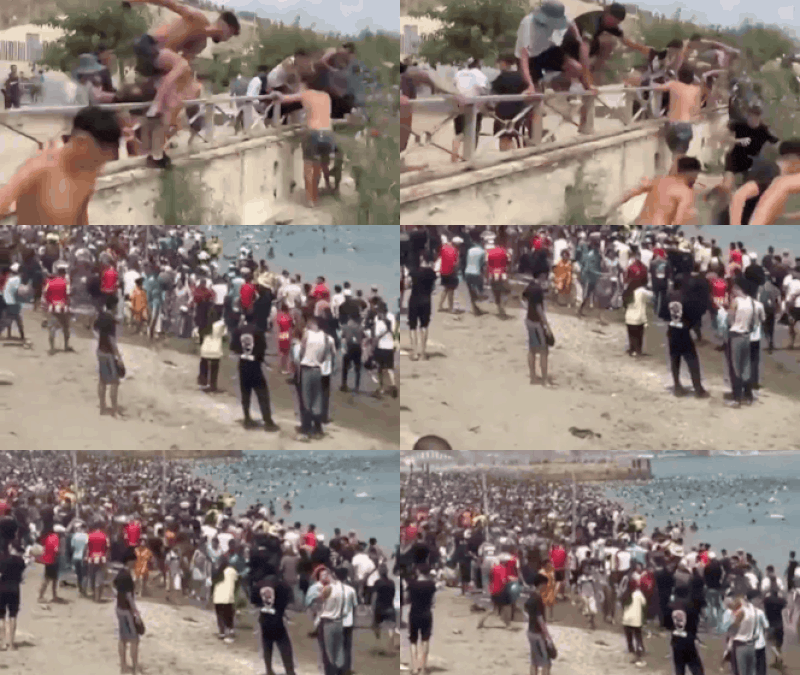
Spain has deployed its armed forces to the North African enclave of Ceuta after thousand migrants crossed into the territory from neighbouring Morocco in one of the largest border breaches in recent years. The Spanish interior ministry has said that over 49,000 people have crossed into Ceuta in last 24 hours. The surge has overwhelmed local authorities, stretched reception centres and reignited debate over migration, border security and Spain’s ties with Morocco.At least 18 people have died while attempting to reach the Spanish territory, most of them drowning as they tried to swim around the border barriers. Spanish authorities have sent military reinforcements, while the European Union has offered support to help restore order at the frontier.The latest influx has also sparked political tensions beyond Spain. Italy has raised the possibility of “extraordinary measures” over concerns about Europe’s external borders, while Spanish officials have accused some European politicians of exploiting the crisis for political gain.
Ceuta migrant crisis explained in 10 points
Where is Ceuta?
Ceuta is a small autonomous Spanish city on the northern coast of Africa. It sits on a six-mile-long peninsula bordering Morocco, just across the Strait of Gibraltar from mainland Spain.Together with Melilla, another Spanish territory further east, Ceuta forms the European Union’s only land border with Africa. Although it has been under Spanish control since 1580, Morocco does not recognise Spanish sovereignty over either enclave and considers them occupied territories.
Why is Ceuta a migration hotspot?
For many migrants hoping to reach Europe, Ceuta offers one of the shortest routes onto EU territory.People attempting the crossing often swim around the border fences from nearby Moroccan towns such as Fnideq and Belyounech. Others try to climb or cut through the double-layered border fence, despite surveillance systems, patrols and security barriers.Migrants who enter Ceuta can seek asylum in Spain, although many are immediately returned to Morocco under bilateral agreements.
What happened this week?
The number of attempted crossings had been increasing for several days before thousands of migrants entered Ceuta on Thursday.Many swam around the breakwaters separating Morocco from the Spanish enclave, while others reached local beaches using inflatable rings and flippers. Images from the area showed crowds, mostly young men but also women and children, arriving on foot after reaching Spanish territory.Authorities estimate that between 2,000 and 3,000 people crossed into Ceuta during the day, although officials have not confirmed an exact figure.
Why have so many people died?
The crossing is extremely dangerous despite the relatively short distance.At least 19 migrants died while attempting to reach Ceuta, with most believed to have drowned. The combination of strong currents, overcrowded crossings and attempts to swim around border barriers has made the route particularly hazardous.Many others have required rescue after becoming stranded in the water.
Why has Spain deployed the military?
The scale of the influx overwhelmed Ceuta’s local authorities and security forces.Spain has sent the armed forces to reinforce the Civil Guard, increase naval and aerial surveillance and strengthen border security. Diving teams have also been deployed to patrol the waters around the enclave.Prime Minister Pedro Sánchez is expected to visit Ceuta as the government works to restore control along the frontier.
Why are Spain and Morocco often at odds over Ceuta?
Ceuta has long been a source of diplomatic friction between Madrid and Rabat.The most serious recent crisis came in May 2021, when around 8,000 migrants entered Ceuta within two days after Morocco relaxed border controls. The move was widely viewed as retaliation against Spain for allowing the leader of the Western Sahara independence movement to receive medical treatment in a Spanish hospital.Relations improved only after Spain changed its position on Western Sahara and strengthened cooperation with Morocco on border management.
What caused this latest surge?
Authorities have not yet confirmed why so many people attempted to cross into Ceuta this week.Spanish officials have suggested that human trafficking networks may have encouraged migrants following a recent Supreme Court ruling that migrants intercepted at sea while trying to reach Ceuta or Melilla cannot automatically be returned to Morocco.Some analysts have also questioned whether broader diplomatic tensions between Spain and Morocco may have contributed, although there is no official evidence supporting that claim.
Why has the crisis become a political issue?
The latest arrivals have intensified political divisions inside Spain.Conservative and far-right parties have accused Sánchez’s government of failing to protect the country’s borders, with some claiming that recent proposals to regularise undocumented migrants have encouraged more illegal crossings.The government rejects those allegations and says restoring border security remains a priority while continuing to uphold Spain’s international obligations towards migrants and asylum seekers.
Why is Europe watching closely?
The crisis has sparked concern across Europe because Ceuta is one of the EU’s external frontiers.Italy has suggested it could consider extraordinary measures, including reviewing aspects of the Schengen open-border system, arguing that uncontrolled migration poses a broader European security challenge.Spain has criticised those remarks, saying migration should not become a tool for domestic political debate and calling instead for greater European solidarity. The EU has also offered assistance through Frontex, its border and coast guard agency.
Why does Ceuta matter beyond this crisis?
Ceuta has become one of Europe’s most symbolic migration frontiers.Although most migrants entering Spain now arrive via the Canary Islands or other Mediterranean routes, Ceuta continues to represent one of the most direct land gateways into the European Union.The latest mass crossing highlights the complex mix of humanitarian concerns, border enforcement, organised smuggling and geopolitical tensions that continue to shape migration across the western Mediterranean. With dozens dead, thousands having crossed the border and military forces now deployed, the crisis has once again exposed how developments in Ceuta can quickly become an issue for both Spain and the wider European Union.