









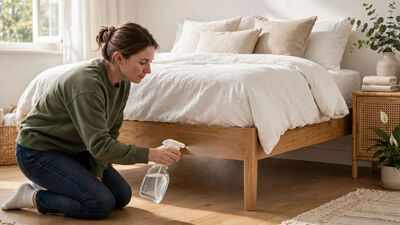
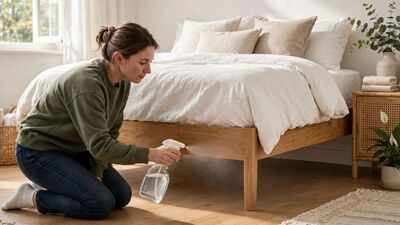
There are some corners of the home that rarely get the attention they deserve. The space under the bed is one of them. It can gather dust, lint, and stale smells while remaining out of sight during everyday cleaning. That is why a simple white vinegar spray has become a popular home-cleaning hack. A diluted solution can be used lightly around suitable hard surfaces such as beneath the bed, to help freshen the area and reduce certain unpleasant odours. Vinegar’s acidity can also help loosen some residues. However, it is not a substitute for cleaning, proper ventilation or pest control. It should never be sprayed heavily or left to soak into carpets, wooden flooring or furniture. Vinegar can also damage some materials and should never be mixed with bleach or other incompatible cleaners.
How white vinegar can freshen the space under your bed
It can help reduce musty smells
The space beneath a bed can have limited airflow. Dust and moisture may collect there over time and contribute to a stale smell. A light mist of diluted white vinegar can help neutralise some household odours rather than simply covering them with fragrance.
It can freshen an overlooked area
Under-bed spaces are often difficult to reach with regular cleaning. A light vinegar solution can be used on compatible hard surfaces after dust and debris have been removed. It should be seen as a finishing step rather than a replacement for cleaning.
It may discourage some insects
The strong smell of vinegar may make the area less appealing to some insects. However, this should not be treated as a reliable insect repellent. Persistent insect problems need proper identification and pest-control measures.
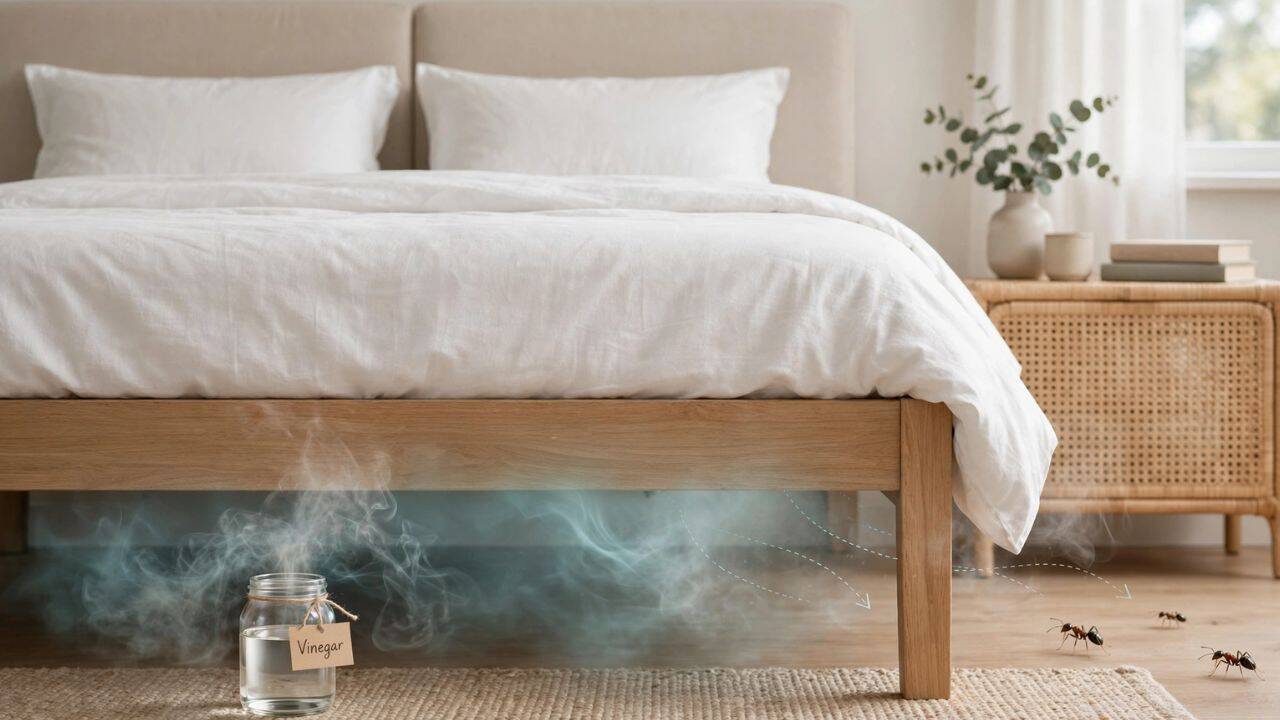
PC: AI Generated
It can help with certain residues
Vinegar can loosen some types of residue because of its acidity. This makes it useful for selected hard surfaces, although the surface should always be checked first because vinegar can damage some finishes.
It can help with lingering pet odours
A diluted vinegar solution may help neutralise some lingering odour on suitable hard surfaces. It should not be used to treat carpets, unfinished wood, or porous flooring without checking the material. For a persistent stain or strong odour, proper cleaning is more effective.
How to spray white vinegar under the bed safely
Dilute the vinegar first
Mix white distilled vinegar with water in a clean spray bottle. A simple 1:1 mixture is commonly used for household cleaning, but a lighter solution can be chosen for routine freshening.
Clean the area before spraying
Move storage boxes and other items from underneath the bed. Vacuum or sweep away dust, hair, and lint first. Spraying vinegar over accumulated dirt will not replace proper cleaning.
Use a fine mist
Spray over suitable hard surfaces. The aim is to lightly mist the area rather than soak it. Heavy application can leave moisture trapped in poorly ventilated spaces.
Let everything dry
Allow the area to dry completely before placing storage items again. Good airflow can help the vinegar smell dissipate more quickly.
Test the surface first
Test a small hidden area first. Do not assume every floor or furniture material is suitable for vinegar. It can damage natural stone, some wood finishes, and other sensitive surfaces.
What other household areas can benefit from a vinegar cleaning routine
Bedroom curtains
Some washable curtains can be lightly treated with a diluted vinegar solution to help with stale smells. Always check the fabric care label and test a hidden section first.

PC: AI Generated
Shoe storage areas
The inner surface of a shoe cupboard or storage area can develop unpleasant odours because of limited airflow. Cleaning the shelves and allowing them to dry before using a light vinegar mist may help freshen the space.
Waste bins
A diluted vinegar solution can be useful for wiping suitable hard surfaces around a bin after it has been emptied and cleaned. The bin should be dried afterwards to prevent lingering moisture.
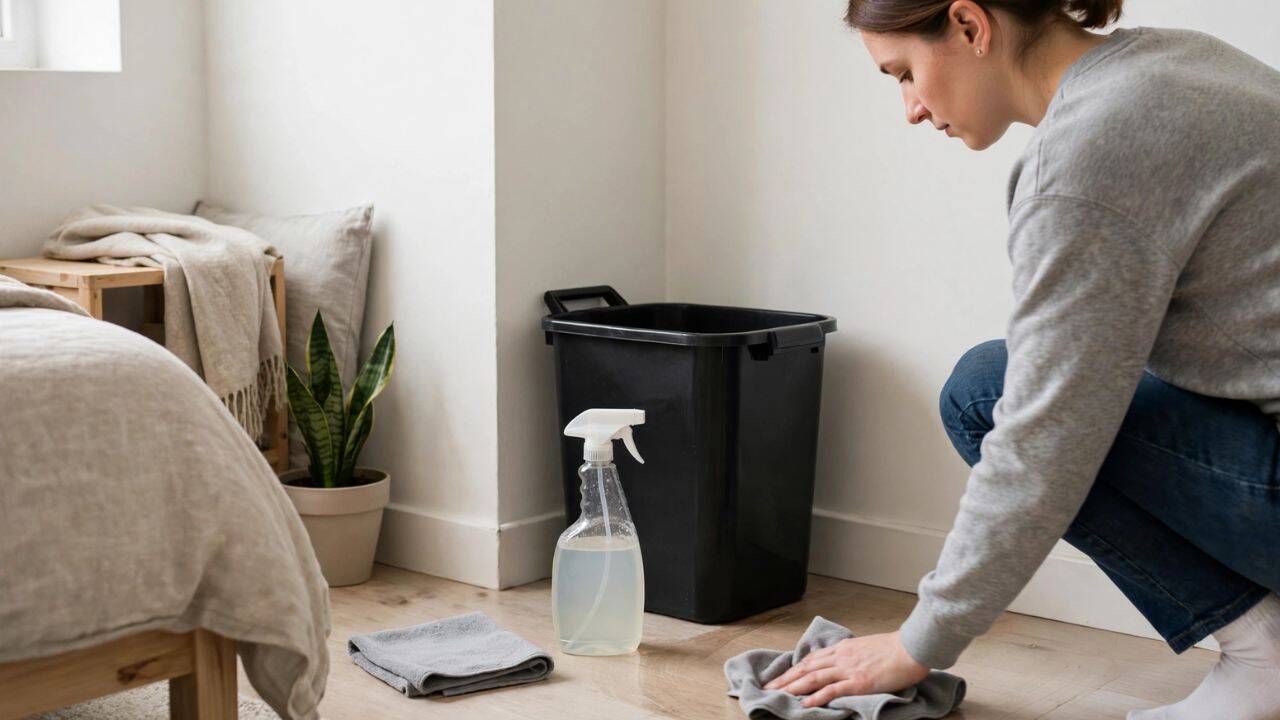
PC: AI Generated