









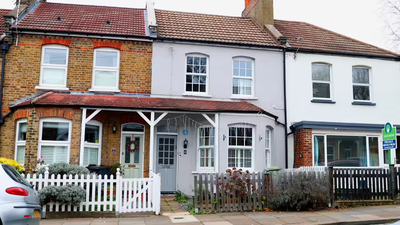
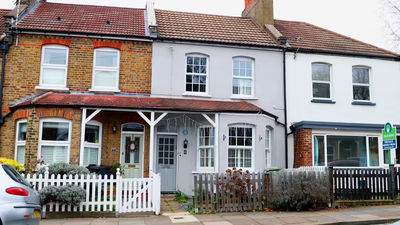
A decade after the Brexit referendum, London’s housing market has seen significantly slower growth, with experts citing political uncertainty, the pandemic and broader economic challenges as key factors behind the slowdown. Average house prices in London rose just nine per cent between 2016 and the first quarter of 2026, compared with a national average increase of 40 per cent, According to new research by Savills, cited by London newspaper The Standard Before Brexit, London house prices had surged 92 per cent in the decade to 2016.Research by Savills found annual house price growth in London fell sharply after the referendum. Average prices had risen 15 per cent in the year to March 2016 but declined three per cent in the 12 months to May 2019. “The political turmoil before and after the vote was a drag on buyer confidence. This was most acute in London as a cosmopolitan capital city,” said Lucian Cook, head of residential research at Savills.Property experts said uncertainty surrounding Brexit led many buyers and investors to delay decisions, while concerns over jobs, particularly in London’s financial sector, weighed on demand. “There was a period of stagnation between 2017 and 2019 as Theresa May’s government remained in a precarious position,” said Tom Bill from Knight Frank.“Brexit increased political and economic uncertainty that made buyers press pause, but it also altered the trajectory of the London housing market,” said Tony Mulhall of Royal Institution of Chartered Surveyors.Experts said Brexit’s impact was compounded by subsequent events, including the Covid-19 pandemic, rising inflation, higher interest rates and the cost-of-living crisis. “It is difficult to ascertain the true and isolated effects of Brexit because of what came next,” said economist Jennet Siebrits.“It is convenient to blame Brexit. It hasn’t helped but it certainly wasn’t the total disaster that was forecast. Covid, the expensive emergency furlough package, inflation, interest rate rises and the cost-of-living crisis were far more damaging,” she added.The report also noted that Brexit disrupted labour supply and construction activity, contributing to a decline in new housing starts across London. Meanwhile, affordability has worsened, with house prices now around 12 times average earnings and first-time buyers facing deposits approaching £150,000.Despite the challenges, analysts remain optimistic about London’s long-term prospects. “You will struggle to find a period of greater disruption to the housing and development markets,” Cook said.“London has been at the sharp end of a series of unique events but its access to Europe, the language, the cultural offering, leading leisure and retail, the time zone and education all mean London is still London and it will prove to be resilient over the next decade,” he added.