





The United States and Iran exchanged a fresh round of military strikes on Thursday, targeting each other’s strategically important military facilities across the Middle East.In the early hours of Thursday, the US conducted a series of strikes on Iranian military surveillance capabilities, communication systems and air defence sites across the country. In retaliation, Iran launched missile and drone attacks on US military installations in Bahrain, Kuwait and Jordan.“Iran is all talk and no action. They’ve taken too long to negotiate a deal that would have been great for them, now they will have to pay the price!!!” US President Donald Trump said in a social media post on Wednesday.The Islamic Revolutionary Guard Corps (IRGC) said its Aerospace Force and Navy conducted a retaliatory operation in two separate waves in response to the attacks.“Eighteen key targets belonging to the criminal US military were struck and destroyed at the Ali al-Salem and Ahmad al-Jaber airbases in Kuwait, as well as the Sheikh Isa airbase in Bahrain.”In a separate statement, the Iranian Army’s Public Relations Office said, “In response to a ceasefire violation and attacks on parts of southern Iran, the Islamic Republic of Iran’s Army used various explosive-laden drones to strike the US Fifth Fleet.”The statement further added that the communication antennas and radar systems associated with the fleet’s Patriot air defence system were targeted in the counterstrike.
US strikes on Iran
The US targeted military sites across Iran in its latest strikes. According to Reuters, Iranian news agencies reported explosions in several cities across the country, including Sirik, Kargan, Bandar Abbas and Minab in the southern province of Hormozgan. Strikes were also reported in Varamin and Karaj near Tehran.Bandar Abbas is Iran’s principal naval hub near the Strait of Hormuz and hosts multiple IRGC naval facilities. Alongside Bandar Abbas, Sirik and Minab, coastal cities overlooking the Gulf of Oman, were also targeted in the attack. Kargan, in Hormozgan province, which hosts key coastal defence, surveillance and communication infrastructure, was also targeted by the US.Strikes were also reported in Karaj and Varamin, both of which are located in close proximity to Tehran. The two cities form part of the wider region surrounding the Iranian capital and hold strategic importance due to their logistical and transportation roles.
Iran’s retaliation
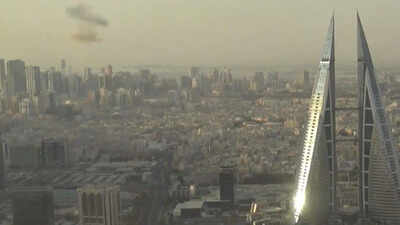
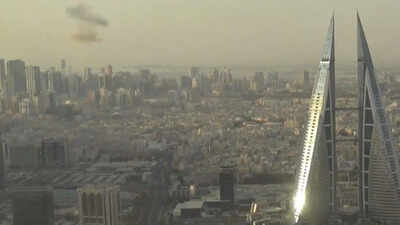
In response to the strikes, Iran launched retaliatory attacks on key US military installations across West Asia. Among the targets was Muwaffaq al-Salti Air Base in Jordan, which currently houses US F-35 fighter jets and supports air operations and intelligence missions in the region.In Bahrain, Iran targeted the US Fifth Fleet, the command centre for American naval operations in the region. Sheikh Isa Air Base, an important military installation, was also targeted in the attack.In Kuwait, Iran struck Ali al-Salem Air Base and Ahmad al-Jaber Air Base. Both facilities play an important role in US military operations in the Gulf. Ali al-Salem serves as a key hub for logistics and surveillance missions, while Ahmad al-Jaber supports combat air operations across the region.The latest exchange of strikes marks a significant escalation in tensions between Washington and Tehran, with both sides targeting critical military infrastructure. While the United States focused on Iranian naval, surveillance and logistical sites stretching from the Strait of Hormuz to the outskirts of Tehran, Iran targeted key American air and naval facilities across Bahrain, Kuwait and Jordan.As military tensions rise and peace talks remain in limbo, the region faces an increasingly unpredictable future, raising concerns about further escalation around the Strait of Hormuz and across the wider West Asia region.