








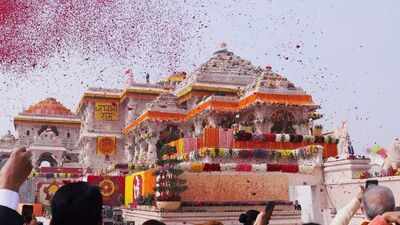
AYODHYA : Amid raging talks about the impending power shift and appointment of a CEO to run the Ram Temple trust, the bylaws governing the trust make it difficult to change its existing structure.Even if a CEO or managers are appointed to manage different operations at the temple, which continues to attract an average of 80,000 devotees daily, they would have to report to the same board of trustees.According to the original deed document, majority votes are required to amend existing provisions. Out of the 14 existing members (one member passed away last year), 10 have voting rights. General secretary Champat Rai and trust member Anil Mishra, who resigned after facing backlash, are likely to abstain from Monday’s meeting; hence, among the other eight, five must agree to notify a change in the working structure.
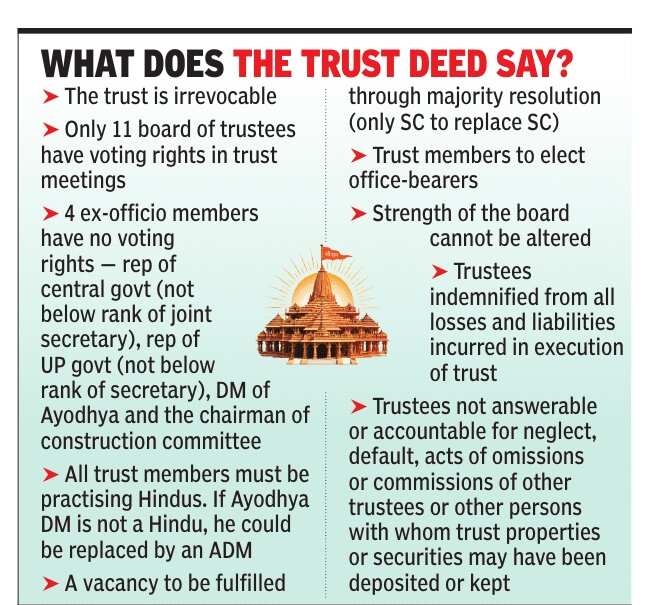
However, alterations should not be inconsistent with the basic structure of the trust and must be done without changing the original constitution of the board of trustees, the document mentions.In the concluding portion of the 18-page deed document, specific conditions that must be fulfilled in the two scenarios (resignation or termination) are laid down in black and white. With two trustees Rai and Mishra, becoming incommunicado it’s not sure whether those conditions have been fulfilled. Acceptance of resignation does not require voting.“Any trustee may resign after giving one month’s prior written notice to the board of trustees,” mentions the deed document. No other formality or protocol must be followed to remove a trustee who does not want to continue. No voting is required to accept a trust member’s resignation.However, terminating a trust member is a complicated process. The conditions to terminate permanent trustees are -upon death, resignation, unsound mind, declared bankrupt, upon conviction for a criminal offence involving moral turpitude, upon being declared incompetent to contract (as per Indian contract act) “The board of trustees may remove a trustee by a two-thirds majority for working against the interests of the trust. However this can only be done after serving the trustee concerned with a show-cause notice providing details and particulars of their activities against the interest of the trust and giving them an opportunity for reply and hearing,” the deed says.In the absence of any clarification from the existing trust members as well as treasurer Swami Govind Dev Giri who convened the July 6 meeting, unpleasant situations are expected to unfold when all the trust members gather at Ram Temple complex in Ayodhya at 3pm to attend the meeting, says a source watching the developments.“As is the case with all such groups, internal dynamics between trust members matter a lot at a crucial juncture like this one. Contrary to public perception and Rai’s public image, he commands a lot of respect and affection from people associated with the temple movement. I am sure he will have more supporters than critics on the table on Monday if a vote of trust is required on any matter. He has been staying in Ayodhya since 1991 to serve Ram Lalla,” said Prakash Sharma, former national convener of Bajrang Dal and Rai’s close confidante.In the five-point agenda circulated among the trust members, the board would also look at alternative arrangements to manage the Ram temple.The scope to amend the trust’s provisions has been provided but again with strict conditions. The constitution of the board of trustees cannot be changed, meaning the current 10 members can continue to serve the trust until their death, and without altering the basic structure of the trust deed.