







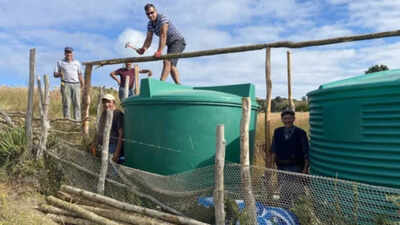
A small rural community on Chile’s Chiloe Island has ended years of dependence on emergency water tanker trucks by restoring its forests, protecting its watershed and building a community-managed water system.The project took years of planning and work by local residents, researchers and landowners. Rather than only building pipes and storage tanks, the community focused on improving the health of the land that supplies water. Nearly seven years after the system began operating, residents continue to receive a reliable water supply.The experience has now been turned into a practical guide for other rural communities that are facing water shortages. While the exact model cannot be copied everywhere, the approach of protecting the water source before building infrastructure can be adapted to many places. The information was published by Chile’s Institute of Ecology and Biodiversity.
A rainy island faced shortages
Chiloe Island is known for heavy rainfall. The Ancud area receives around 87 inches of rain in an average year. Even so, the Catruman community experienced serious water shortages.The problem was not the total amount of rainfall but when it fell. Most rain comes during winter, while summer rainfall has reduced over the years. During the dry season, small streams can stop flowing for as long as four months.As a result, many families struggled to get enough water. Before the project started, 64% of households depended partly on water supplied by tanker trucks. Around 37% relied completely on tanker deliveries for six months or more.Municipal records from the 2014-2015 drought show that tanker deliveries provided an average of only 2.4 gallons of water per person each day. That limited amount had to cover drinking, cooking, washing, caring for animals and watering vegetable gardens.
Restoring nature
To solve the problem, the community decided to improve the entire watershed. A watershed is the area of land where rainwater collects and flows into streams, rivers or springs. Keeping the land healthy helps water soak into the ground and flow steadily throughout the year.Residents worked with researchers to map Catruman’s 36 microcatchments- small areas that collect rainwater. They identified a stream that continued flowing throughout the year and worked with upstream landowners to protect it.The team planted more than 500 native trees around damaged land and an old spring. These included ulmo, coihue, canelo, luma and arrayan trees, all native to southern Chile.They also dug small infiltration trenches on slopes. These shallow channels slow down rainwater allowing more of it to soak into the soil instead of flowing away. This helps recharge groundwater and keeps streams flowing longer during dry periods.
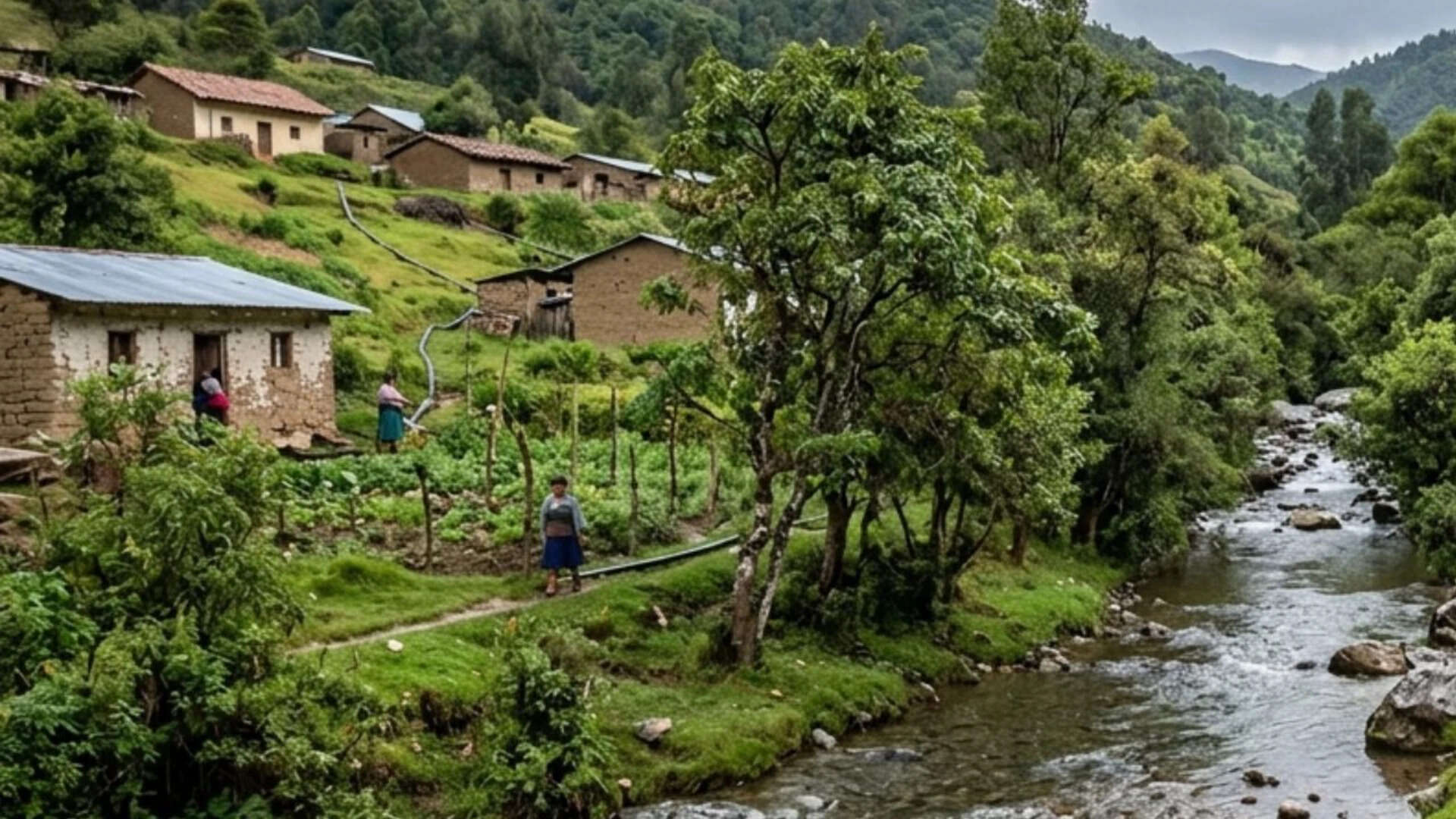
Even during the lowest measured summer flows, the stream supplied around 6.3 gallons of water every minute. (Representational AI image)
A gravity-fed system
Once the water source was protected, the community built a gravity-fed water network. Water first enters through an intake, passes through filters and then moves into a storage system that can hold around 6,600 gallons. From there, it flows naturally downhill through pipes to homes without needing electric pumps.Because the system uses gravity, it reduces electricity costs and ongoing maintenance, making it more suitable for a small rural community.Even during the lowest measured summer flows, the stream supplied around 6.3 gallons of water every minute, or about 9,100 gallons each day.The estimated daily demand for 14 families and the local civic centre was about 2,640 gallons. This meant enough water remained in the stream to support the surrounding ecosystem.
Wetland protected quality
The project also focused on keeping the water clean. A constructed wetland was built near a home and a small cheese-making operation located upstream from the community’s water intake.Constructed wetlands use plants and naturally occurring microorganisms to clean household wastewater. After treatment, the water can either be reused for irrigation or allowed to soak safely into the ground instead of flowing back into the community’s water source.The project showed that increasing the amount of available water is only part of the challenge. Protecting water quality is equally important because pollution from wastewater, livestock or household activities can make a water source unsafe.
Locally built and maintained
Community members carried out much of the construction through traditional collective work gatherings known as ‘mingas’.Residents also received training to maintain the pipes, filters and restoration areas. They formed a local organisation to collect fees, organise repairs and work with government agencies and landowners when needed.Community leader Galicia Mansilla said the changes had made a significant difference. “Before, we lived with a lot of uncertainty. Today, we have a system that works,” Ecoticias reported.