








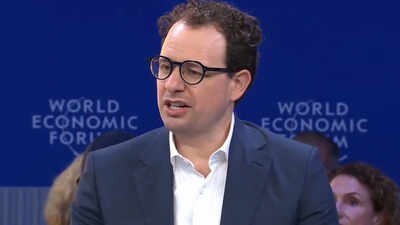
Court documents unsealed this week have pulled back the curtain on how one of America’s hottest AI companies fell out with the Pentagon. The emails, first reported by The Wall Street Journal and released as part of Anthropic’s ongoing litigation against the Department of Defense, trace a months-long exchange between Anthropic CEO Dario Amodei and Emil Michael, the undersecretary of defense for research and engineering. What began as a negotiation over how the military could use Claude ended with Anthropic labeled a “supply-chain risk,” treatment usually reserved for foreign adversaries.The correspondence, spread across January and February 2026, tracks how a working relationship steadily came apart. On one side sat a safety-focused lab drawing hard lines. On the other, a Pentagon that wanted no strings attached. The filings don’t just show who said what—they show where a $200 million relationship snapped.
Amodei’s two redlines: no autonomous weapons, no mass surveillance
Amodei’s position never moved. He wanted two hard limits on how the Department of War—the unofficial name the Pentagon has revived for the DoD—could deploy Anthropic’s models: no fully autonomous weapons, and no domestic mass surveillance. In a January 15 email, he wrote that these boundaries set important guardrails against using powerful AI to spy on Americans, without blocking legitimate foreign intelligence work. The Pentagon wanted broader terms. It insisted on covering “all lawful uses,” a phrase that leaves plenty of room.
Pentagon to Anthropic: your AI safeguards are ‘just not workable’
The talks had been dragging since late 2025, slowed partly by Amodei’s illness in December. On January 14, Michael broke weeks of silence, telling Amodei he was hoping the two sides were closer to engaging with Anthropic’s revised point of view. By February 4, his patience had thinned. Michael called Anthropic’s latest proposal “just not workable,” saying it clashed with the Pentagon’s first principles and piled on complexity. He offered one more chance to align on core principles before it stopped being a good use of anyone’s time.The offense-vs-defense line the Department of War wouldn’t acceptMichael’s February 12 email cut to the heart of the disagreement. Citing an in-person meeting with Tarun Chhabra, Anthropic’s national-security policy head, he argued there is no distinction in the Pentagon’s world between defensive and offensive weapons—a drone that downs other drones can do either job. He pointed to hypersonic threats and stealth attacks as cases where no human could respond in time. Amodei’s categories, he suggested, didn’t hold up against how the military actually operates.Amodei pushed back three days later. Following existing law wasn’t enough, he argued, because US law already permits some domestic surveillance. He pointed to Section 702 authorities, geolocation data around sensitive sites, and commercially available location data as examples—and said that’s exactly why Anthropic wanted its restrictions written in.
How Anthropic landed on the Pentagon’s ‘supply-chain risk’ list
The end came on February 26. Amodei rejected the Pentagon’s final draft, writing that it appeared to completely remove Anthropic’s redlines. The autonomy provision, he noted, was gutted by an “as appropriate” clause, and the surveillance protection collapsed under “and all other applicable laws.” He saw no path forward given those categorical statements.The next day, Defense Secretary Pete Hegseth announced on social media that he was designating Anthropic a supply-chain risk, barring Pentagon partners from using its technology. Anthropic sued. A federal judge, Rita Lin, later granted a preliminary injunction, calling the move classic illegal First Amendment retaliation for Anthropic’s public criticism—though an appeals court reversed that in April, and the case continues.Michael’s role has since drawn scrutiny. Financial disclosures show he held stock in xAI, an Anthropic rival, alongside other AI investments, which Anthropic points to in arguing the blacklisting was retaliation rather than security policy. The scramble that followed is visible in the filings, too: a March 3 late-night email from Commerce official Olivia Bradley shows agencies working to identify every Anthropic contract on the secretary’s orders.The case is far from settled. Anthropic is still fighting the Pentagon’s supply-chain label in court, with its government business hanging on the result. On a separate front, though, some ground has been regained—government-approved agencies now have access to Mythos 5, the company’s most powerful AI model.