






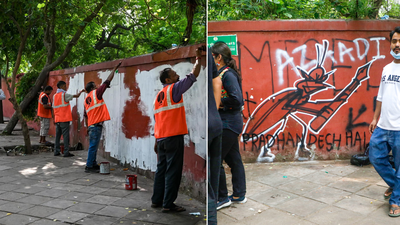
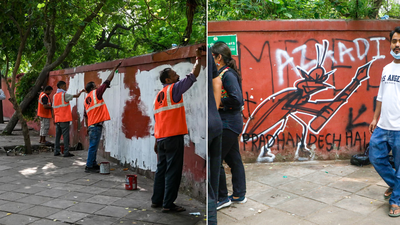
NEW DELHI: On Sunday, Jantar Mantar and the lanes leading to it felt both different and familiar.It was a day after Dharmendra Pradhan resigned as Union education minister following 36 days of protest over the NEET paper leak.Signs of the protest were everywhere, but so also was evidence that an overnight effort was made to remove the traces of it.The slogans that had covered the walls had been painted over.The lanes had been cleaned. The main section, with the stage area, was out of bounds. Police said “cleaning was in progress”.The main entry points to the site were blocked. Those determined to get in found another way, through an inner lane, off Janpath.
CJP Jantar Mantar Protest Updates
But after entering the lane, they were stopped from accessing the main area.Still, people came in scattered groups.There were surprisingly many first-time visitors from outside Delhi.Several of them said they couldn’t come on weekdays but had planned this visit in advance because they wanted to be part of the protest. Alongside them were those who had been at the site since Day 1, who were returning, despite the restrictions.Some reminders of the previous day’s events, however, could not be painted over.A few students who had been injured in the police action were back. Nearby, a car with shattered windows stood.Among those who returned was Sahil, a student who arrived at the protest site with a plaster on one foot and a walker to help him move.Surrounded by his friends, he carefully made his way through the lane, stopping to rest, and determined not to turn back.The injury was fresh, but his decision to return seemed older than the pain.When asked about his broken leg, Sahil smiled and briefly looked towards his friends standing beside him.“This happened when we were trying to run for cover,” he said.Not everyone who arrived at Jantar Mantar had been part of the movement from the beginning. Some had travelled hundreds of kilometres just to stand at the site once.Aniruddh, a student preparing for competitive exams, came from Saharanpur and was visiting the protest site for the first time.“I was a little late, but I really wanted to come here. I booked my train ticket in advance because I knew I might not be able to come during the weekdays,” he said.For students like him, the protest had become a way of showing solidarity with thousands of others who were questioning the impact of the paper leak on their future.Zubair, who travelled from Bhopal, said, “It is one thing to watch everything on social media, but when I saw what was happening here, I couldn’t stay in Bhopal anymore.”The visitors on Sunday also included people who had made Jantar Mantar part of their daily routine. Fahmina had been coming to the protest from Day 1 along with her husband, who works in a parking space nearby.Travelling from Ghaziabad every day, she stood through the restrictions and even faced lathis during the clashes.“I also have kids. One is completing Class XII, the other is doing graduation. If we don’t raise our voices now, what will happen to their future? That’s my only concern,” she said.Expressing relief over Pradhan’s resignation, she added, “Pradhan is gone. But if the next one is also like Pradhan, we will raise our voice again. This is about the future of the entire country.”For some younger visitors, reaching Jantar Mantar meant keeping their plans hidden from their parents.Nitin and Amit, Class XI students from Dwarka, did not tell their parents they were coming to the protest site.“On weekdays, we couldn’t come. We had studies and our parents would not allow it. Today, we said we’re going nearby, took the metro and came here,” Nitin said, as the two watched groups chant slogans.Some people were even seen breaching the adjacent boundary of the Jantar Mantar heritage monument to enter the lane.Another group was focused on cleaning up the place. A group of strangers who had come from different parts of India found themselves picking up garbage bags together.They encouraged others to join them. “We didn’t know each other before this at all,” said Priya, before calling out: “Naare baad mein lagana, pehle safai karo (Shout slogans later, first come and clean the place).”The protest had also changed the surrounding streets. Ice cream sellers and golgappa vendors found a new spot where demand remained steady as visitors continued to arrive.Street shops reopened after many days. “We could not open our shops as this whole street was filled with protesters. It’s a relief finally,” said a shopkeeper.By afternoon, the scattered groups slowly became a crowd. The police started dispersing them.Meanwhile, workers with paint cans moved from one place to the other.For many who gathered there on Sunday, simply being present was a statement in itself, and they said they would return if the need arose.