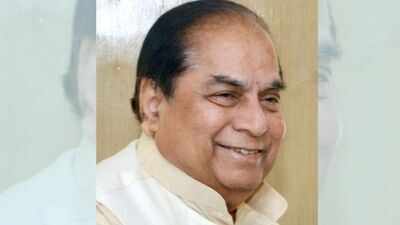










René Mayrhofer, the engineer who led Google‘s Android platform security team as a director before moving into a principal engineer role, has resigned over the company’s decision to let the Pentagon use its Gemini AI for classified military work. His farewell note pulls no punches—he told colleagues that leadership “has lost its moral compass,” the line he used to title the letter itself. The note was first obtained and reported by Business Insider.Mayrhofer dated the note May 18 and circulated it internally before publishing it on his personal blog, where he says it “spread far wider than he expected.” His core reason is blunt: as a self-described pacifist, he won’t work even indirectly for a US military he sees as engaged in offensive warfare. “Proactively harming people is not something that I can or will be involved with,” he wrote.
The Pentagon AI deal that drove the resignation
The trigger was Google’s late-April agreement with the Department of Defense, recently renamed the Department of War under the Trump administration. The contract clears the Pentagon to run Google’s Gemini model on classified systems for “any lawful purpose”—the same open-ended wording OpenAI and Elon Musk’s xAI accepted in their own military deals.That phrase is exactly what set Mayrhofer off. Google, he wrote, is “signing deals with the US Ministry of War,” where “any lawful purpose” by the current government had already been shown, repeatedly, to break international law. He confirmed the letter’s authenticity to Business Insider and said the decisions were made entirely at the top, without internal debate. “None of this is being debated or communicated within the company,” he wrote—a sharp complaint from someone who’d once sat in Google’s management chain himself.Mayrhofer led the Android platform security team from Mountain View until around 2019, then shifted to a part-time, strategic role after relocating his family to Austria. Over a year ago he formally moved from Director Engineering to a principal software engineer post on the individual-contributor track. He wasn’t a sitting director when he resigned—a detail he pointedly corrected.
Why surveillance fears made it personal
For Mayrhofer, the stakes aren’t abstract. He’s also a professor at Johannes Kepler University Linz in Austria, and he fears the “any lawful purpose” clause could stretch to cover mass surveillance of EU citizens, himself included. He pointed to the US government turning “hostile” toward European academics and warned that Google’s AI products “will likely be used directly against me and mine.”The climate angle feeds his broader read that Google’s priorities have quietly shifted. In the same note he wrote that the company had abandoned its carbon-neutral goal to feed the energy appetite of its AI models—a decision he frames as part of the same top-down drift, not a co-equal reason for leaving.His departure is also a measure of how far Google has moved. He signed the 2018 open letter that pushed the company to drop an earlier Pentagon contract, back when Sundar Pichai’s AI principles explicitly ruled out weapons and surveillance tools. Those clauses were stripped out in February 2025. The “Don’t be evil” motto had faded long before.
A wider revolt inside Google over military AI
Mayrhofer is far from the only one uneasy. More than 560 employees signed an open letter urging Pichai to walk away from the talks, warning the technology could be used in “inhumane or extremely harmful ways.” Andreas Kirsch, a research scientist at Google DeepMind, told Business Insider in April he was “incredibly ashamed” of the decision.Google didn’t respond to Business Insider’s request for comment, though a spokesperson previously said the company was “proud” to support national security and maintained its AI shouldn’t power domestic mass surveillance or autonomous weapons without human oversight.Mayrhofer, who concedes his tenure made it easier to leave than it would be for colleagues who depend on the paycheck, plans to serve out his notice until August. He’ll stop touching any AI work tied to the deal immediately. “I am quite sad that it had to come to this,” he wrote, “and desperately hope Google management re-discovers its moral compass.”
The full farewell note, as published on Mayrhofer’s blog:
When Google offered me the job of Director of Android Platform Security in 2017, it was impossible to refuse. Yes, Trump was already president—my family and I had qualms—but he seemed contained, even ineffective. More importantly, Google was a different company 9 years ago. Android was open source first and had just surpassed 2 billion users. I’d been studying its security from the outside since 2009, and it was (and still is! ) the most exciting end-user facing operating system to work on. However, while the source code was always public, getting direct contact to the internal Android team had been incredibly difficult; trying to discuss new ideas for security mitigations or architectures supporting upcoming fields like mobile digital ID was a frustrating exercise for academics and industry researchers outside Google.Getting the chance to lead on the inside, on the most widely used Linux based, (mostly) open source operating system in the world, was an incredible chance. I am still thankful for the initial offer, especially to Dave Kleidermacher and Nick Kralevich for their trust in me, and the welcoming atmosphere from day one. Google was the place to be to getting things done on a global scale, The culture was transparent and open to diverse discourse, and from the start it was made clear that, as Googlers, we were not only welcome but expected to bring our own identity and values into the job. As an academic and tenured professor of computer security, working on Android inside Google was literally the most appealing place in the whole of the Silicon Valley – the one that best matched the spirit of academia and my own ethical principles to work for the public good.While I was never really involved with the cloud side of things, on the company level, the goal was still to become completely carbon-neutral, and contracts with the Pentagon were canceled after employees spoke up against them (I signed the 2018 open letter). The AI principles published by Sundar Pichai in 2018 stated very clearly that “AI applications we will not pursue: … 2. Weapons or other technologies whose principal purpose or implementation is to cause or directly facilitate injury to people. 3. Technologies that gather or use information for surveillance violating internationally accepted norms. 4. Technologies whose purpose contravenes widely accepted principles of international law and human rights.” Many computer scientists and software engineers wanted to work at Google, and I heard both hearty congrats and fierce jealousy when I mentioned the job offer to colleagues before relocating to Mountain View.Then there were the people. Larry and Sergey were still answering some tough leadership questions every week, and “Don’t Be Evil” wasn’t just a slogan of often-referenced Googliness—it was a north star for teams making hard calls. My immediate team—Android Security, the defenders of Billions of users—has the motto to “make things so secure that we ourselves can’t break them, whether the device costs $1000 or $100, or the user is a celebrity or a refugee”. It was always about doing right for our users, and protecting their interests first (occasionally even against business interests of other Google apps and services). I met the most amazing experts within my first months of joining, including Android legends like Dianne Hackborn. Everybody was friendly, happy to give time to newcomers, to share their knowledge about the technology as well as about the internal processes. And everybody was dedicated to do right by the global population—thanks a lot to all of you for that hard work! I am still incredibly proud of many of our achievements, most of which required moving other ecosystem stakeholders over long periods of time. Making full device encryption the Android 10 default even for the cheapest of devices moved the world forward. Enabling end-to-end encrypted Android backup quietly while the discussions focused on Apple defined a de facto state of the art that still holds strong in current law enforcement vs. user privacy discussions. Insider Attack Resistance, ARM MTE, privacy-first digital credentials, and many other things were only possible because we pulled together to make our users more secure—including against a potentially malicious sub-part of Google itself.Unfortunately, times have changed. Google management has quietly abandoned its goals to become carbon-neutral because of the AI model energy usage. Worse, Google management is now signing deals with the US Ministry of War—where “any lawful purpose” by the current US government has already been repeatedly demonstrated to be in violation of international laws. None of this is being debated or communicated within the company. It is just decided by top-level management (I was part of the management chain before, and I hadn’t heard of any of these changes through internal channels). With my moral and ethical principles, I cannot—explicitly or implicitly, directly or transitively—support the current and ongoing actions of the “Maximum lethality, not tepid legality” US Ministry of War. Given Google’s top-level management direction and recent doubling-down, this unfortunately leaves me with the only choice to resign.On the one hand, this decision has been incredibly hard to make. I will miss the people, all of you who are still trying to do good for the rest of the planet. I will miss the opportunities to affect positive change. I will miss the brilliant engineers and technically focused decision-making. I will miss the blameless post-mortems and the overall, very mature culture on dealing with failures.On the other hand, this decision has been easy because it has become unavoidable. I am a pacifist, and have long ago decided that I will not personally work for militaries engaging in offensive warfare (strictly defensive action is somewhat different). Proactively harming people is not something that I can or will be involved with. I am also a European academic. That means the current US government has become hostile to me, and “any lawful purpose” in this sense will absolutely include mass surveillance of EU citizens. This deal implies that Google (AI) products will likely be used directly against me and mine. In this recent environment, I don’t see how I could not resign.My current contract gives a notice period of 3 months starting with the last day of the month in which the resignation is tendered. That means I’ll still be around (in my limited time commitment) and reachable through internal channels until 2026-08-31, wrapping up or passing on some of my ongoing projects—but I will immediately disconnect from any work on AI systems that might fall under this deal with the DoW (not that I am aware of having been involved so far). Afterward, I should be easy to reach externally through multiple channels. I will continue to work on end-to-end encrypted, resilient communication and storage protocols, privacy-preserving digital identity, embedded systems security, operating systems and supply chain security, and related topics. One intersection point of these topics is obviously still Android (particularly AOSP) security and privacy.I am quite sad that it had to come to this, and desperately hope Google management re-discovers its moral compass. Until then, I’ll miss y’all.