











At just 11 years old, A.S. Sharvaanica from Tamil Nadu has done something rare in chess: she moved up an age group and won a world title without losing a single game. In April 2026, she became the World Under-12 Girls Rapid Champion at the FIDE World Cadet & Youth Championships in Vrnjačka Banja, Serbia. Sharvaanica scored 10.5 points from 11 rounds (10 wins, 1 draw) and clinched the gold with two rounds still left to play. She sealed the title in round nine by beating higher-rated Ema Jaksa of Slovenia and finished three full points ahead of the runner-up, Zhansaya Sholpanbek of Kazakhstan.
From U-10 world champion to U-12 queen
28 Jul 2026 | 16:22
How do you teach children about money and financial responsibility?
This was not Sharvaanica’s first world crown. In 2025, at age 10, she won the World Under-10 Girls Cadets Chess Championship, recovering from a first-round loss to win nine straight games and take gold. That made her the third Indian girl to win the U-10 world title, after legends like Koneru Humpy and Divya Deshmukh. Stepping into U-12 in 2026, she repeated the feat in the rapid format, this time staying unbeaten throughout and showing how comfortably she can compete against older opponents.
Ratings, titles, and a historic rise
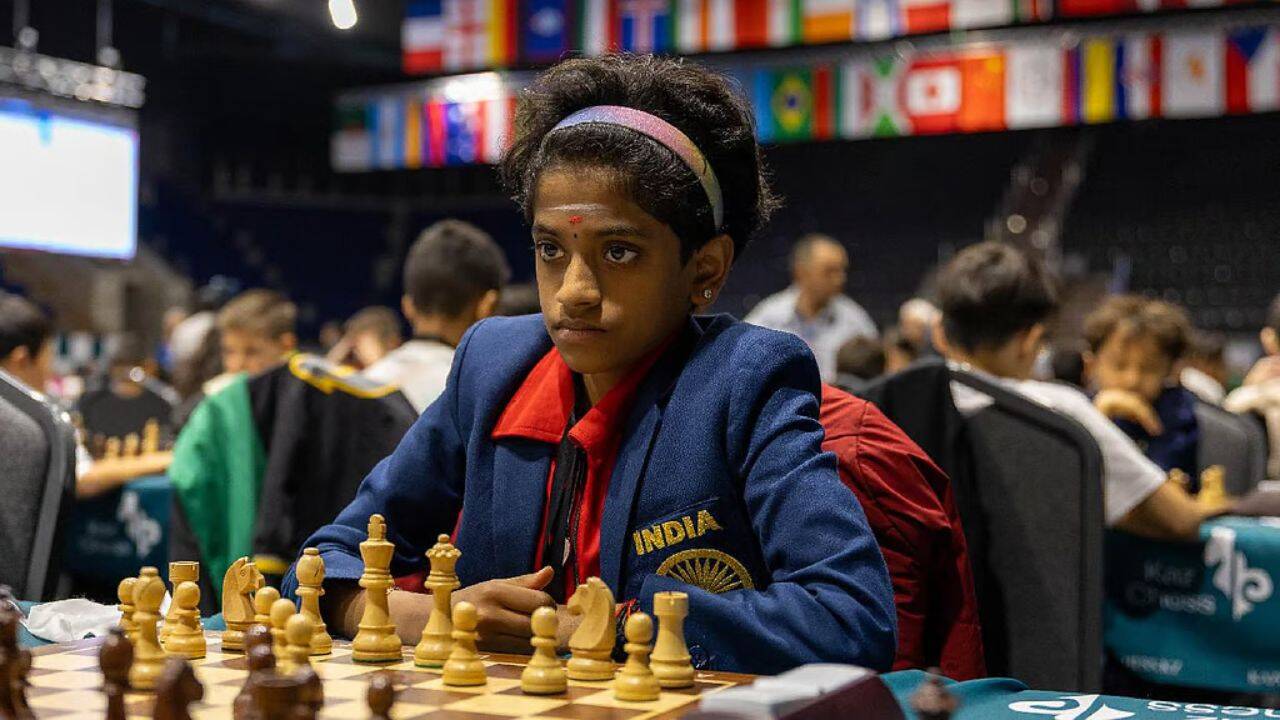
Sharvaanica is already rated above 2,000 in classical chess and has been listed by FIDE as a Woman Candidate Master (WCM). In August 2026, reports noted she had crossed an even higher live classical rating and earned the stronger Woman FIDE Master (WFM) title, while also becoming India’s No. 1 under-18 girl in rapid chess. These milestones matter because FIDE titles and rating thresholds are official markers of strength. Moving from WCM to WFM shows consistent performance against strong fields over time, not just one good tournament.
How the Serbia win unfolded
The 2026 U-12 girls’ rapid event had players from more than 40 countries. Sharvaanica entered as one of the top seeds, with a classical rating around 2041 at the time. Her tournament run looked like this: She began with steady wins, including a round-three victory over Alisa Yunker. She then won three more games in a row before being held to a draw in round seven against Ukraine’s Daria Kravchuk. On the second day, she won again and kept pressing, eventually beating Ema Jaksa in round nine to mathematically secure the title. She finished with 10.5/11, leaving the second-place player on 7.5 points. Finishing “with two rounds to spare” means that even before the last two games, no rival could catch her on points.
Beyond the board: background and support

Sharvaanica hails from Chennai, Tamil Nadu, and has been representing India at global youth events since she was very young. Media profiles highlight her focus in tournaments and the strong support from her family, who manage travel, training, and the demands of a growing competition calendar. She has also won multiple medals at Asian and Commonwealth youth events, building a record that mixes classical, rapid, and blitz success. In 2024, she took silver in blitz at a FIDE World Rapid and Blitz Championship event in Albania, showing her comfort with faster time controls too.
Why Sharvaanica’s rise matters for Indian chess
India has become a powerhouse in youth chess, with a deep pipeline of titled teenagers and even younger prodigies. Sharvaanica’s back-to-back world titles in U-10 (classical) and U-12 (rapid) fit a clear pattern: Indian girls are not only winning, they are winning across age groups and formats. Her jump from U-10 to U-12 world champion in successive years signals that she is progressing faster than the usual curve. Combined with her new WFM title and top national rapid ranking in her age band, she is now firmly in the conversation as one of India’s most promising young female players.
What’s next?

With a WFM title already secured and a classical rating climbing past 2,200 in live lists, the next logical steps are strong open tournaments, more international youth events, and pushing toward higher FIDE titles. If she keeps improving at this pace, the Woman International Master (WIM) and eventually Woman Grandmaster (WGM) targets will come into view in the next few years. For now, the story is simple: an 11-year-old from Tamil Nadu moved up a category, stayed unbeaten, and won the world again.