









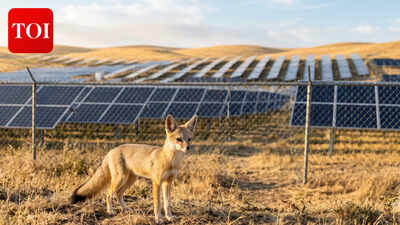
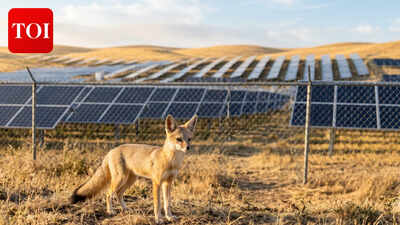
The San Joaquin kit fox, a small endangered canid native to central California, has found an unlikely refuge inside two of the state’s biggest solar farms. Research conducted at the Topaz Solar Farms and the neighbouring California Valley Solar Ranch shows that these sprawling facilities, built on the animal’s own habitat, are actually helping the species survive—shielding foxes from predators and giving them room to den, breed, and thrive.
Fences that keep predators out, foxes in
The findings come from studies run between 2014 and 2017, with results published in a 2019 report by researchers from California State University, Stanislaus and Althouse and Meade. The design of the security fencing did much of the heavy lifting. Arrays were ringed with chain-link fences raised roughly 12 to 15 cm off the ground—wide enough for a kit fox to slip under, too narrow for coyotes and bobcats to follow. Topaz even fitted a rail along the bottom of the gap to stop larger predators digging their way in.The solar panels pulled their weight too. Perched above the ground, they gave foxes cover from golden eagles, which hunt from the air and turned out to be a major threat on open land nearby. The upshot: the fenced arrays worked as refugia, areas where predation risk dropped sharply.The numbers back it up. Survival rates on the solar site trended higher than on comparable land outside, and a follow-up study from 2019 to 2022 found fox survival held steady inside the farm even as it slipped elsewhere. Reproductive success and body weights matched those of foxes on undisturbed reference land.
Why the design matters more than the panels
None of this happened by accident. The foxes’ good fortune rests on a stack of deliberate conservation measures: movement corridors threaded through the site, 16 artificial dens, sheep grazing to keep vegetation low and prey-friendly, and bans on dogs, firearms, and trash. Strip those away and the outcome could look very different.Researchers are careful not to oversell it. They still advise against building solar on high-quality habitat, since habitat loss remains the biggest reason the species is endangered in the first place. But on degraded or previously farmed land, a well-planned solar farm can nudge suitability back up—especially when it links two patches of good habitat.For a species with fewer than 4,000 foxes left, that’s a meaningful lifeline. And it points to a broader lesson: clean energy and conservation don’t have to pull in opposite directions.