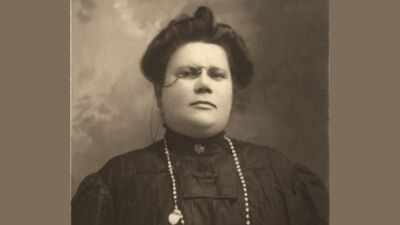







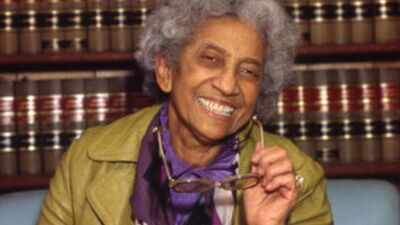
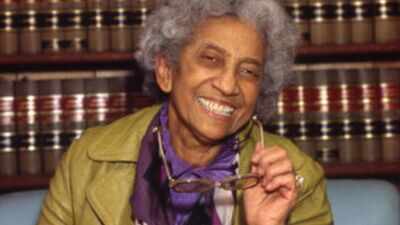
American lawyer and civil rights advocate Mahala Ashley Dickerson’s life took her from Montgomery, Alabama, to Alaska, where she broke barriers in both the legal profession and homesteading. Her journey has been featured by the National Park Service among important figures in Black history.Born in Montgomery in 1912, Dickerson grew up in the American South before graduating from Tennessee’s Fisk University in 1935. She later earned her law degree from Howard University School of Law in Washington, DC, in 1945.After completing her legal education, Dickerson returned to Alabama. In 1948, she became the first Black female lawyer in the state. She spent the next six decades working in the legal profession and became known for representing people who faced discrimination. Her career later took her to Indiana and then, unexpectedly, to Alaska.Dickerson moved to Indiana in 1951 after practising law in Alabama for three years. There, she became only the second Black woman admitted to the bar in the state. But her life changed several years later after she travelled to Alaska on holiday. She was drawn to the state’s landscape and natural beauty and eventually decided to move there.In 1958, Dickerson filed a claim for a 160-acre homestead in the Matanuska-Susitna Valley near Wasilla. By doing so, she became Alaska’s first Black homesteader. A few months later, she passed the Alaska Bar exam and became the first Black lawyer in Alaska, adding another milestone to a career already marked by barriers she had overcome.
Building career in Alaska
Dickerson continued to face discrimination in Alaska, just as she had elsewhere. However, she chose to stay and established law offices in Wasilla and Anchorage. She became known for the strong defence she offered to her clients and for her willingness to take on difficult cases.Describing her approach to the legal profession, Dickerson once said, “My zeal was often resented by opposing counsel. I had no fear of the other attorney and often incurred his wrath.”Her determination also shaped some of the cases she took on. One of her most notable trials involved female faculty members at the University of Alaska. The women were receiving lower wages than their male counterparts. Dickerson won the case, creating a precedent for the female faculty members.Her work brought recognition beyond Alaska. Dickerson held several important positions and received a number of honours during her long legal career. From 1983 to 1984, she served as president of the National Association of Women Lawyers.
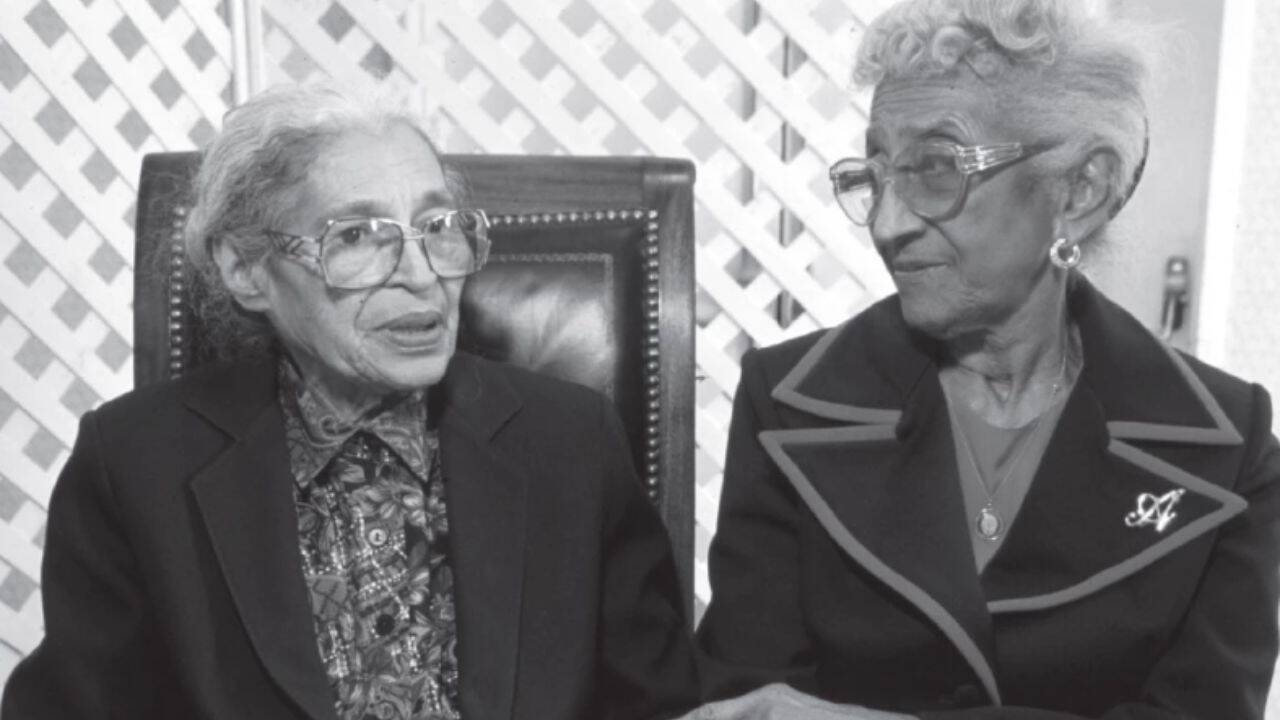
Dickerson was a longtime friend of legendary civil rights activist, Rosa Parks (NPS photo)
A trailblazer
In 1985, Dickerson received the Zeta Phi Beta Award for distinguished service in the field of law. A decade later, she received one of the most notable honours of her career.In 1995, the American Bar Association awarded Dickerson the Margaret Brent Award. The award recognised outstanding American female lawyers. Dickerson spoke about the achievement with the confidence that had marked much of her career. “Ruth Bader Ginsburg got hers before me, but I got mine before Sandra Day O’Connor,” she said..
‘Not afraid to fight somebody big’
She also documented her experiences and views in an autobiography. In 1998, she published Delayed Justice for Sale, giving readers another account of her life and career.In her autobiography, Dickerson reflected on the challenges she had faced and the determination that had driven her throughout her life.“In my life, I didn’t have but two things to do. Those were to stay black and die. I’m just not afraid to fight somebody big,” she wrote.The statement captured the attitude that had defined her legal career. From becoming Alabama’s first Black female lawyer to becoming the first Black lawyer in Alaska, Dickerson repeatedly entered professions and places where she had to overcome discrimination. She died in 2007 at the age of 94.