






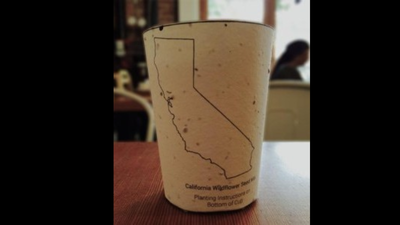
A disposable coffee cup normally has a very short life. It holds a hot drink, travels with its owner for a while and is then left behind as waste. In 2015, an unusual idea proposed changing what happened next. Reduce. Reuse. Grow. Developed what it called the “World’s First Plantable Coffee Cup”, a paper cup made with seeds embedded into its material. Rather than simply disappearing into the waste stream, the cup could be taken apart, soaked and planted. The project used post-consumer paper fibres that would otherwise have been discarded and envisaged the cups becoming part of local reforestation efforts. The seeds were selected from native varieties, while the cup was designed to withstand the heat of coffee without exposing them directly to it. Its Kickstarter campaign eventually raised $21,077 from 569 backers, turning a familiar everyday item into an experiment in what disposable packaging might become after use.
Recycled paper fibres gave the plantable coffee cup a second life
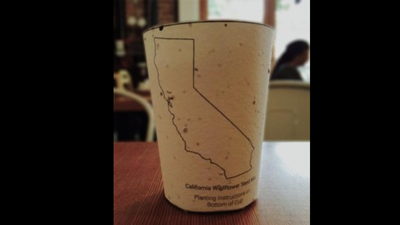
According to the Kickstarter campaign for Reduce. Reuse. Grow., the project used post-consumer paper fibres collected from local recycling centres, including fibres that were considered too rough for conventional packaging. The campaign said the resulting cup was compost certified and could biodegrade within 180 days.The project began with an awkward question about what happens after a coffee cup has been used. The team said it was using post-consumer paper fibres collected from local recycling centres, including material considered too rough for ordinary packaging. The proposed cup was also described as compost certified, with the company saying it could biodegrade within 180 days.The intended second life of the cup was more specific than simply allowing it to decompose. Seeds were embedded in the material, with the variety identified on the outside and planting directions printed underneath. The campaign described the basic process in almost casual terms: “Unravel the cup, soak in water for 5 minutes and watch grow!” A separate 2015 account by Branded Paper Cups said the seeds were held within the inner lining and selected native varieties were being used, with choices based on their hardiness and durability.
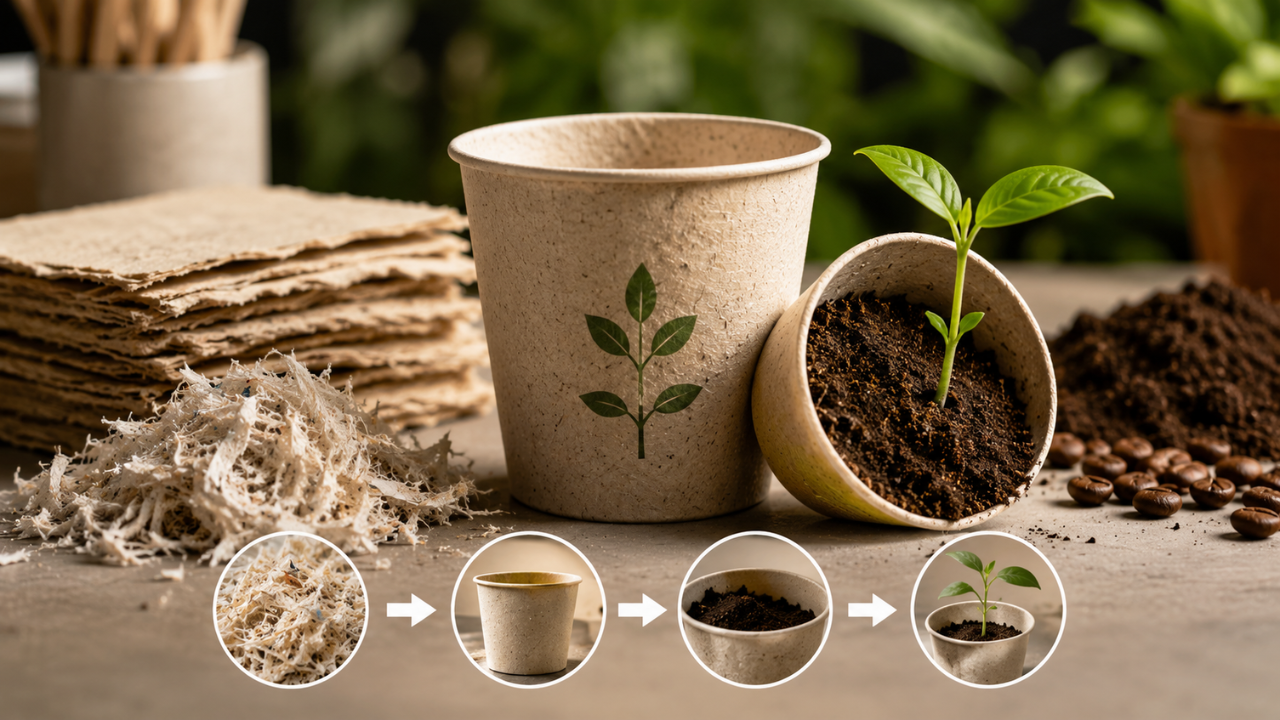
Image AI generated
Plantable coffee cups could be planted at home or collected for reforestation
There were two possible routes once the drink was gone. Someone could take the cup home, prepare it for planting and put it into suitable ground. The campaign also envisaged a collection system for cups that people did not want to plant themselves. In that version, Reduce. Reuse. Grow. or another organisation could collect them and direct them towards local reforestation work.The proposed planting sites were not limited to private gardens. The campaign mentioned community projects as well as state and national parks affected by fires, overgrazing or other forms of habitat damage. That gave the cup a second function: rather than treating every used container as an individual gardening project, discarded cups could potentially become part of wider planting efforts. The project described its intended material cycle in direct terms, saying the cup could be “used for reforestation in your local communities”.
How the 2015 plantable coffee cup protected seeds from hot coffee
Making a paper cup that could survive a hot drink while still containing viable seeds was not quite as straightforward as planting ordinary seed paper. Branded Paper Cups reported that the seeds were kept away from direct contact with the coffee and its heat. The lining was described as heat resistant, intended to protect the seeds during use rather than allowing them to be damaged before the cup ever reached the ground.The project itself also acknowledged that several technical and environmental questions remained unresolved. Its Kickstarter risk statement identified the possibility of spreading non-native or invasive species, finding material that would biodegrade by 90% within 180 days or less, and building a reliable link between the supply of cups and the availability of reforestation sites. At the time, the creator described the product as moving from a prototype towards commercial prototyping rather than as a finished mass-manufactured system.
The plantable coffee cup campaign raised more than twice its $10,000 funding goal
The campaign’s funding figures show that the concept attracted attention. It set a $10,000 target and finished with $21,077 pledged by 569 backers. The campaign ran for 36 days, from 7 February to 15 March 2015, while rewards ranged from a name printed on an early cup to framed versions of the first cups and other project merchandise.What made the proposal distinct was not simply that the cup could biodegrade. The project was trying to make disposal itself part of the product’s purpose. Distinction when it described the concept as one in which “Each disposed cup becomes a potential plant instead of just filling up landfills.” The sources do not establish how widely the cup was ultimately manufactured or used after the campaign, so the evidence supports its significance as a 2015 plantable-cup proposal rather than a claim about its later commercial reach.