






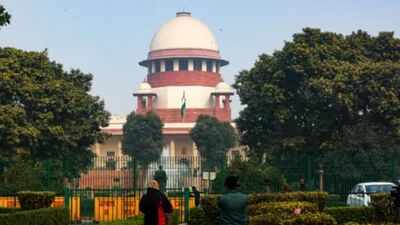
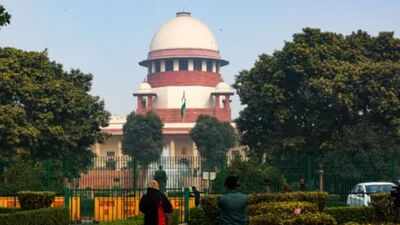
NEW DELHI: Put on the back foot by a Supreme Court intervention, NCERT on Tuesday has released the revised Part 2 of its Class 8 Social Science textbook with the controversial chapter on judiciary stripped of its earlier critical framing and recast as a more conventional civics lesson on justice, constitutional remedies, courts, tribunals and dispute resolution.The biggest shift is in Chapter 4, The Role of the Judiciary in Our Society. The revised version drops the earlier section on “corruption in judiciary” and the discussion on judicial backlog as a key challenge. Instead, it now opens with broader questions: “What is the concept of justice?” , “Why is it important for a just and harmonious society?” , “What is the structure and role of the judiciary in India?” and “What are the alternative modes of dispute resolution?”The earlier version had said the judicial system faced “corruption” and “massive backlog”, and referred to complaints received through CPGRAMS. It stated that the judiciary had an “established procedure for receiving complaints” and that over 1,600 such complaints were received between 2017 and 2021. The passage that drew the sharpest objection said “people do experience corruption at various levels of the judiciary,” adding that efforts were being made to increase transparency and act against corruption.The controversy erupted soon after the book was released in February. The Supreme Court took suo motu cognisance, ordered withdrawal of physical and digital copies, and later said the chapter gave an impression that the judiciary had acknowledged institutional corruption while leaving out its role in protecting constitutional rights and access to justice. NCERT apologised, called the inclusion an “error of judgement” and said the chapter would be rewritten.The revised chapter now leans heavily on constitutional structure. It says the judiciary is “one of the three pillars of the government” and is “independent from the legislature and the executive”. It adds that the judiciary ensures that laws passed by legislatures remain within the “framework of the Constitution” and that the executive does not “overstep its role”. The tone has clearly shifted from scrutiny of institutional shortcomings to institutional explanation.There are substantial additions. A new section on writ jurisdiction explains Articles 32 and 226 and calls the right to constitutional remedies a “right under the Constitution to file a writ petition” before the Supreme Court or high courts. The chapter adds a detailed segment on PILs, describing PIL as “an innovation introduced by the Supreme Court” to address issues of public concern, with examples including the Hussainara Khatoon undertrial prisoners case, M C Mehta’s environmental litigation and the Vishaka guidelines on workplace sexual harassment.The chapter also expands the Supreme Court’s original, appellate, advisory and special leave jurisdictions, and includes references to Articles 141 and 142. It lists 25 high courts, explains subordinate courts, and introduces tribunals such as NCLT, consumer fora, NGT, CAT, APTEL and the Armed Forces Tribunal. A new section on digital technology mentions e-filing, hybrid hearings, live streaming, translation of judgments and the National Judicial Data Grid.Another major addition is alternative dispute resolution. Arbitration, mediation, Lok Adalats and Gram Nyayalayas are explained as ways to reduce the burden on courts. The chapter also notes the replacement of IPC, CrPC and Evidence Act by Bharatiya Nyaya Sanhita, Bharatiya Nagarik Suraksha Sanhita and Bharatiya Sakshya Adhiniyam.The fallout went beyond textual changes. The Supreme Court had directed that the three academics associated with the chapter — Michel Danino, Suparna Diwakar and Alok Prasanna Kumar — be disassociated from public-funded curriculum work, though it later lifted the life ban after accepting their explanation. The Centre has said they will not be associated with NCERT work in future.The revised chapter closes by reinforcing the institutional role of courts rather than dwelling on their failings. Its recap says “the judiciary is one of the three pillars of the government” and that its key role is to ensure that justice is served and laws remain within the constitutional framework. It also underlines that the Constitution prescribes separation of powers among the legislature, executive and judiciary, and that the judiciary remains independent of the other organs of government. The end-of-chapter activities, too, now steer students towards civic engagement with courts — writing model letters to the High Court or Supreme Court on social issues, staging a moot court, studying local judicial personalities and interacting with someone associated with the justice system. In effect, the rewritten chapter shifts the classroom focus from corruption and delay in courts to constitutional remedies, access to justice, PILs, digital initiatives, tribunals and alternative dispute resolution.