







Earth is expected to remain alive for an almost unimaginable length of time, but new calculations suggest that even massive objects could eventually disappear through a process similar to Hawking radiation. Scientists at Radboud University in the Netherlands have calculated that the universe’s longest-lasting stellar remnants may decay in about 10⁷⁸ years, far earlier than earlier estimates of 10¹¹⁰⁰ years.The research examines how intense gravitational fields can create particle pairs, allowing objects to gradually lose energy even without being black holes. The team also calculated that the Moon and a human body could theoretically evaporate through this Hawking-like process in about 10⁹⁰ years. The findings do not mean Earth is literally scheduled to vanish on that exact date, but they offer a striking picture of how even matter could eventually fade away if this process is allowed to operate in isolation.
Why the cosmic objects could eventually evaporate
The idea comes from a new interpretation of Hawking radiation, a phenomenon proposed by physicist Stephen Hawking in the 1970s. Hawking showed that black holes are not completely black, under quantum physics they can gradually lose energy by emitting radiation and eventually evaporate. The Radboud University researchers astrophysicist ‘Heino Falcke,’ quantum physicist ‘Michael Wondrak’ and mathematician ‘Walter van Suijlekom’ explored whether a similar process could occur around objects that are not black holes.Their earlier 2023 study, published under the title ‘Gravitational Pair Production and Black Hole Evaporation,’ proposed that spacetime curvature itself could produce pairs of particles. The study found that this mechanism can produce particle and energy fluxes of a similar order to Hawking radiation, even though it does not require an event horizon. That finding led to an obvious question that ‘if ordinary objects can theoretically undergo a similar form of evaporation, how long would it actually take for them to disappear.’
What did the new calculations reveal about the universe
The answer is almost impossible to comprehend. In their 2025 paper published in the ‘Journal of Cosmology and Astroparticle Physics,’ the researchers calculated how quickly different massive objects could lose their matter through gravitational pair production.The study found that the evaporation timescale depends strongly on an object’s average density. In simplified terms, less dense objects can survive for much longer, while denser objects disappear more quickly. The researchers describe the relationship as an “evaporation time that scales with density to the power of minus three-halves.” This produced a surprising result for some of the universe’s most extreme objects.
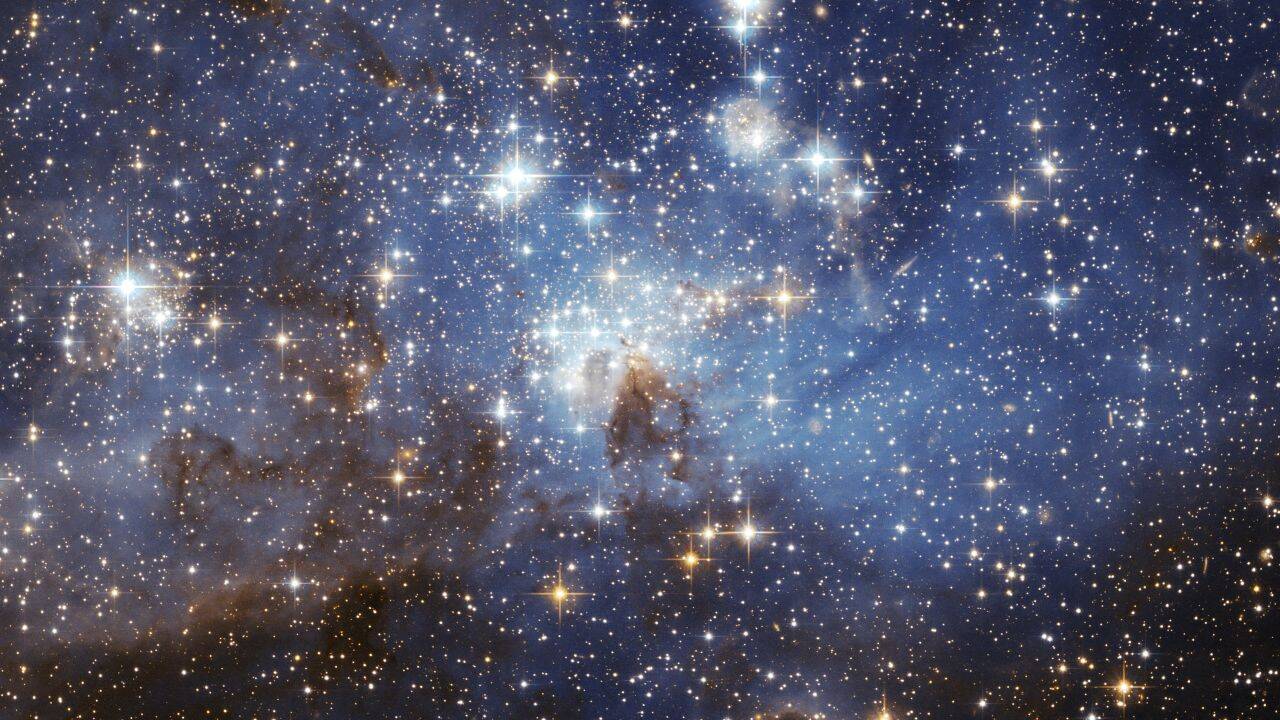
The image was taken using the Hubble Space Telescope. Image Credit: European Space Agency (ESA/Hubble)
Why would neutron stars and black holes have similar lifetimes
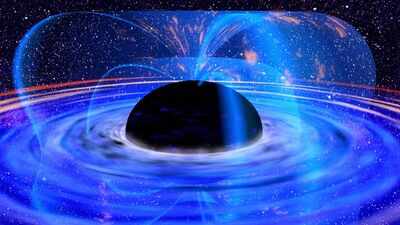
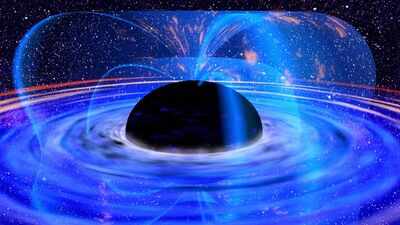
The calculations indicate that neutron stars and stellar-mass black holes can have decay times of roughly 10⁶⁷–10⁶⁸ years through this Hawking-like process. That may sound counterintuitive. Black holes possess extraordinarily strong gravitational fields, so it might seem reasonable to expect them to evaporate more rapidly than neutron stars.However, the researchers found an important difference. Black holes do not have a physical surface. According to Michael Wondrak, some of the radiation produced around a black hole can be reabsorbed, slowing the overall process. Neutron stars, on the other hand, have a surface from which the produced radiation can escape. The result is that stronger gravity does not automatically mean faster disappearance.
When would the universe finally run out of life
The most important number from the research is ‘10⁷⁸ years.’ The researchers calculated that white dwarfs(extremely long-lived remnants of stars) could eventually decay through Hawking-like radiation in roughly 10⁷⁸ years. Because these objects are expected to be among the last persistent stellar remnants, their lifetime provides an estimate for the ultimate end of the universe under the process considered. The Radboud University research explains that previous estimates had placed the lifetime of white dwarfs at around 10¹¹⁰⁰ years because this Hawking-like effect had not been included.That difference is enormous. A ‘1’ followed by 78 zeros is already far beyond any meaningful human timescale, but a ‘1’ followed by 1,100 zeros is vastly longer still. The new calculation therefore makes the theoretical end of the universe arrive much sooner, while still leaving an almost incomprehensibly long period of time.
Could the Moon and Earth really evaporate too
The Radboud University states that both the Moon and a human body would take about ‘10⁹⁰ years’ to evaporate through Hawking-like radiation alone. The paper’s broader density-based approach allows the same kind of reasoning to be extended to other bodies, but the published example specifically gives the 10⁹⁰-year figure for the Moon and a human rather than presenting it as a precise countdown for Earth.That distinction is important because the calculation assumes a highly idealised situation. The researchers themselves point out that other processes could make objects disappear much sooner. For a human being, ordinary biological and physical processes would obviously end the story vastly earlier. Earth, meanwhile, faces many possible changes long before such an extreme timescale could ever be reached.
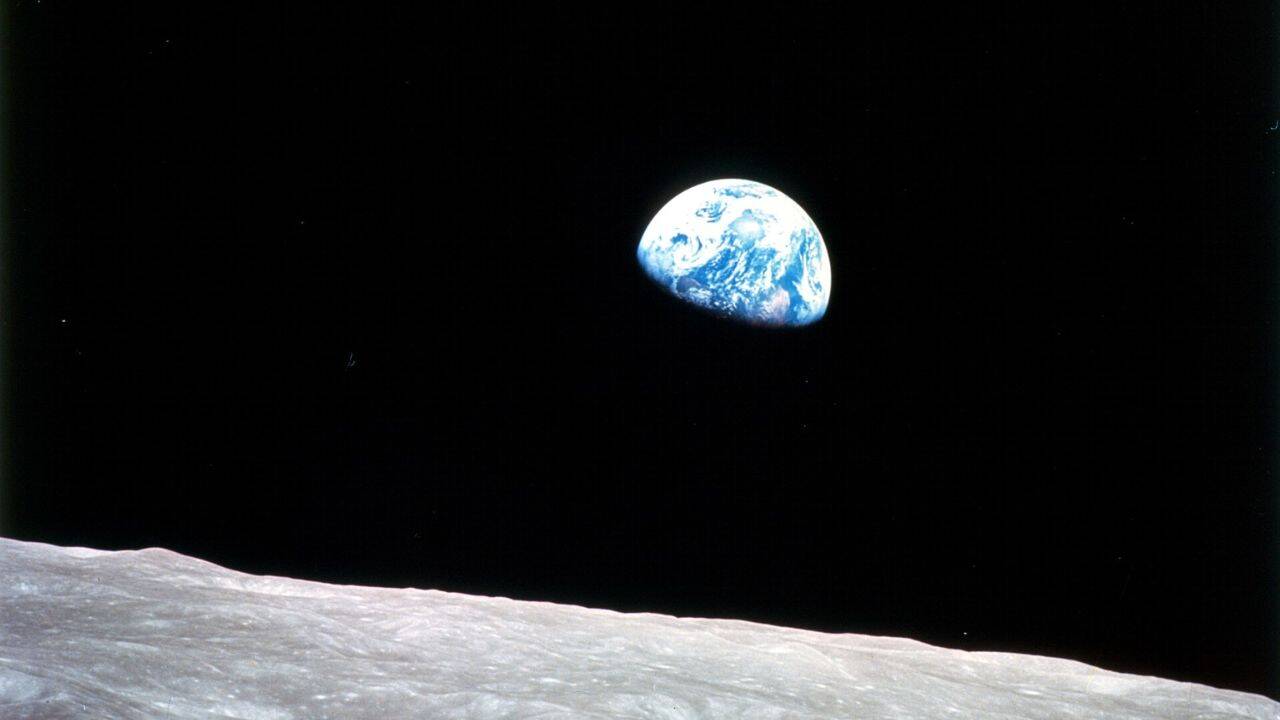
This view of the rising Earth greeted the Apollo 8 astronauts as they came from behind the Moon after the fourth nearside orbit. Image Credit: Apollo 8 crew member Bill Anders/Wikipedia
What does this mean for the ultimate fate of matter
The study does not predict an imminent end for Earth, humanity or even the universe. Instead, it explores what could happen over timescales so long that they are almost impossible to picture. The researchers argue that gravitational fields may be capable of producing particles and causing massive objects to lose energy even when those objects are not black holes. Their 2023 study provided the foundation for this idea, while the 2025 study examined how long the resulting evaporation could take.As Walter van Suijlekom explained, examining extreme and unusual questions can help researchers understand the theory itself and perhaps eventually shed light on the still-mysterious nature of Hawking radiation. For now, the calculations offer a strange but fascinating picture of the distant future in which stars disappear, black holes fade, and even ordinary matter may not remain forever. The universe may ultimately be far more temporary than previously thought, but with 10⁷⁸ or 10⁹⁰ years involved, there is certainly no need for anyone on Earth to start counting down.