









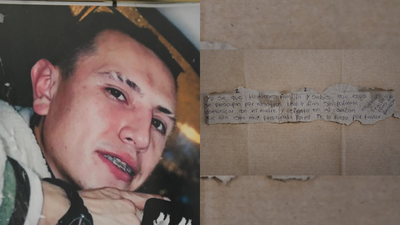
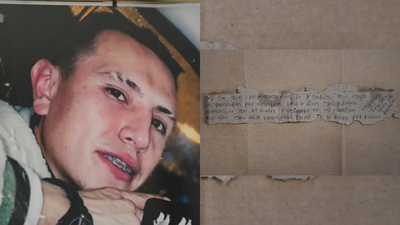
He folded the paper carefully, slid it beneath the cell door and waited.Brayan Rayo Garzon was 26 years old, sick with Covid-19, running a fever in a cinderblock isolation room in rural Missouri. It was his fourth day alone. His body ached. His mental health appointment had been canceled twice. And the one thing that had anchored him each night, a phone call to his mother before bed, had been taken away to prevent the spread of illness.So he wrote to his jailers by hand, in Spanish, and begged.“I feel in my heart that she’s very worried about me,” he wrote in one note. In another, he appealed to whatever humanity might receive it. “I know you have family, and you know that they worry about us. God bless you.”An English-speaking guard used a colleague’s phone to translate the words. He wrote in a report that he planned to follow up.Within an hour, guards found Rayo unconscious on his bed with a sheet around his neck.Rayo’s death in April 2025 was not an isolated tragedy. It was the first in a cascade.An Associated Press investigation has found that at least 10 detainees, all men, have died by suicide since President Donald Trump took office in January 2025. Seven of those deaths have occurred since October, already the most for any fiscal year in ICE’s history. In most prior years, ICE recorded one such death, or none.The numbers are not merely grim. They are, experts say, a signal of systemic failure, a warning siren sounding across a detention network that has swelled by 50 percent, to 60,000 detainees, during Trump’s second term.“Something is going profoundly wrong from any kind of public health or mental health perspective,” said Dr. Sanjay Basu, a University of California–San Francisco epidemiologist who co-wrote a study documenting the surge in mortality and suicide rates among ICE detainees. “This is one of those alarming, sudden increases.”Nine of the ten men were Hispanic, arriving from four countries. One was Chinese. Their average age was 32. While the Trump administration has characterized those facing deportation as the “worst of the worst,” seven of the ten had no record of violent crimes in the United States.Their deaths account for nearly a fifth of the 51 people who have died in ICE custody since January 2025.The Department of Homeland Security has insisted suicide deaths remain “extremely rare.” Acting assistant secretary Lauren Bis said staff follow protocols to protect at-risk detainees, that annual suicide prevention training is required, and that detainees receive “comprehensive healthcare, including mental health services.”However, news agency AP’s findings tell a different story.Across ICE’s detention network — in centers run by major private contractors, in county jails that recently signed on as ICE partners, in a federal prison — AP found a pattern of failures that violate ICE’s own standards: staff who ignored visible distress, mental health treatment that was delayed or denied, detainees placed in isolation that experts say deepens the very despair it was meant to contain and access to materials that could be used for self-harm left unsecured.ICE requires that detainees be screened for medical and mental health conditions within 12 hours of arrival. At least three of the nine facilities where detainees died by suicide have struggled to meet that standard.“The increase reflects failures in how the system’s being operated, and particularly failures in how the first stages of coming into detention are happening so that people aren’t being assessed adequately,” said Dr. Homer Venters, former chief medical officer of New York City jails, who previously consulted with ICE on preventing detainee deaths. “And then if that receiving screening picks up red flags, they’re not acted on in a way that reduces the risk of them having preventable death.”The men who died had arrived at their final days through vastly different roads.A 19-year-old from Mexico was detained after a misdemeanor traffic stop while riding his scooter. A 36-year-old restaurant worker from Nicaragua lost contact with his relatives after ICE moved him from Minnesota to a crowded camp in Texas. A 45-year-old had crossed the border repeatedly and carried a long criminal record.Leo Cruz Silva, 34, began screaming in his cell on his first night in Missouri’s Ste. Genevieve County Jail. For two nights, he hid under his bed and reported hallucinations. A nurse ordered antipsychotic medication and planned to get him treatment the following week. On the third day, he was found dead.Chaofeng Ge arrived at a Pennsylvania facility run by the GEO Group already in crisis: he had previously attempted suicide in state custody and had pleaded guilty to minor gift card fraud. In five days at the facility, he received no mental health treatment. No one at the facility spoke Mandarin. He went unmonitored. He was found hanged in a shower stall.At Camp East Montana in El Paso- then ICE’s largest detention facility- Victor Diaz, 36, died by suicide in a medical holding room in January after being moved into isolation following reports of harassment by fellow detainees. Days earlier at the same facility, Geraldo Lunas Campos died of asphyxia after guards restrained him following a suicide attempt. His death was ruled a homicide. ICE inspectors who visited the facility in February documented 49 violations of detention standards — including a finding that required checks to prevent “significant self-harm and suicide” had not been recorded, and that tools and equipment that could be used for harm had been left unsecured throughout the facility.Brayan Rayo Garzon had not come to the United States a week after his 26th birthday in 2023. He crossed the border with his family in California. He spent three months in detention before being allowed to settle in St Louis. He learned English quickly, made friends, worked as a housepainter and a food delivery driver. He wanted to save enough money to hire a lawyer who could help him fight the deportation order a judge had issued in 2024.His mother, Adriana Garzon, her name tattooed on her son’s arm, described a young man who found his footing fast. ICE’s own records classified him as a laborer who was a low risk to public safety.He was arrested in March 2025 after being caught using a stolen credit card, one he had obtained from a friend, at a vape shop. ICE took him from St Louis police and placed him in the Phelps County Jail in Rolla, Missouri, about 100 miles away. The jail had begun accepting ICE detainees just a month earlier. It took the jail 35 hours to conduct Rayo’s initial medical screening- nearly three times the 12-hour window ICE promises.A nurse who didn’t speak Spanish used a handheld translator to assess him. Rayo told her he was anxious and wanted mental health treatment. She concluded he denied thoughts of suicide, listed his condition as stable, and referred him for a routine appointment. Two days later, he was hospitalised with Covid-19 and tuberculosis exposure and returned to the jail. His mental health appointment was canceled: first due to “mental health clinic time and staff,” then, days later, because of his coronavirus infection. ICE’s own standard requires mental health treatment within a week of a referral.The DHS spokesperson said Rayo received “high-quality medical care during his time in ICE custody.”To manage his anxiety, Rayo had a nightly ritual: a phone call with his mother, sharing a Catholic blessing. “I gave him strength,” Adriana Garzon said.When the isolation began and the calls stopped, that lifeline was severed. He slid his notes under the door. He waited.The guard’s report said he planned to follow up.The first call Adriana Garzon received was not from her son. It came from an official who told her that Brayan was in very bad shape and was being flown to a St Louis medical center.At the hospital, a doctor told her what had already happened. Her son was dead.