








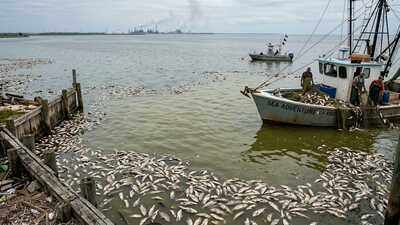
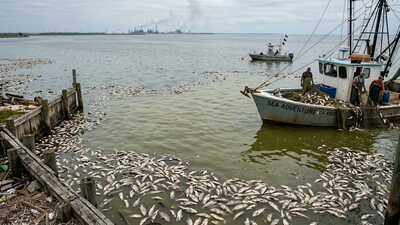
Every summer, a vast stretch of the Gulf of Mexico transforms into what scientists call a “dead zone,” an area where oxygen levels in the water become so low that most marine life cannot survive. Fish flee if they can, while shrimp, crabs and bottom-dwelling organisms are often trapped in what researchers describe as “hell waters.” Biologists have mapped one of the largest dead zones recorded in nearly four decades, highlighting a worsening environmental problem that threatens marine biodiversity, commercial fisheries and the livelihoods of thousands of people along the US Gulf Coast. The latest findings underscore how nutrient pollution, combined with climate change, continues to reshape one of North America’s most productive marine ecosystems.
Scientists map one of the Gulf’s largest dead zones in 39 years
Researchers from the Louisiana Universities Marine Consortium (LUMCON) and the National Oceanic and Atmospheric Administration (NOAA) conduct annual surveys of the Gulf of Mexico’s hypoxic, or oxygen-depleted, waters every summer.Their latest expedition found that the 2025 dead zone covered approximately 7,900 square miles (about 20,450 square kilometres), making it one of the largest measures since annual mapping began in 1985. Although its exact size changes from year to year depending on river flow, storms and ocean mixing, the hypoxic zone remains substantially larger than the long-term management target established by the Mississippi River/Gulf of Mexico Hypoxia Task Force.Scientists classify an area as hypoxic when dissolved oxygen concentrations fall below 2 milligrams per litre. At these levels, many marine animals struggle to breathe, feed or reproduce.The dead zone develops every summer along the Louisiana and Texas continental shelf, where nutrient-rich freshwater from the Mississippi and Atchafalaya rivers flows into the Gulf before forming layers that prevent oxygen-rich surface waters from mixing with deeper water.
Why does oxygen disappear from the Gulf every summer
The dead zone is largely driven by excess nutrients, particularly nitrogen and phosphorus, carried downstream from farms, cities and wastewater systems throughout the vast Mississippi River Basin.These nutrients stimulate the explosive growth of microscopic algae. Initially, the algal blooms appear harmless, but once the algae die, they sink to the seafloor, where bacteria begin decomposing them. This process consumes enormous amounts of dissolved oxygen.At the same time, warm summer temperatures strengthen the layering of the water column, preventing fresh oxygen from reaching deeper waters. The result is a vast underwater region where oxygen levels fall so low that many species can no longer survive.While this cycle occurs naturally to a limited extent, NOAA notes that decades of human-driven nutrient enrichment have dramatically increased both the frequency and size of hypoxic zones in the Gulf.
Shrimp, crabs and fish are forced into ‘hell waters’
The Gulf of Mexico supports one of the world’s most productive fisheries, supplying shrimp, oysters, blue crabs, menhaden, snapper and numerous other commercially valuable species.When oxygen disappears, mobile species such as fish often attempt to escape into better-oxygenated waters. Less mobile animals, including many shellfish, worms and bottom-dwelling organisms, may suffocate before they can move.Even animals that survive experience significant stress. Reduced oxygen affects feeding, growth and reproduction, while concentrating marine life into smaller areas where competition and predation increase.Commercial shrimp fisheries are particularly affected. Shrimp may abandon their traditional habitats, forcing fishers to travel farther offshore, increasing fuel costs and reducing catches. Coastal communities that depend on fishing and seafood processing therefore experience not only ecological consequences but also significant economic losses.Researchers increasingly describe these oxygen-starved regions as “hell waters” because they become virtually uninhabitable for much of the marine ecosystem.
Climate change is making hypoxia more difficult to manage
Scientists warn that climate change is amplifying the problem.Warmer surface waters strengthen ocean stratification, making it harder for oxygen-rich surface water to mix with deeper layers. Rising temperatures also reduce the amount of oxygen seawater can naturally hold while accelerating bacterial decomposition that consumes even more oxygen.More frequent extreme rainfall across the Mississippi River Basin can wash larger quantities of fertilisers into rivers, fuelling larger algal blooms before they eventually decay.Although reducing nutrient pollution remains the most effective long-term solution, researchers say climate change is making recovery increasingly challenging by creating environmental conditions that favour larger and longer-lasting hypoxic zones.
Restoring coastal habitats could help reduce future dead zones
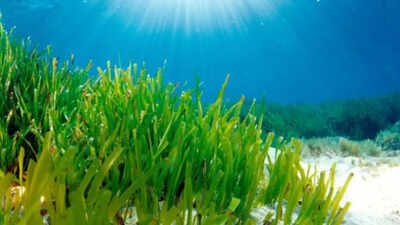
Scientists emphasise that reducing fertiliser runoff upstream is essential, but restoring coastal ecosystems can also improve the resilience of marine environments.Research on marine habitat restoration, including studies such as Hauraki Gulf Marine Park habitat restoration potential, highlights how oyster reefs, seagrass meadows, salt marshes and coastal wetlands provide valuable ecosystem services. These habitats naturally filter water, trap sediments, recycle nutrients and improve overall water quality while supporting diverse marine communities.Although the Hauraki Gulf study focuses on New Zealand, its findings reinforce broader ecological principles that are increasingly being applied worldwide. Similar restoration efforts along the Gulf Coast, including rebuilding oyster reefs and protecting wetlands, can help reduce nutrient pollution, improve habitat quality and strengthen coastal ecosystems against environmental stress.Scientists caution, however, that habitat restoration alone cannot eliminate the Gulf’s dead zone. Lasting improvements will require coordinated action across the entire Mississippi River Basin to reduce nutrient runoff before it reaches the sea.
A warning for one of the world’s most productive seas
The Gulf of Mexico’s annual dead zone has become one of the world’s most striking examples of how human activities far inland can profoundly alter life at sea. Fertilisers applied to crops across the vast Mississippi River Basin may seem disconnected from the Gulf, yet the nutrients they carry downstream ultimately fuel massive algal blooms that rob marine waters of oxygen. The result is a seasonal hypoxic zone that forces fish to flee, suffocates less mobile species and disrupts one of North America’s most productive fisheries.For marine biologists, the expanding dead zone is more than a recurring summer event; it is a warning about the cumulative impacts of nutrient pollution, habitat degradation and a warming climate. Rising temperatures are expected to strengthen water stratification and reduce oxygen levels further, while increasingly intense rainfall could wash even more nutrients into rivers feeding the Gulf. Together, these factors may make hypoxic events larger, longer-lasting and more difficult to reverse. Scientists stress that reversing this trend will require coordinated action across the entire Mississippi River Basin. Reducing agricultural runoff, restoring wetlands and oyster reefs, improving wastewater management and adopting more sustainable land-use practices could all help curb the flow of excess nutrients into the Gulf. Without meaningful intervention, the annual dead zone is likely to remain a growing threat, not only to shrimp, crabs and fish, but also to the coastal communities, commercial fisheries and regional economies that depend on a healthy and productive Gulf of Mexico.