









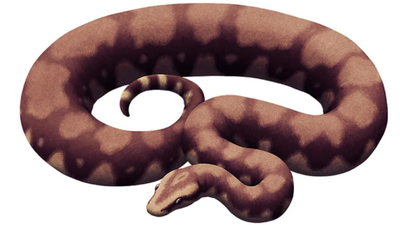
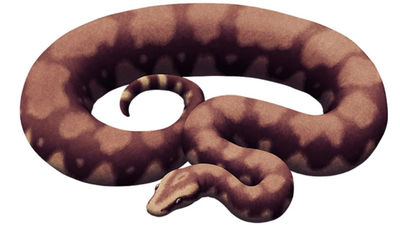
Snakes are among nature’s most fascinating creatures and are also revered in the mythologies and traditions of cultures around the world.In India, snakes have long been closely associated with Lord Vishnu and Lord Shiva. In Hindu mythology, Lord Vishnu is depicted resting on Sheshnag, the king of snakes, while Lord Shiva is shown with a snake wrapped around his neck, often identified as Vasuki Naag, the serpent king.Even as these stories continue to hold deep religious and cultural significance, scientists at IIT Roorkee discovered fossils belonging to one of the largest snakes ever known and named the species Vasuki Indicus, after the revered serpent Vasuki Naag.So, this brings us down to the question: Was the Vasuki naag real?Buried for millions of years in a coal mine in Gujarat was the skeleton of a snake so massive that scientists initially mistook its bones for those of a crocodile. It took a team from IIT Roorkee, careful fossil analysis, and years of comparison with living reptiles to realise what they were actually looking at was a creature that may have stretched longer than a school bus.Named Vasuki Indicus, after the serpent king coiled around Lord Shiva’s neck in Hindu mythology, this snake lived around 47 million years ago in a warm, swampy, green India, even before the landscape we know today took shape.
A discovery that started out looking like a crocodile
In 2004, researchers digging at the Panandhro Lignite Mine in Kutch, Gujarat, uncovered 27 vertebrae that were initially assumed to belong to a crocodile. According to a PIB report, it was only years later, when scientists compared the bones with data from living snakes and existing fossil records, that the team from IIT Roorkee, led by Professor Sunil Bajpai and researcher Debajit Datta, realised they were looking at an ancient species of a snake that lived around 47 million years ago in the Kutch region.
A snake that was as long as a school bus
Scientists estimated the snake’s total length at 10.9 to 15.2 metres, nearly 36 to 50 feet. That puts Vasuki Indicus as one that was larger than Titanoboa, which has been considered the largest snake ever known. Some of the vertebrae were even found still connected, like puzzle pieces, giving researchers an unusually clear picture of its build: broad, cylindrical, and powerfully muscular.
Named after mythology, rooted in Indian soil
Vasuki takes after the divine serpent of Hindu mythology, often depicted wrapped around Shiva’s neck, while indicus comes from the country where the fossils were unearthed. According to a study published in Scientific Reports, researchers described the fossils recovered from the Panandhro Lignite Mine as dating to the Middle Eocene period, around 47 million years ago.
It was a slow, patient predator built for ambush, not speed
Unlike fast-striking predators, Vasuki Indicus likely depended on patience. Lead author Debajit Datta explained that given its large size, Vasuki was a slow-moving ambush predator that killed its prey through constriction, much like anacondas and pythons do today. It’s believed to have lived in a warm, marshy swamp near the coast, surviving in a climate far hotter and more humid than the one we experience now.