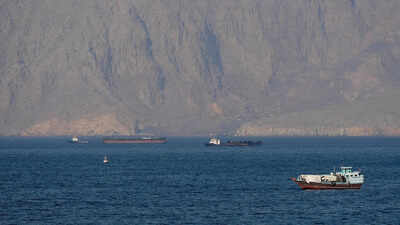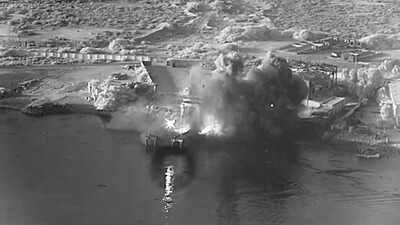










Oil prices fell on Thursday as hopes of a possible agreement between the US and Iran to prevent further escalation in the Middle East conflict and reopen the Strait of Hormuz eased market concerns. During the week, crude prices have already fallen over 5%, dropping below the $100 per barrel mark .Around 7:20 am, WTI Crude was at $90.09, up 1.59%, recovering from its earlier low of $89 per barrel. US benchmark Brent Crude was trading at $96.07, gaining 1.89% after touching the $95 mark.The developments came as Iran’s Revolutionary Guards said a return to war with the United States was unlikely, while also warning that the country remained prepared to respond to any attack. Meanwhile, US President Donald Trump indicated that he was not rushing towards an agreement despite earlier remarks over the weekend suggesting that a deal was close. During a cabinet meeting at the White House, Trump reiterated his commitment to securing what he described as a favourable ceasefire deal with Iran.He also dismissed suggestions that the ongoing conflict could politically hurt Republicans in the United States, saying he was focused on preventing Iran from developing nuclear weapons.“They thought they were going to outwait me, you know? We’ll outwait him; he’s got the midterms, I don’t care about the midterms,” he said.“Iran cannot have nuclear weapons. I’m doing that for the world, not just for us,” he added.Speaking about the Strait of Hormuz, Trump said the route would remain accessible to all countries and described it as part of the ongoing negotiations.“It’s international waters. Nobody’s going to control it. We’re going to watch over it. We’ll watch over it, but nobody’s going to control it,” Trump said. “That’s part of the negotiation that we have.”Trump also warned Oman against interfering in the negotiations related to the Strait of Hormuz and rejected the idea of a short-term arrangement that would allow Iran and Oman to control the waterway, which is critical for global oil and gas supplies.“Oman will behave just like everybody else, or we’ll have to blow ’em up,” he said.Meanwhile, the Strait of Hormuz has remained closed for the past three months, straining oil supplies across the world. The conflict began on February 28, when the US and Israel launched joint strikes on Iran. In response, Tehran tightened its noose on the crucial Strait of Hormuz, an oil pipeline that carries 20% of global energy supplies.