








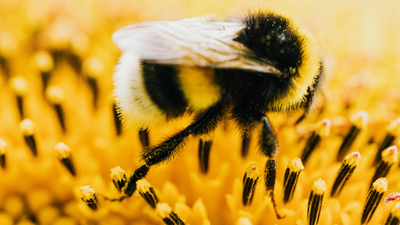
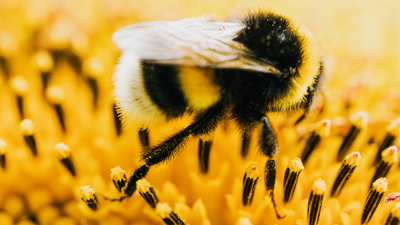
Two solar farms in Minnesota were built on retired agricultural land, and instead of the gravel or mown turf that usually goes under panels, the ground was seeded with native wildflowers and prairie grasses. Researchers from Argonne National Laboratory came back to the same test plots for five years and counted what flew and crawled past them. Insect abundance tripled. Native bees went up twentyfold.Bees, butterflies, wasps and hornets all turned up in greater numbers as the plantings matured. Lee Walston, the landscape ecologist who ran the fieldwork, builds his research around a plain question: “If you build it, will they come?” On land that used to grow row crops, the answer is yes—provided the right plants go into the soil.
The insect count that turned a Minnesota solar site into a research case study
At an 18-acre site in Ramsey, north of Minneapolis, the method is unglamorous. Plastic flags mark the tracts, students walk the rows with clipboards, and everything spotted gets logged—a metallic green sweat bee here, a moth and two hoverflies there. Acoustic monitoring at the same site has picked up 73 bird species, drawn by the seeds and the insects. Some of them nest in the steel supports holding up the panels. The timing gives the numbers weight. Monarch butterflies are under federal review for endangered listing, and North American bird populations have fallen almost 30 percent since 1970.
Panel height quietly decides how much wildlife a solar farm can support
The Ramsey meadow exists because the panels sit higher than standard. A prairie restoration firm told ENGIE, the developer, that raising the arrays would let far more native species grow underneath without shading the glass. The extra steel and seed barely moved the project budget, and the site now needs a fraction of the mowing it otherwise would. Lower arrays leave landscapers with clover and a few grasses—better than gravel, nowhere near a prairie.
Native prairie habitat costs less than gravel across a solar farm’s 25-year life
The economics are less charming than the butterflies but more persuasive. Costed across 25 years, a native grass-and-forb mix works out to roughly $14,150 an acre, against $16,800 for standard turf grass and $25,000 for gravel. Maintenance drops sharply once the natives establish, usually after three or four years. There is a return at the farm gate too. A Nature Conservancy study in New Jersey found squash and blueberry yields rose 80 percent near pollinator habitat, with tomatoes, peppers, cucumbers and apples gaining 10 to 20 percent.
Most American solar farms still have no pollinator habitat at all
Scale is where the story deflates. About 24,000 acres of US solar carry documented pollinator habitat, against roughly 600,000 acres of operating utility-scale sites, and meeting national energy targets could take close to 10 million acres of panels. At least 15 states run pollinator scorecards, but they largely rely on developer promises with no monitoring attached. One California project marketed as a pollinator solar farm pledged more than 200 native trees and shrubs along its perimeter; a UC Davis ecologist who walked the fence line found invasive grasses, yellow star thistle and the remains of a few plantings. The Xerces Society and an industry-funded research group are drafting a certification that would require 15 percent of a site’s vegetated area to carry a diverse native mix.The Minnesota plots have settled the ecological question. What they cannot settle is whether the rest of the industry will pay for the taller steel.