









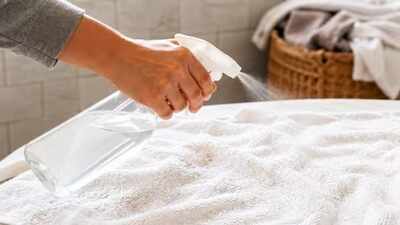
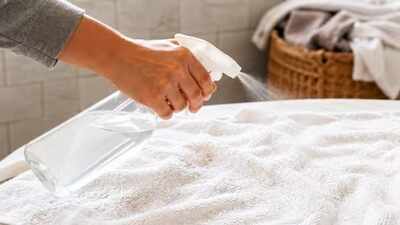
There’s a particular kind of disappointment in pulling a towel straight out of the wash, expecting it to feel fresh, only to find it’s gone stiff, a little scratchy, and carrying that faint musty smell that no amount of detergent seems to fix. It’s a genuinely common problem, and it’s led a lot of people online to swear by one surprisingly simple fix: adding a splash of plain white vinegar to their towel wash roughly once a month. It sounds almost too basic to actually work, pouring something you’d normally reach for in the kitchen into your laundry, but cleaning experts have largely backed up why this hack has stuck around. Here’s what’s actually happening to your towels, and why vinegar, used the right way and not too often, genuinely helps.
Why your towels are getting stiff and smelly in the first place
The real culprit almost always turns out to be the very products meant to keep towels soft and clean. Detergent and fabric softener residue gradually builds up inside towel fibres over repeated washes, and that buildup does two things at once: it makes towels less absorbent and stiffer to the touch, and it creates exactly the kind of damp, residue-coated environment bacteria and mildew thrive in, which is where that musty smell actually comes from. Improper drying, leaving towels damp in the machine too long or not air-drying them fully, only makes the problem worse by giving bacteria even more time to settle in.
How vinegar truly works to solve the problem
It’s the natural acidity of white vinegar that really does the trick, attacking the detergent and mineral deposits that plain washing often can’t completely shift. Unlike commercial fabric softeners, which work by coating fibres in a waxy layer to make them feel soft, vinegar strips residue away instead, restoring absorbency rather than masking the problem with a temporary layer of softness. It also has genuine antibacterial properties, with hot water specifically helping the acetic acid break down the odour-causing bacteria and mildew responsible for that lingering musty smell.
How to actually use it correctly
The method matters more than people often realise. Vinegar should go into the fabric softener dispenser or be added directly during the final rinse cycle, never mixed in with detergent at the start of a wash, since detergent is alkaline and vinegar is acidic, and combining the two simply neutralises both, cancelling out the benefit of either. Somewhere between a quarter cup and a full cup, depending on your load size and machine type, is the general range most laundry experts recommend, with hot or warm water helping the vinegar work more effectively than a cold cycle would.
Why once a month, and not every single wash
This is the part a lot of viral posts leave out entirely. Cleaning experts have specifically cautioned against using vinegar in every wash load, not because it stops working, but because regular exposure to its acidity can gradually degrade rubber hoses and seals inside your washing machine over time. Used occasionally, roughly once a month or so, it’s considered safe and genuinely effective, which is exactly why the “monthly” framing behind this hack isn’t just a suggestion, it’s the actual sweet spot between getting the benefit and avoiding unnecessary wear on your machine.
What you should never mix it with
A couple of combinations are worth actively avoiding. Never use vinegar in the same load as chlorine bleach, mixing the two can release genuinely harmful fumes, and this applies even if you’re just trying to whiten towels in the same session. Vinegar and baking soda, while both individually useful, shouldn’t be added together either, since the chemical reaction between an acid and a base cancels out both of their cleaning properties rather than combining them into something stronger. It’s also worth skipping vinegar on towels or items with a lot of elastic, since repeated acid exposure can weaken elasticated fibres over time.
For genuinely stubborn towels, a two-step approach works better
If your towels have gone past mild stiffness into properly rough, sour-smelling territory, a single vinegar rinse might not be enough on its own. Many laundry experts recommend a two-cycle approach instead: wash the towels first with just hot water and a cup of vinegar, no detergent involved, then run a second cycle with about half a cup of baking soda added directly to the drum, again without detergent. It’s a bit more effort than a single load, but it tackles genuinely entrenched buildup far more thoroughly than either ingredient could manage alone.
Disclaimer:
This article is intended for general informational purposes only. Never mix white vinegar with chlorine bleach, as this can release harmful fumes. Avoid using vinegar regularly or on elasticated fabrics, and check your washing machine’s manufacturer guidelines before adding vinegar directly to the machine, as frequent use may affect certain internal components over time.