








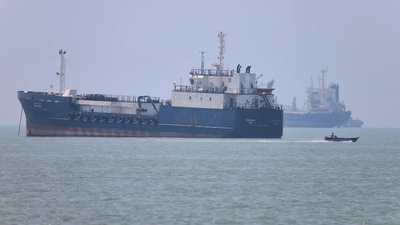
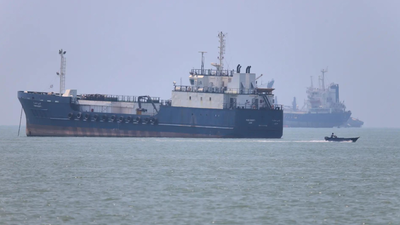
The conflict between Iran and the United States entered its 135th day on Monday, with both sides continuing to contest control of the strategically vital Strait of Hormuz despite an interim agreement aimed at paving the way for a permanent ceasefire. The latest escalation follows a weekend of attacks in Iran and across Bahrain, Kuwait, Qatar, Jordan and Oman, further dimming prospects for diplomacy even as the two countries approach the midpoint of the 60-day deal period.After Iran struck a container ship in the Strait of Hormuz on Sunday, the US military said it carried out strikes on around 140 targets, including missile and drone launch sites, ammunition depots and communication facilities, marking a significantly larger wave of attacks than the two previous rounds last week.“We bombed the hell out of them last night,” US President Donald Trump told NBC.Iran retaliated following the strikes and maintained that it alone has the authority to control the Strait of Hormuz.
We will become guardians of the Strait, says Trump
US President Donald Trump said on Monday that the United States would likely assume control of the Strait of Hormuz and should be compensated for securing and overseeing the strategically important waterway. “We’re going to keep the strait, and we’ll probably run it. We’ll become the guardian of the strait. Maybe we’ll call it the guardian angel of the strait. And we should be reimbursed for that,” the US president added. We’re going to guard it. We’re going to get paid for guarding it – a lot of money,” he said.“We’re going to be reimbursed, because the other nations are very wealthy. They’re on our side, and we can’t be expected to do that for nothing.”US strikes on Iran are increasing in scale and expanding beyond the coastal areas surrounding the Strait of Hormuz. While most overnight attacks remained concentrated along Iran’s southern coastline, one strike hit a military facility in Na’in, central Iran, killing one person and injuring seven others, the province’s deputy governor told the state-run Islamic Republic News Agency (IRNA).
Hormuz closed ‘until further notice’, says Tehran
Iran’s top joint military command said on Monday that Tehran would not allow the United States to intervene in the management of the Strait of Hormuz.Over the weekend, Tehran also announced that the Strait of Hormuz would remain closed “until further notice.” Iranian authorities said passage through the strategic waterway remained suspended and that permits would be issued only after “stability and calm” were restored.On Monday, Iran’s Revolutionary Guards (IRGC) said the only way to restore normal shipping through the strait was for the United States to end its military operations in the waterway, warning that “continued interference could lead to greater incidents in the global oil and gas sector.”The IRGC also said its naval forces fired warning shots at two vessels attempting to cross the Strait of Hormuz. “This morning, two ships that were attempting to cross the Strait of Hormuz illegally were targeted and stopped by warning shots fired by the navy of the Revolutionary Guards.”
Ships go dark in Hormuz
As per a Bloomberg report, commercial shipping through the Strait of Hormuz has increasingly shifted out of public view in recent days, with a growing number of vessels transiting the strategic waterway without broadcasting their locations.According to preliminary Kpler data analysed by Bloomberg News, all six commodity carriers that passed through the strait on Sunday did so with their transponders switched off. Such “dark” crossings have outnumbered observable transits over the past three days.Ship-tracking data based on Automatic Identification System (AIS) signals showed no vessels moving through the strait early on Monday. However, several ships have appeared on either side of the waterway, either in the Persian Gulf or the Gulf of Oman, after last transmitting their positions from the opposite side, indicating they crossed the strait with their transponders turned off.