









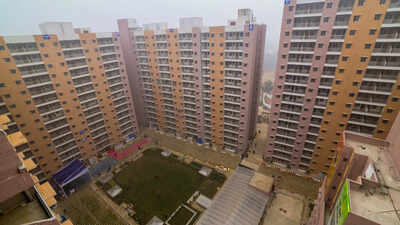
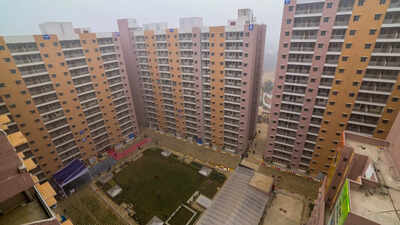
The Delhi government’s slum rehabilitation policy is set to transform the living standards of the underprivileged sections of its population, affecting around four to five lakh families or nearly 20 lakh people.The Delhi Slum and JJ Cluster Rehabilitation and Relocation Policy, 2026, which replaces the 2015 policy framework, aims to provide permanent housing inside multi-storey flats for people residing in Jhuggi-Jhopri (JJ) clusters. The houses would be equipped with essential civic amenities like water and electricity.It gives preference to in-situ rehabilitation, where residents are provided homes at or near the existing settlement under the principle of ‘Jahan Jhuggi Wahan Makan’, thereby minimising disruption to livelihoods and social networks. However, if not feasible, eligible residents may be relocated to alternative sites.Besides housing, the rehabilitation colonies are planned to include essential social infrastructure such as schools, anganwadi centres, health centres, children’s playgrounds and other civic amenities. The government has said the projects will be implemented through the Public-Private Partnership (PPP) model.EligibilityIn order to be eligibile for rehabilitation, you must fulfill the following criteria.(i) You must be an Indian citizen and not less than 18 years of old.(ii) The JJ cluster you reside in must be in existence prior to 2025.(iii) Your name must appear in the joint survey conducted by the Delhi Urban Shelter Improvement Board (DUSIB) and the land owning agency.(iv) No one in the family should own any house/ plot/flat, in full or in part, in Delhi.Accommodation would not be provided if the jhuggi is used solely for commercial purpose. However, allotment can be considered for those in mixed use dwellings.The ineligible individuals will be removed from the JJ Cluster at the time of its rehabilitation, relocation, or clearance.Documents requiredUnder the revised policy, the cut off year has been extended form 2015 to 2025. This means families residing in eligible JJ clusters established up to 1 January 2025 can now qualify for rehabilitation.However, they must possess any one of the 12 documents:1. Passport2. Photograph-bearing ration card3. Electricity bill4. Driving licence5. Photograph identity card or smart card issued by the Central or State Government, or their autonomous bodies.6. Passbook with photograph issued by a public sector bank or post office.7. Caste certificate issued by the competent authority.8. Pension document carrying a photograph, such as an ex-serviceman’s pension book, pension payment order, ex-serviceman widow/dependent certificate, old-age pension order or widow pension order.9. Freedom Fighter Identity Card with photograph.10. Disability certificate with photograph issued by the competent authority.11. Health Insurance Scheme Smart Card with photograph issued under the Ministry of Labour scheme.12. A photograph identity card issued in the name of the slum dweller’s descendant by a government school, or a certificate with photograph issued by the principal of a government school certifying that the descendant is or was a student of the school.The government said the revised eligibility norms are expected to bring a substantially larger number of slum residents into the formal housing network, providing them with secure homes and improved civic infrastructure.