









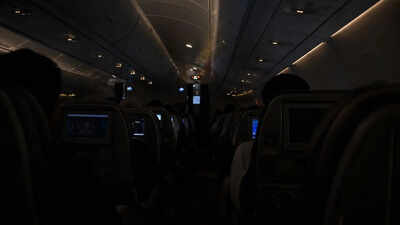
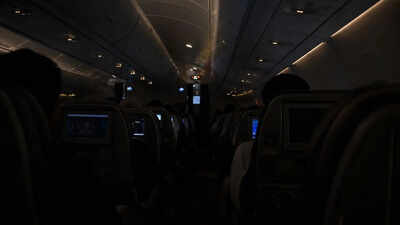
Most air travellers have experienced the moment when the cabin suddenly becomes darker just bef ore an aircraft lines up on the runway or begins its descent. It happens so routinely that many passengers barely notice it anymore. The practice has been part of airline operations for decades and is closely tied to safety procedures. Although modern aircraft are equipped with advanced lighting systems and sophisticated emergency equipment, the basic reasoning remains surprisingly straightforward. In the rare event that something goes wrong during take-off or landing, airlines want passengers and crew to be able to react as quickly as possible. A darker cabin helps prepare for that possibility long before anyone would need to think about an evacuation.
The real reason airlines dim cabin lights before takeoff and landing
Human vision does not adjust instantly when moving from a bright environment into darkness. Anyone who has walked into a dark room after spending time in strong daylight will recognise the effect. For a short period, visibility is reduced while the eyes adapt.According to the European Union Aviation Safety Agency (EASA), cabin lights are dimmed before take-off and landing because an emergency could result in the aircraft’s electrical systems shutting down. By lowering the lighting beforehand, passengers and crew become more accustomed to darker conditions, allowing them to see more clearly if an evacuation becomes necessary.The timing matters. Take-off and landing are the stages of flight when crews are most alert and when safety procedures are most tightly focused. If visibility inside the cabin suddenly changed during an emergency, even a few moments of confusion could slow movement towards exits.
Dimmed cabin lights improve emergency visibility during takeoff and landing
Commercial aircraft are fitted with illuminated exit signs and floor-level guidance systems designed to direct passengers towards evacuation routes. These lights become especially important when visibility is reduced by darkness, smoke or power loss.According to the European Union Aviation Safety Agency (EASA), a brightly lit cabin can make emergency lighting appear less prominent. When the surrounding environment is darker, those signs and pathways stand out more clearly. Passengers can identify exits faster, and cabin crew can direct people more effectively.This is one reason airlines often dim the cabin well before reaching the runway or before the final stages of landing, rather than waiting until the last moment. The adjustment period gives the eyes time to become more responsive to the lower light levels that might exist during an emergency situation.
The role of cabin lighting during the riskiest stages of flight
A flight spends only a relatively short amount of time climbing after departure and descending towards arrival, yet these phases receive a great deal of attention from pilots and cabin crews. Because these are the moments when the risk profile of a flight is highest, safety procedures become more visible to passengers. Seat backs are placed upright, tray tables are stowed, and cabin lighting is adjusted.The dimming of lights should be viewed as part of that wider preparation. It is not a response to a specific threat. Why darkened cabins remain a standard aviation safety practiceEASA’s guidance highlights this practical purpose: if an aircraft were to lose electrical power during a critical phase of flight, passengers and crew would already be better prepared to navigate the cabin and locate emergency exits. What appears to be a small adjustment is therefore part of a broader safety system designed to save valuable time when every second counts.