









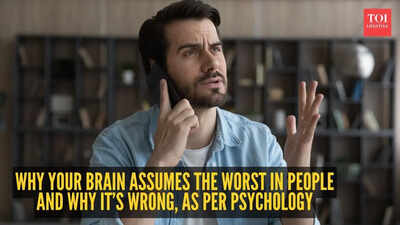
Trust is harder to come by these days. Scams, fraud, and deception make regular headlines, so many people often question motives be it online, at work, or in everyday encounters. We often assume people will bend the truth rather than admit it. But new psychology research suggests that suspicion may be stronger than reality warrants.A study published in the Journal of Experimental Social Psychology found that people consistently overestimate how dishonest others are. While some do cheat when given the opportunity, most are far more honest than many assume. The implication is simple and hopeful: our default pessimism might be costing us confidence in the people around us.
People may be judging others too harshly
The findings draw on 11 experiments with more than 8,000 responses. Participants were placed in situations where they could anonymously lie for a small financial reward without facing punishment. They were also asked to estimate how many others would behave dishonestly in the same scenario.The gap between perception and reality was significant. On average, participants overestimated dishonest behaviour by 13.6 percentage points. Nearly two-thirds believed others would cheat more often than they actually did. Researchers found that around 70% of participants behaved honestly, even when dishonesty could have benefited them.“People on average overestimated what percentage others behave dishonestly by about 14 percentage points, which is a substantial effect,” said study author Jareef Martuza, assistant professor of strategy and management at the Norwegian School of Economics. The pattern remained consistent across experiments and groups, suggesting we tend to hold a generally pessimistic view of others’ honesty.
Why these beliefs matter
Assumptions about human behaviour quietly shape decisions. If someone believes dishonesty is widespread, they may become more cynical, less trusting, and more supportive of strict rules designed to prevent misconduct.The researchers found this among professional managers. Those who believed people were more likely to cheat were also more likely to support surveillance measures and stricter workplace monitoring.Researchers then tested whether these views could be changed. When participants were informed that most people had behaved honestly in the experiments, they reported more positive views of others and higher levels of trust. Managers who received the same information also became less supportive of restrictive monitoring.“In our paper, we present preliminary evidence that the more people overestimate, the more people endorse surveillance measures, and correcting misperceptions seems to reduce surveillance preference,” Martuza said.
A reason to rethink assumptions
The study doesn’t claim people are perfectly honest. Around 30% of participants did cheat when given the opportunity. But the key finding is that most believed the number was much higher.Negative experiences explain part of this. Incidents involving dishonesty draw attention and stay in memory, while ordinary examples of honest behaviour go unnoticed.“We tend to overestimate how dishonest others are,” Martuza concluded. “Of course, the potential downside to trusting strangers can be significant. But most people do not seem to cheat even when their decisions are anonymous, there is no punishment, and there are no reputational consequences. So, we might want to reflect a bit on whether our pessimism about other people’s morality might be justified.”
What to do with this knowledge
Stop doubting people’s intentions and search for actual proof.Try giving people a real chance to show up honestly.At work, stop constant surveillance and micromanagement and instead invest in clear transparency. When you’re anxious, focus on positive things. Real trust is never naive; it is a tactical, smart decision rooted in factual evidence. When we baseline our daily expectations on reality rather than irrational fear, we naturally build much healthier relationships, vastly lighter workspaces, and happier communities.